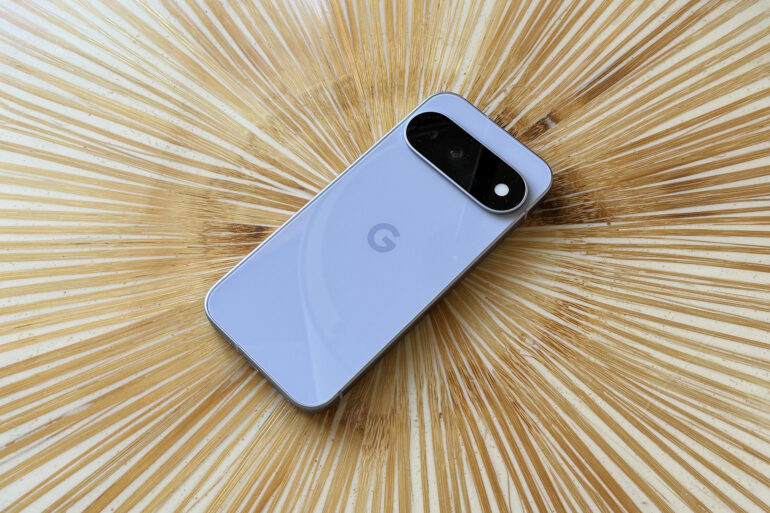
The Google Pixel 11 lacks some of the hardware excess of its Pro sibling, but it shares the same Tensor G6 brain, excellent software and much of the same camera intelligence.
I always found it funny calling a phone “Pro”. It implies that the ordinary version is somehow for amateurs, as if buying the cheaper model means you take blurry holiday photographs and answer emails with two thumbs.
One recent argument came across my desk. The Google Pixel 11 starts at S$1,299 in Singapore, compared with S$1,599 for the Pixel 11 Pro. Yet both use Google’s new Tensor G6 processor, and the standard Pixel still gets 12GB of RAM, 256GB of storage and most of the clever software that defines Google’s flagship experience.
The Pro is undoubtedly better. Whether it is S$300 better is another question.
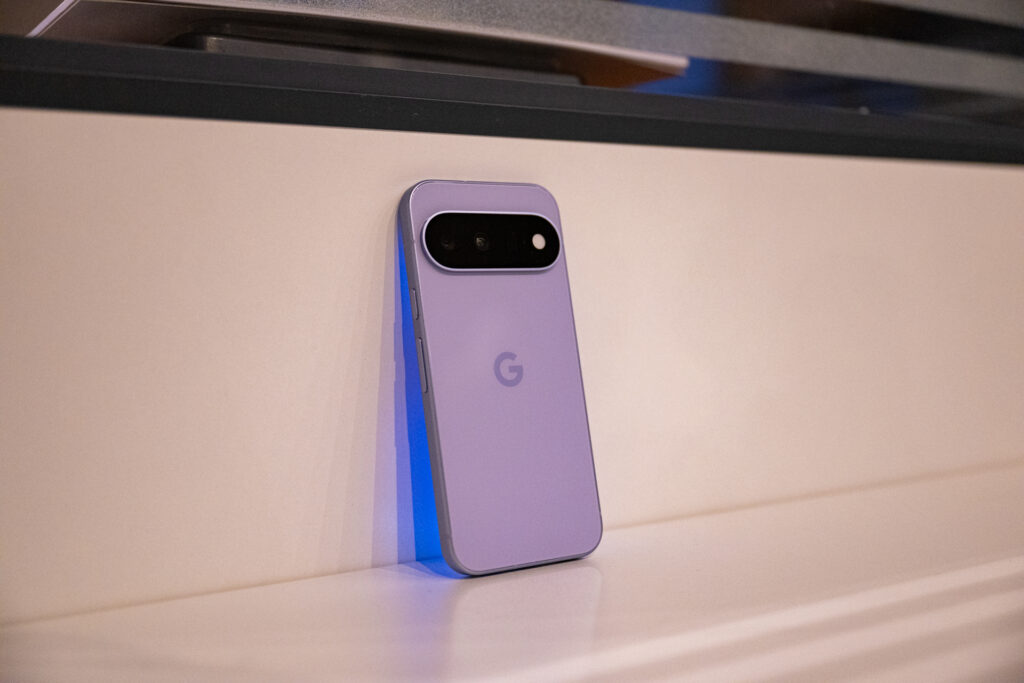
The Pixel 11 retains Google’s familiar design language, including the horizontal camera bar, although this generation’s module is slimmer and less intrusive.
Its 6.3-inch OLED display sits inside a body weighing 197g, making it noticeably less cumbersome than many large-screen flagships.
The Actua OLED panel runs at 2,424 x 1,080 pixels, with an adaptive 60Hz to 120Hz refresh rate. Peak brightness reaches 3,000 nits, while HDR brightness is rated at 2,000 nits. Gorilla Glass Victus 2 provides protection.
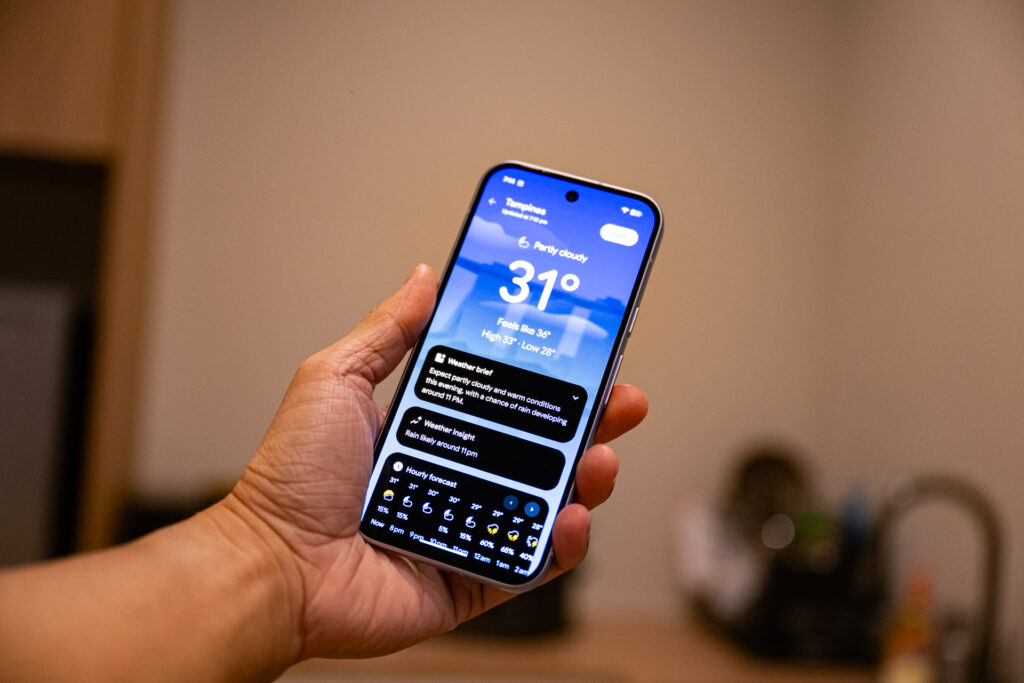
Step outside at lunchtime and a dim display quickly becomes an expensive mirror. The Pixel 11 remains easy to read under bright daylight, while OLED blacks and smooth scrolling make everything from photographs to Netflix look suitably premium.
The Pro has the more sophisticated panel, but I doubt most people will care.
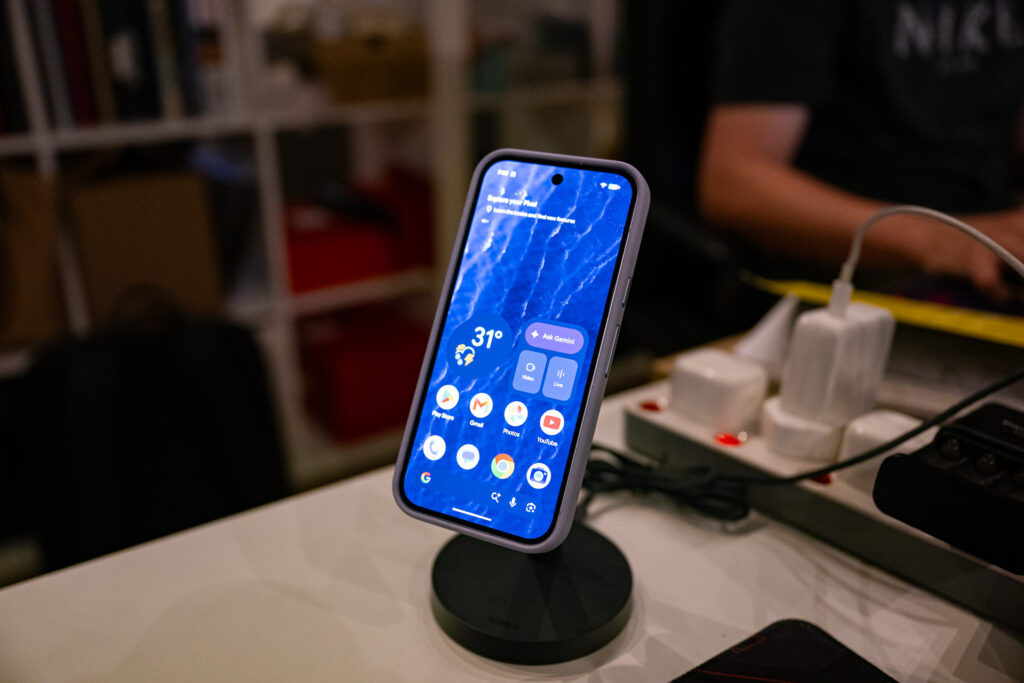
Google’s Tensor G6 powers the Pixel 11. As before, Tensor is less concerned with winning benchmark drag races than with enabling Google’s software, computational photography and AI features. That philosophy remains unchanged.
The Pixel 11 is quick in everyday use; apps open promptly, and multitasking feels fluid. There are faster chips available if gaming performance and synthetic benchmarks are your primary concerns. But buying a Pixel because you want the fastest processor has always been slightly like buying a Volvo because you want the loudest exhaust.
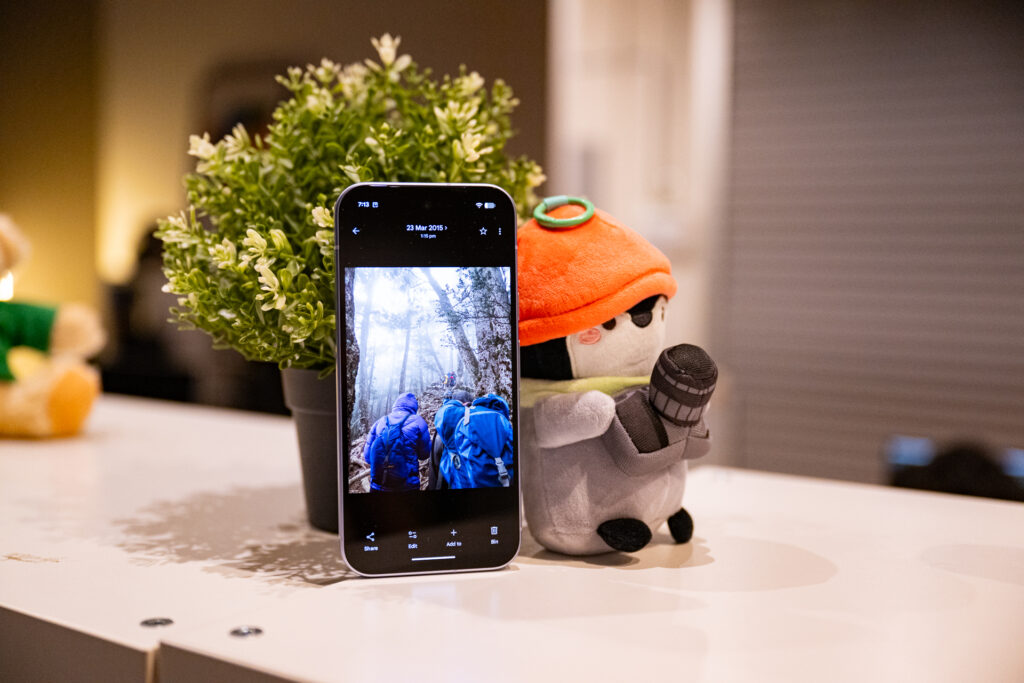
The Pixel 11 runs deeply integrated Gemini features through Tensor G6. Google increasingly wants the phone to help with tasks across apps rather than simply wait for instructions, while features such as Magic Capture can record a moment and automatically curate photographs and video afterwards.
Some of this is genuinely useful. Some still feels like technology searching for a problem. What matters more is that the Pixel 11 receives essentially the same AI foundation as the more expensive Pro phones. You are not buying the “cheap” version of Google’s intelligence.
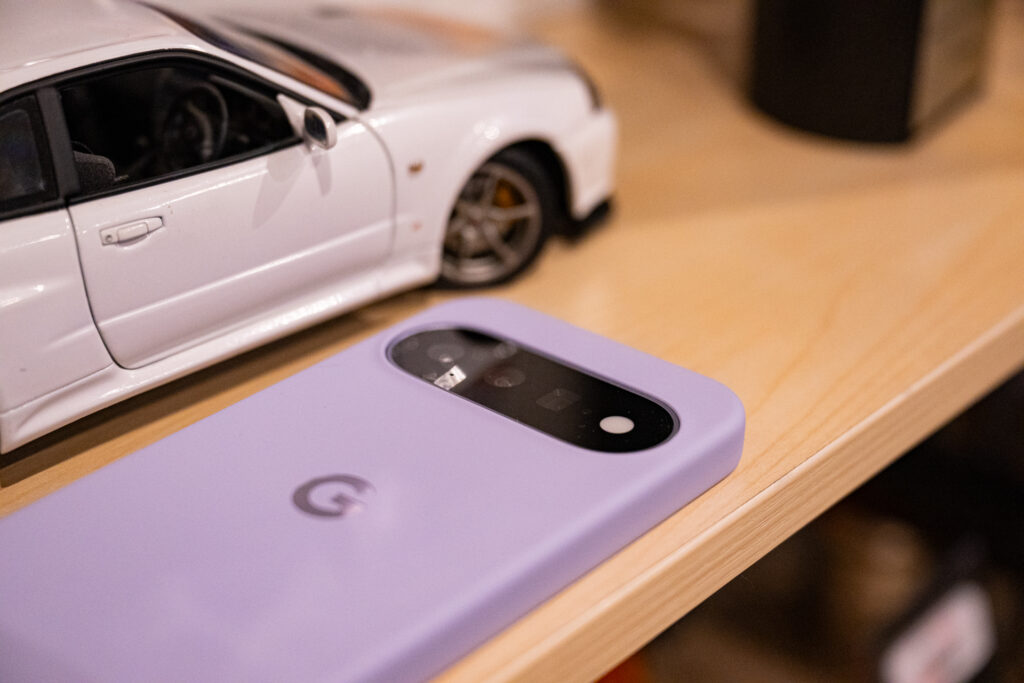
The Pixel 11 comes with a 48-megapixel main camera, a 13-megapixel ultrawide and a 10.8-megapixel 5x telephoto camera, with Google’s Super Res Zoom extending to 30x.
Google’s real advantage continues to be computational photography. The Pro models still have superior ultrawide and telephoto hardware, so serious photographers will find legitimate reasons to spend more. For everyone else, the Pixel 11 remains very capable.
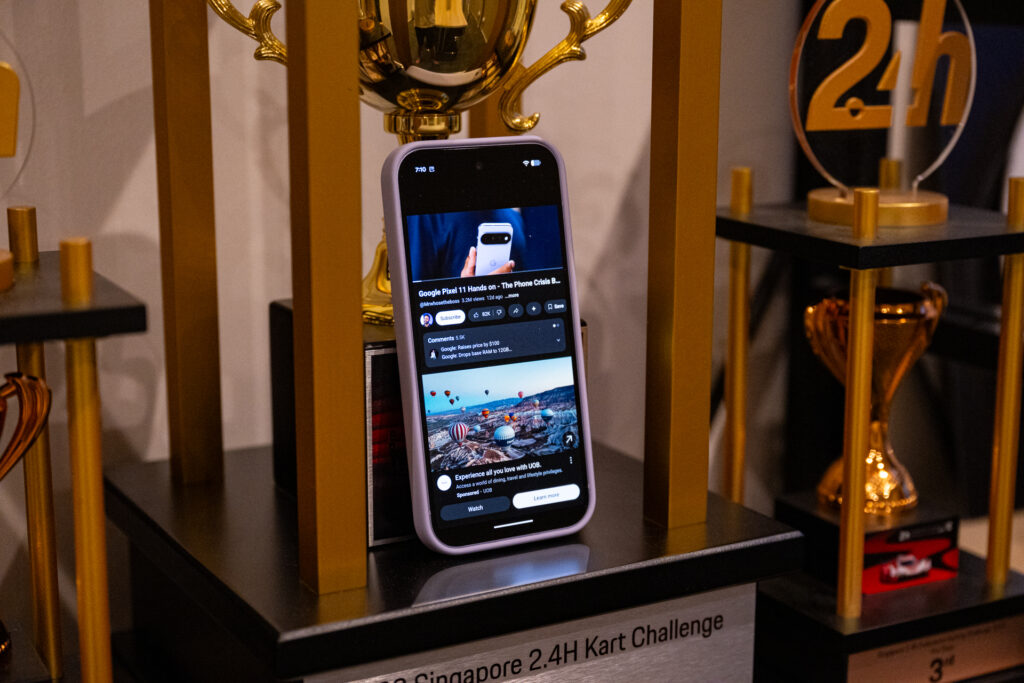
The Pixel 11 uses a 4,985mAh battery, with Google claiming more than 30 hours of typical use.
A compatible 30W USB-C PPS charger can take the phone to around 55 per cent in 30 minutes. That looks rather modest beside the triple-digit charging speeds offered by some Chinese rivals.
Thankfully, wireless charging is much improved, supporting Pixelsnap magnetic Qi2.2 charging at up to 25W.
Verdict: perhaps “Pro” is optional
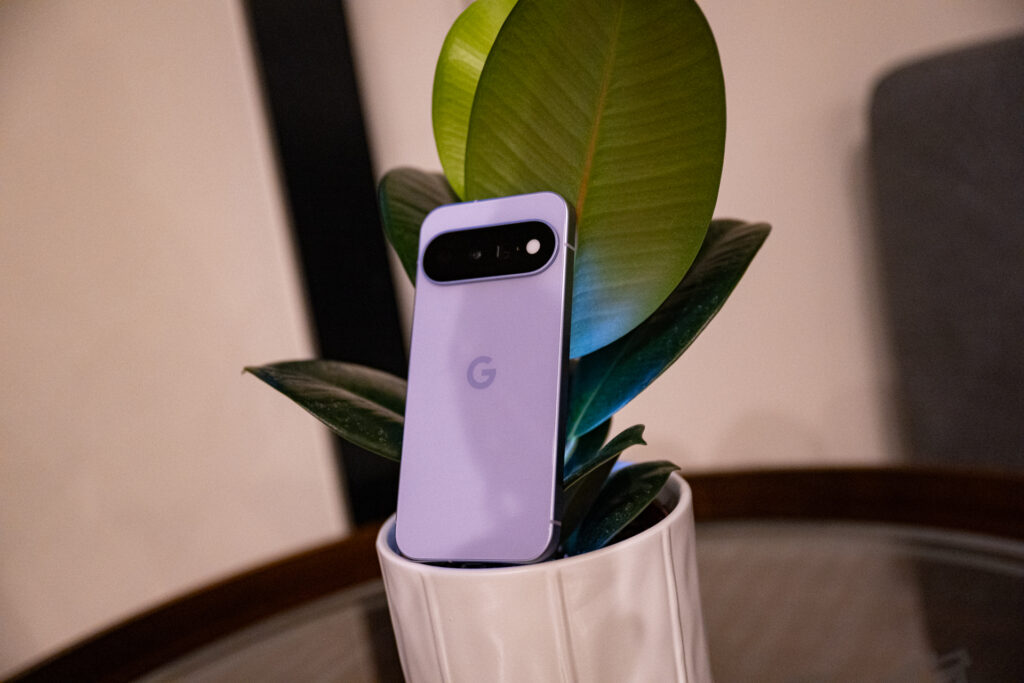
Google currently lists the Pixel 11 from S$1,299, while the Pixel 11 Pro starts at S$1,599. Spend the extra, and you get better camera hardware and a more sophisticated display. Keep the S$300, and you still receive most of what makes a Pixel feel like a Pixel.
The display is excellent, the cameras are consistently dependable, Tensor G6 makes Google’s software feel cohesive, and Pixelsnap finally gives Android users the kind of magnetic accessory ecosystem that should have arrived years ago.
The Pro is the phone for buyers who want every available feature. The Pixel 11 is the one for people who know which features they will actually use.
And sometimes, knowing when not to go Pro is the more professional decision.
Google Pixel 11
Processor: Google Tensor G6
Display: 6.3-inch Actua OLED, 60–120Hz
Cameras: 48MP main / 13MP ultra-wide / 10.8MP 5x telephoto
Battery: 4,985mAh, up to 55% charge in around 30 minutes
Memory: 12GB RAM
Storage: 256GB / 512GB
Weight: 197g
Price: From S$1,299
Liked this? Check out more articles on Futr tech here.