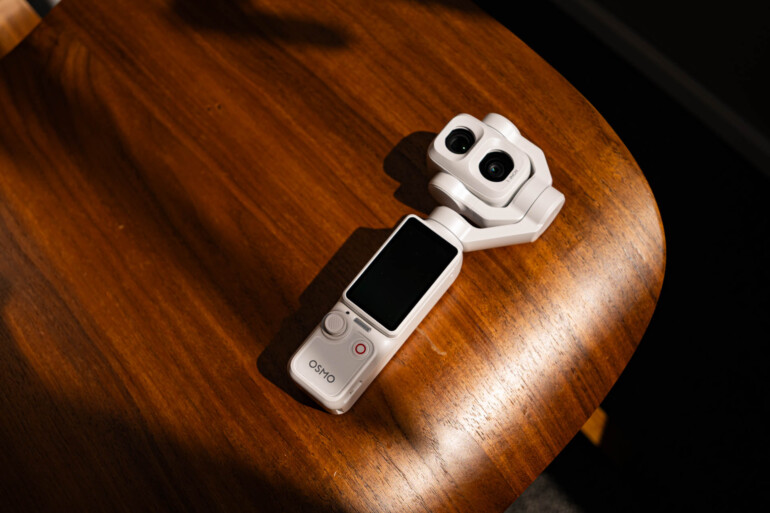
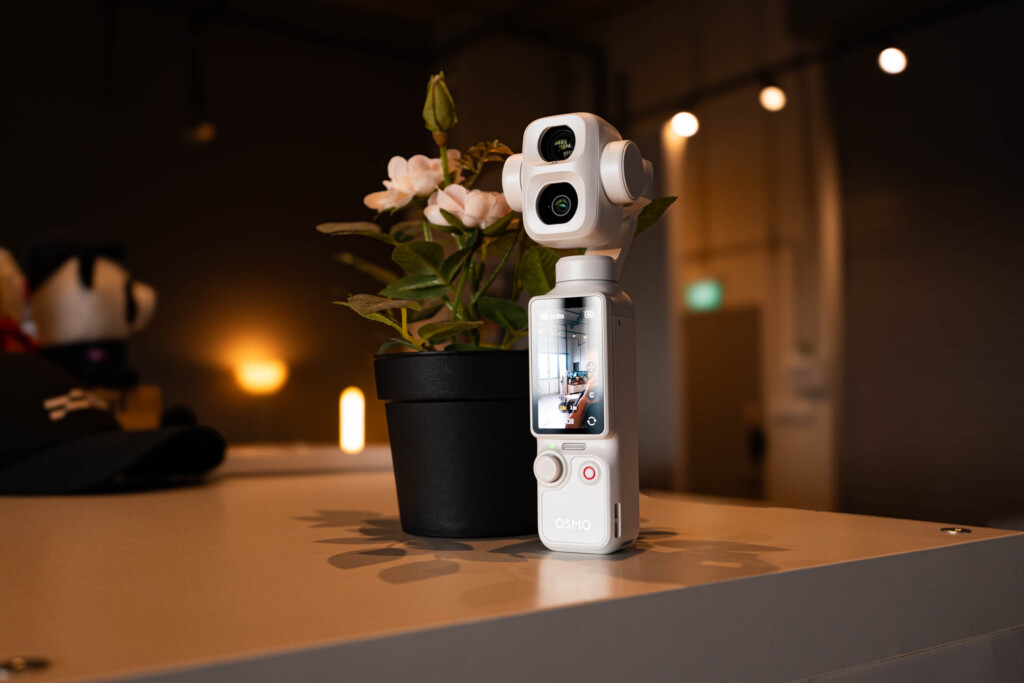
The Pearl White Osmo Pocket 4P does not shoot any better than the black one, but you might just prefer it on your next holiday.
Camera manufacturers are very good at convincing us that every new product needs more megapixels, more dynamic range or another button whose purpose nobody quite understands.
But, coming off the huge success of the Osmo Pocket 4P, DJI just gone and painted it Pearl White.
More accurately, DJI uses mica-infused pearlescent pigments and a multi-layer coating that shifts subtly depending on the light. Underneath, however, this is exactly the same Pocket 4P launched earlier this year.
Less camera, more of an accessory
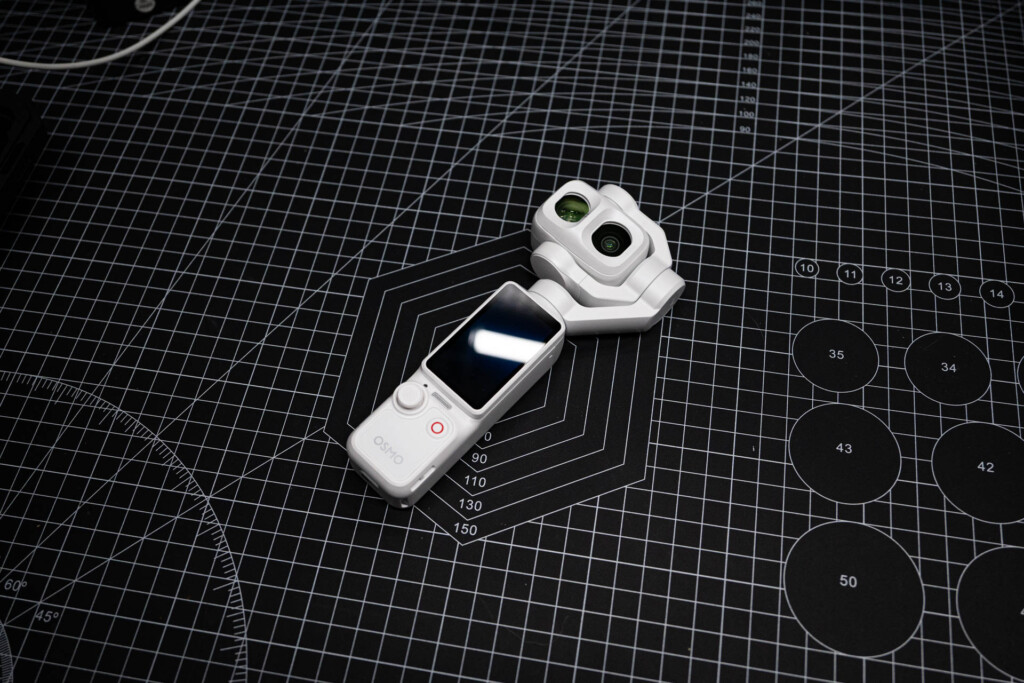
The original Pocket 4P is an unapologetically functional-looking device. Black body, exposed gimbal, twin cameras. It looks like equipment. The Pearl White version, on the other hand, feels different.
It is softer, cleaner and considerably less industrial. There is something almost lifestyle-oriented about it, which sounds superficial until you remember what this camera is actually designed for.
The Pocket 4P is not a cinema camera destined to spend its life inside a Pelican case. It is meant to travel, sit on café tables, appear in social videos, follow you through airports and occasionally end up in photographs itself. In that context, appearance matters.
The Pearl White version feels less like something borrowed from a production crew and more like something you might willingly carry every day. For travel creators, lifestyle vloggers or anyone who prefers technology that does not look relentlessly serious, this may actually be the more appealing Pocket 4P.
Nothing important has changed
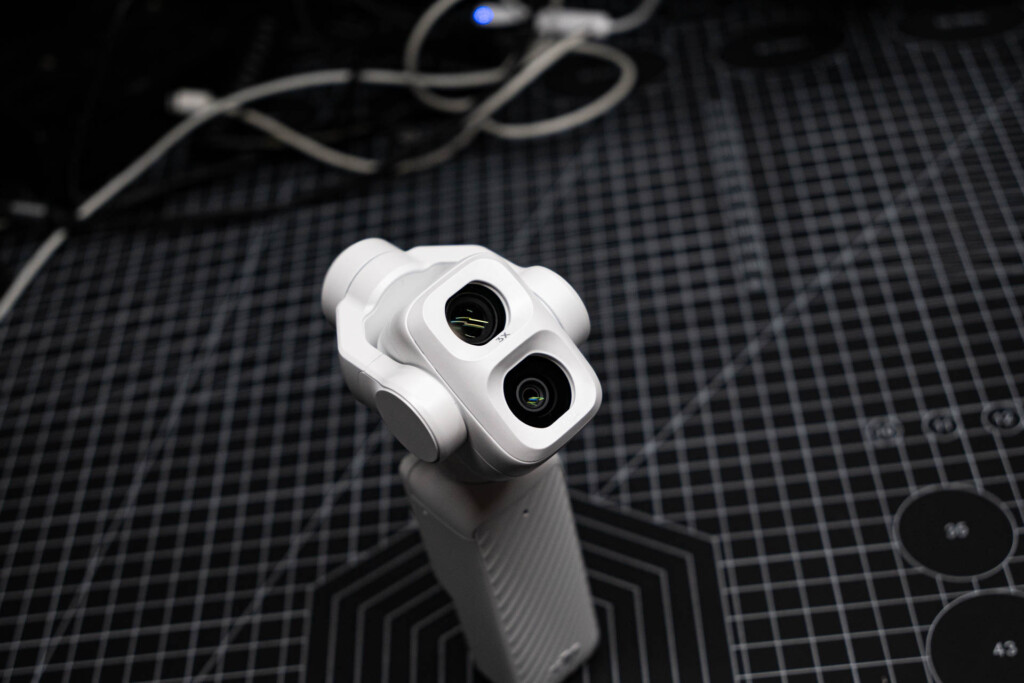
Thankfully, DJI has left everything that matters alone. The wide camera uses a 1-inch CMOS sensor with a 20mm-equivalent f/2.0 lens, while the second camera uses a 60mm-equivalent f/1.8 lens. The latter remains the feature that transforms the Pocket 4P from a very good vlogging camera into something more versatile.
That 60mm lens is excellent for people; faces look more flattering, backgrounds become more compressed and talking-head footage suddenly feels considerably more deliberate. As I found with the original Pocket 4P, the difference is simple: the 20mm lens shows you where someone is. The 60mm lens concentrates on who they are.
The main camera also offers up to 17 stops of claimed dynamic range, along with 10-bit D-Log 2 recording for considerably more flexibility when colour grading.
Still remarkably capable for something this small
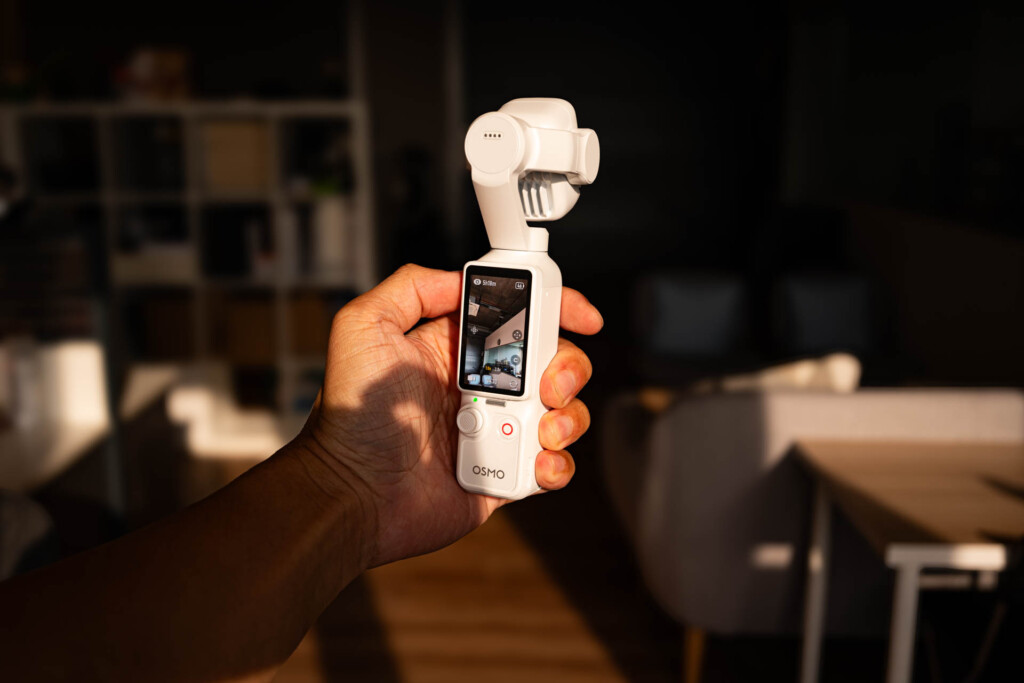
The Pocket 4P can record at up to 4K/240fps with its wide camera, while ActiveTrack 8.0 can follow subjects across a zoom range extending to 12x. Mechanical three-axis stabilisation remains one of its strongest advantages over smartphones.
There is something fundamentally more natural about footage captured with a physical gimbal. Walking shots glide rather than wobble, pans feel intentional and camera movement has a quality that software stabilisation still struggles to imitate.
There is also 103GB of built-in storage, which sounds small until you arrive at a shoot and realise your microSD card is still inside your laptop. Battery life is rated at up to 210 minutes, while fast charging can bring it to 80 per cent in around 18 minutes.
In short, all the reasons I liked the original Pocket 4P remain.
White might actually make more sense
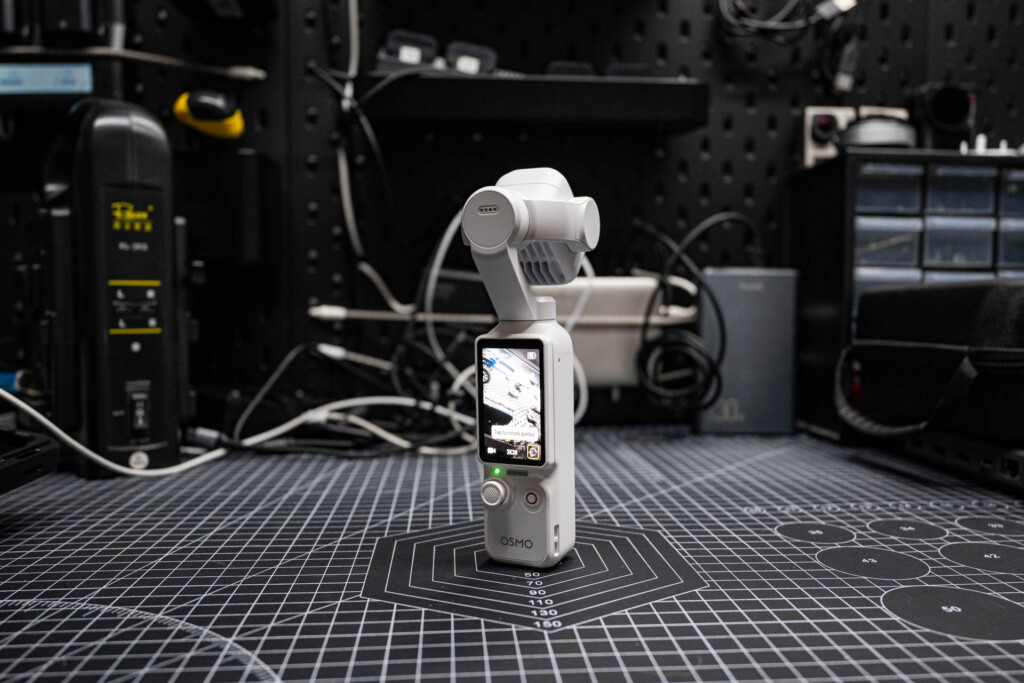
There is also a less obvious advantage to the Pearl White finish: it attracts less visual attention.
Black camera equipment has a habit of looking serious. Put a black camera on a restaurant table or point one towards yourself in public and people immediately understand that filming is happening.
A white Pocket 4P appears slightly less intimidating. That may sound useless, but for creators who shoot casually in public spaces, travel frequently or simply dislike walking around looking like a one-person production company, the softer appearance arguably suits the whole Pocket philosophy better.
It feels less like professional equipment you happen to carry everywhere, and more like an everyday object that happens to be remarkably capable.
Of course, white electronics also have another talent: reminding you exactly how dirty your hands are. Anyone precious about keeping their gadgets immaculate may wish to keep a cloth nearby.
Should you buy one?
At S$779 for the Standard Combo and S$879 for the Vlog Combo, the Pearl White version costs the same as the regular Osmo Pocket 4P in Singapore, so there is no performance equation to solve here.
Buy the black one if you prefer understated, traditional camera gear. Buy Pearl White if you want exactly the same capability in something that feels cleaner, friendlier and slightly less like a piece of equipment.
That may seem like a remarkably shallow reason to choose one camera over another, but when two cameras are technically identical, there is nothing wrong with buying the one you actually enjoy looking at.
And strangely enough, Pearl White might be the Pocket 4P that best understands why it is called a Pocket in the first place.
DJI Osmo Pocket 4P Pearl White
Price: S$779 Standard Combo / S$879 Vlog Combo
Wide camera: 1-inch CMOS, 20mm equivalent, f/2.0
Telephoto camera: 1/1.28-inch CMOS, 60mm equivalent, f/1.8
Maximum video: 4K/240fps
Dynamic range: Up to 17 stops
Colour: 10-bit D-Log 2
Zoom: Up to 12x
Storage: 103GB built-in, microSD expansion
Battery life: Up to 210 minutes
Weight: 230g
Liked this? Check out more articles on Futr tech here.