The NITECORE Carbo 20 is not the most feature-packed 20,000mAh power bank you can buy, nor is it remotely the cheapest. What it offers instead is robust durability and portability.
Power banks have become a little ridiculous. Some now have colour displays, multiple built-in cables, enough ports to resemble a desktop docking station, and charging outputs capable of powering laptops that were once considered portable only because they had handles.
All very clever, but take one of these fully loaded bricks on a trip, or worse, carry it up a mountain, and another specification suddenly becomes much more important: weight.
This is what the NITECORE Carbo 20 aims to solve. It is a 20,000mAh dual-USB-C power bank primarily aimed at outdoor use and everyday carry, and after spending more than a month using it as my primary EDC battery, it is pretty remarkable.
Carbon fibre with a purpose
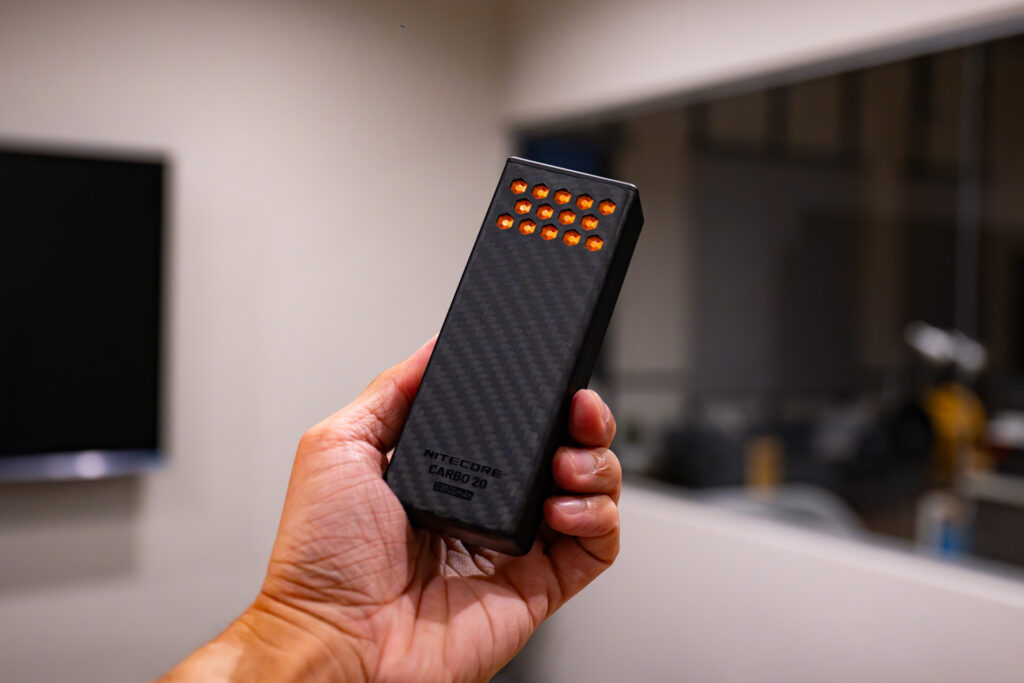
The important distinction is that the Carbo 20 is not trying to win the specifications arms race. It is trying to give you enough power, while weighing considerably less than most of its rivals.
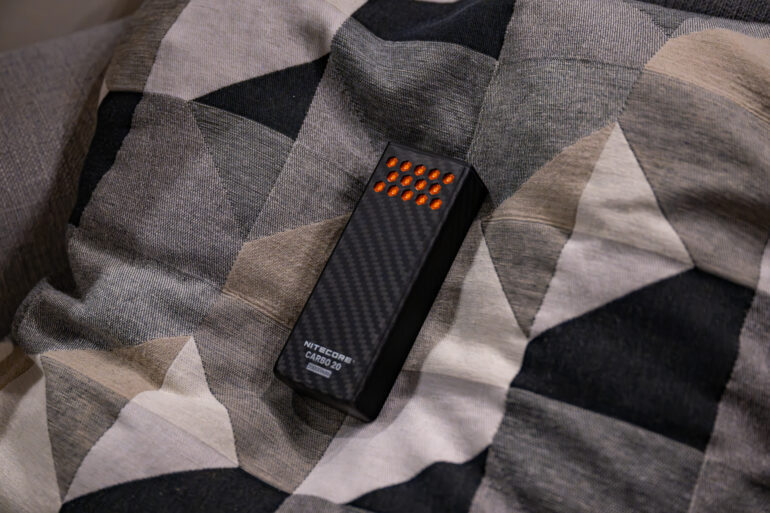
NITECORE uses a carbon-fibre shell to keep weight down, complemented by magnesium-alloy heatsinks finished in either neon orange or an ice-blue colour depending on the version chosen. The combination gives the power bank a distinctly technical look without descending into gaming-laptop theatrics.
It feels dense and almost brick-like in the hand, though rounded edges make it more comfortable to carry and easier to slide into bags. At 128 x 48 x 29mm, it remains compact for something carrying this much energy. It also weighs only 320g, which makes it disappear into your pocket or carry-on.
20,000mAh, but understand what that really means
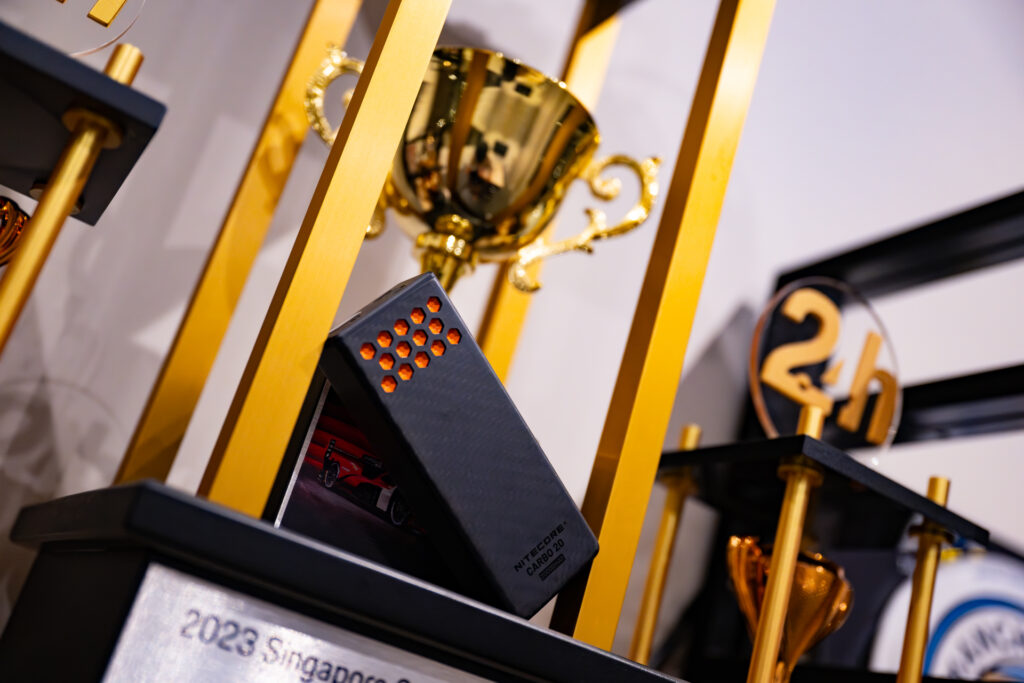
NITECORE rates the Carbo 20 at 20,000mAh, equivalent to roughly 77.6Wh. As with all power banks, however, that headline number does not translate directly into the same amount of usable output after conversion losses.
Real-world usable capacity stands at around 13,500mAh, or approximately 67.5Wh. For comparison, a 13-inch MacBook Air has a capacity of around 53.8Wh, meaning the Carbo 20 carries enough usable energy to take one from effectively empty to close to full under favourable conditions.
Therein lies one of the Carbo 20’s biggest strengths; it has enough capacity and output to become part of a proper mobile working setup.
65W charging makes it laptop-friendly
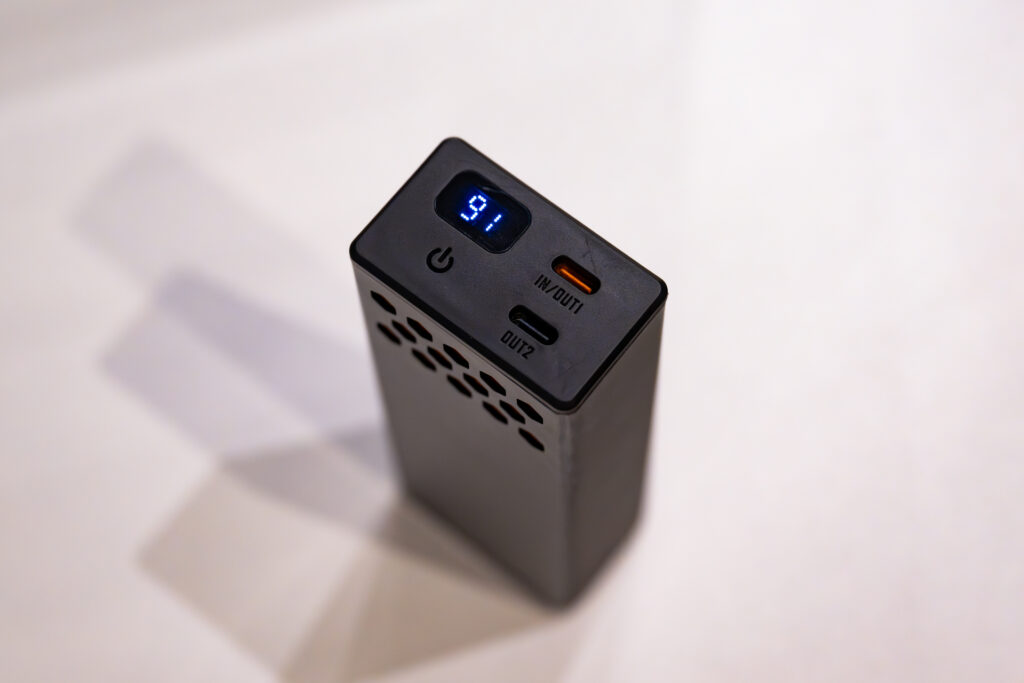
Speaking of laptop charging, both USB-C ports can output power, while one also accepts input. Maximum input and output are rated at 65W, and in testing the Carbo 20 delivered around 63 to 64W to a MacBook.
More impressive is that it can sustain that output. Many power banks advertise an impressive peak figure, only to slow down rather dramatically once heat builds. NITECORE uses those exposed magnesium-alloy heatsinks to help manage temperatures, giving you maximum sustained charging speeds.
Having two USB-C ports is convenient because two devices can be charged simultaneously. The problem is that doing so dramatically reduces the available output.
NITECORE quotes a maximum of 15W when both ports are in simultaneous use. So while the Carbo 20 technically supports two-device charging, this is not a 65W-plus-65W arrangement.
Pass-through charging is genuinely useful
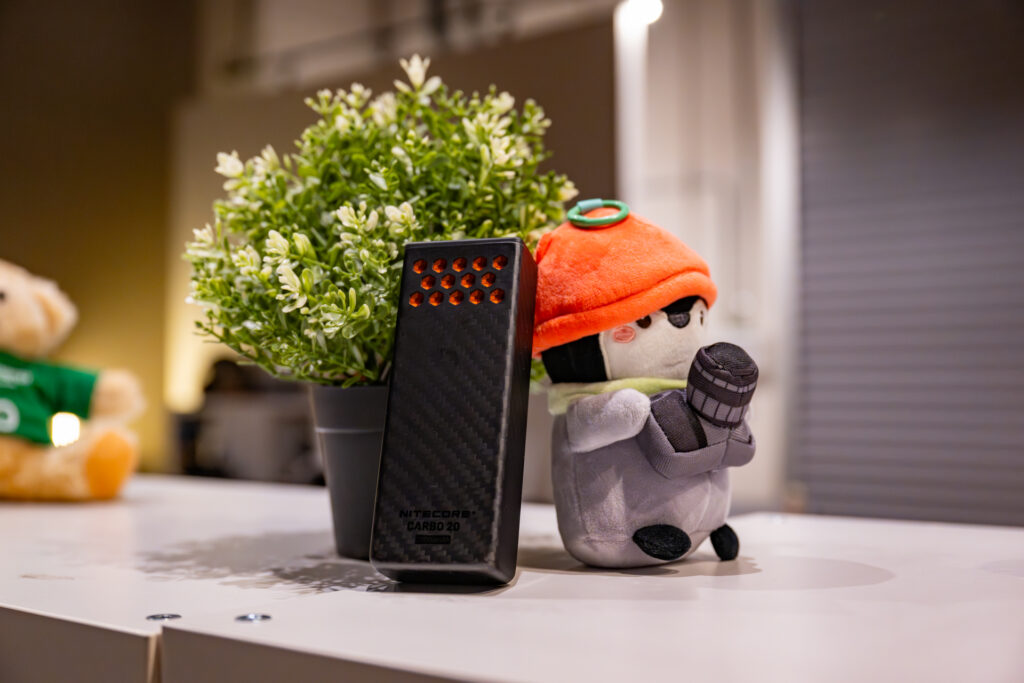
The Carbo 20 can charge itself while simultaneously providing power to another device. When I was travelling, I needed to recharge the power bank, but my phone was also sitting at 12 per cent after an afternoon of maps, messages and boarding passes.
With pass-through charging, both can be connected at once, and it is a useful convenience. The same applies when hiking and stopping somewhere briefly with access to mains power.
A 20,000mAh battery is not much use if it takes an eternity to refill. Fortunately, the Carbo 20 also accepts up to 65W input, and topping it up is a fuss-free and quick affair.
IPX8: genuinely ready for the outdoors
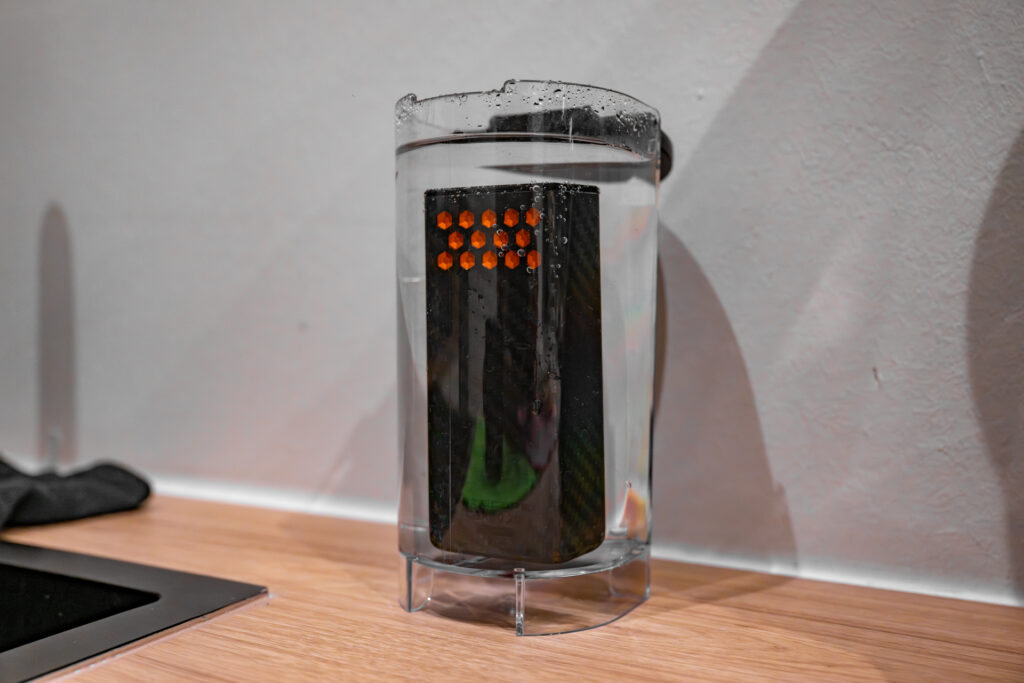
One of the Carbo 20’s strongest outdoor credentials is its IPX8 water-resistance rating. I was sceptical at first, and nobody would voluntarily dunk a powerbank into a vessel of water.
Amazingly, after submerging the battery in water, removing it, drying the ports carefully and then connecting it to a smartphone, it continued charging normally. This USP alone is a game-changer for anyone using it outdoors.
Nobody sensible is buying a power bank to take scuba diving, but rain, puddles, wet backpacks and the occasional careless moment near water are all very real possibilities.
There is one small caveat though. The “X” in IPX8 means there is no formal dust-ingress rating. So while water resistance is excellent, those travelling through particularly dusty environments should be aware that NITECORE does not make the same explicit guarantee against fine particles.
The recessed areas around the ports can also collect dirt, even if debris does not penetrate the body itself.
The display: useful rather than impressive
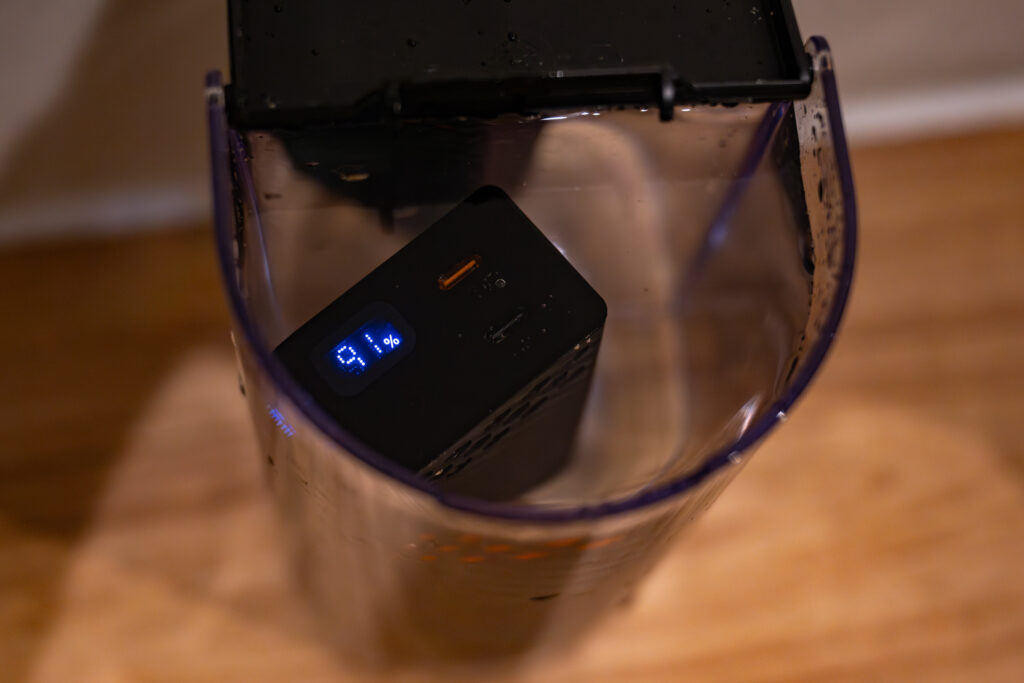
There is a small screen on the top of the Carbo 20. Press the single power button, and it displays remaining battery percentage, while a green indicator appears when USB Power Delivery is active.
Compared with power banks from other companies which increasingly display charging wattage, temperature, estimated runtime and enough statistics to qualify as a minor scientific instrument, NITECORE’s panel looks positively austere.
Still, percentage is better than four blinking LEDs and the accompanying ritual of trying to estimate whether “three lights” means 75 per cent or imminent doom.
Who is it actually for?
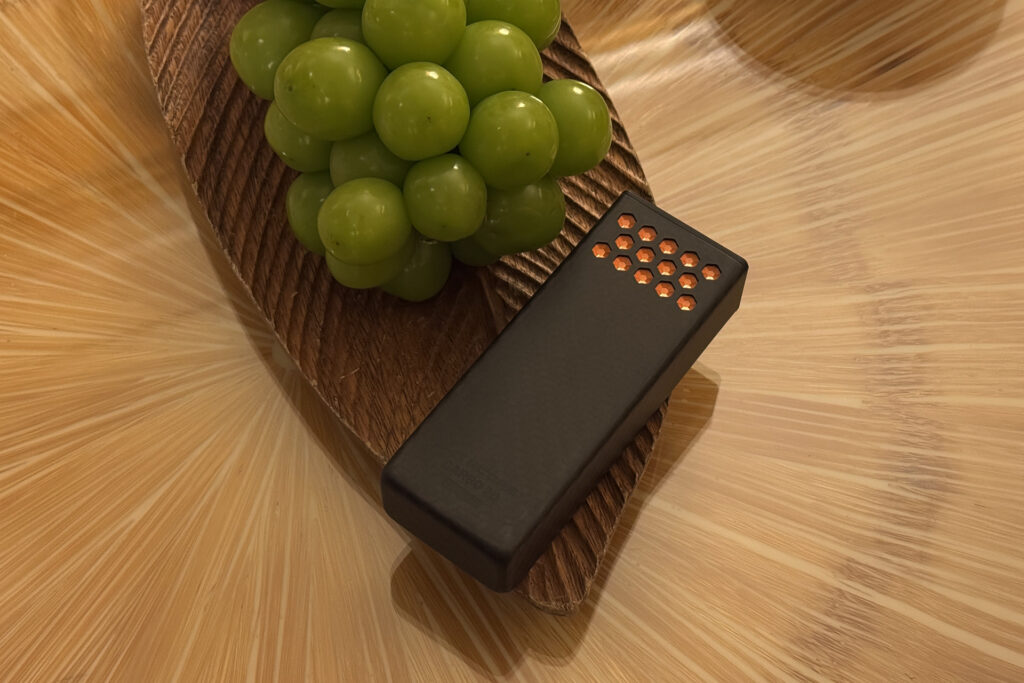
The Carbo 20 makes the most sense when weight matters more than features. That includes frequent travellers carrying a collection of power-hungry electronics.
If you are spending long periods away from mains electricity, the combination of 20,000mAh capacity and a 320g body becomes very compelling. It also makes considerable sense for hikers.
Where it makes less sense is for someone wanting maximum desktop or EDC functionality. If you want huge output, multiple cables, USB-A, numerous ports and detailed information displays, there are better choices.
Likewise, price-sensitive buyers will struggle to justify the price when heavier alternatives offer substantially more functionality for less money.
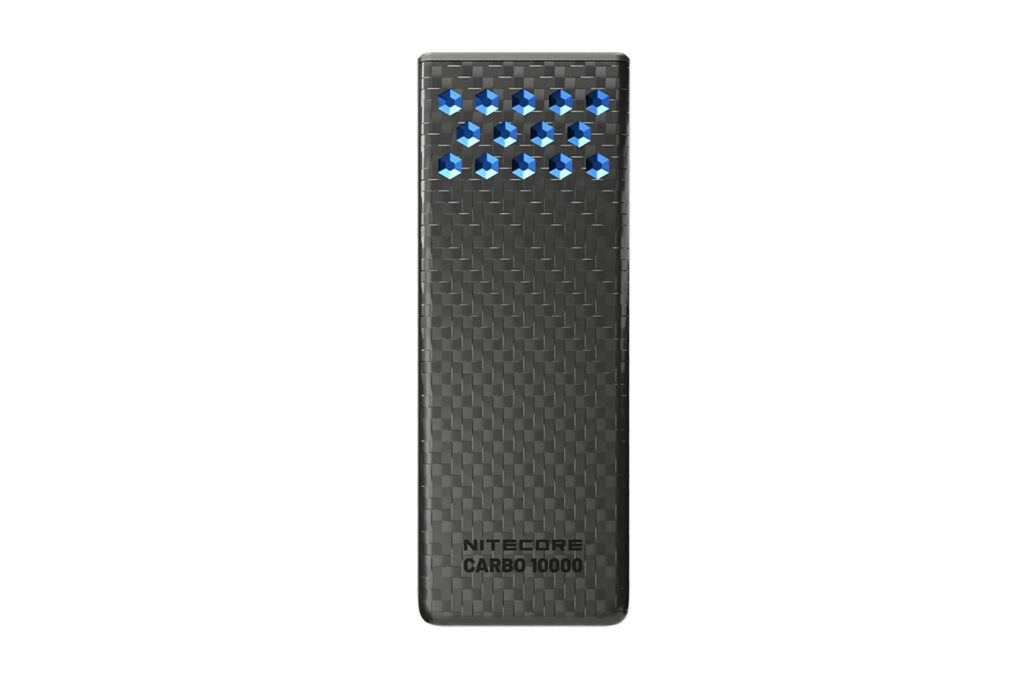
The obvious alternative is NITECORE’s own Carbo 10,000 Gen 2. It follows the same lightweight carbon-fibre philosophy but delivers half the capacity.
It is also limited to around 30W sustained input and output, meaning it is much better suited to phones and smaller electronics than laptops. It retains pass-through charging and water resistance, though it does without the Carbo 20’s percentage display and instead relies on simple indicator LEDs.
If 10,000mAh is enough, take the smaller model. If a laptop needs to be part of the equation, the jump from 30W to 65W is substantial enough to justify the Carbo 20.
Liked this? Check out more articles on Futr tech here.