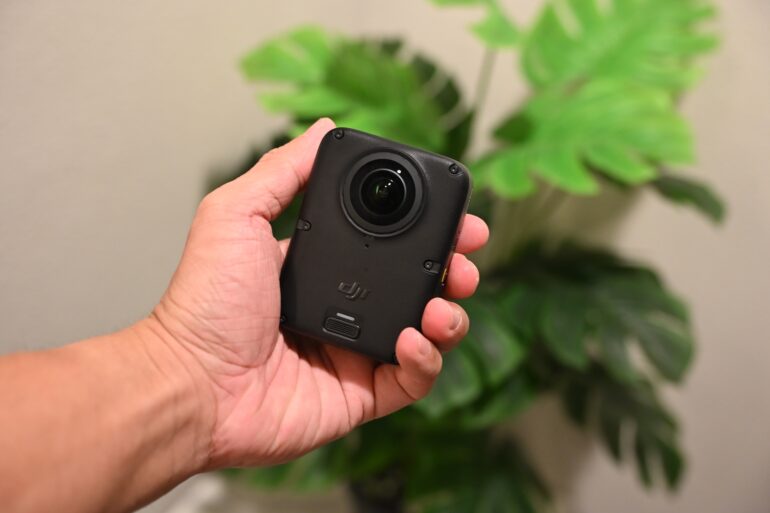
DJI’s second-generation 360-degree action camera does not reinvent the formula, but it does refine it in several meaningful ways.
I have never been particularly fond of 360-degree cameras. That may sound like a strange way to begin a review of one, but there is a reason. My usual preference is to choose the right camera for the job, frame deliberately, and accept that whatever I miss simply was not meant to be in the shot.
A 360 camera takes the opposite approach. It records everything: every direction, every movement, every questionable composition decision, then it asks you to sort it all out later.
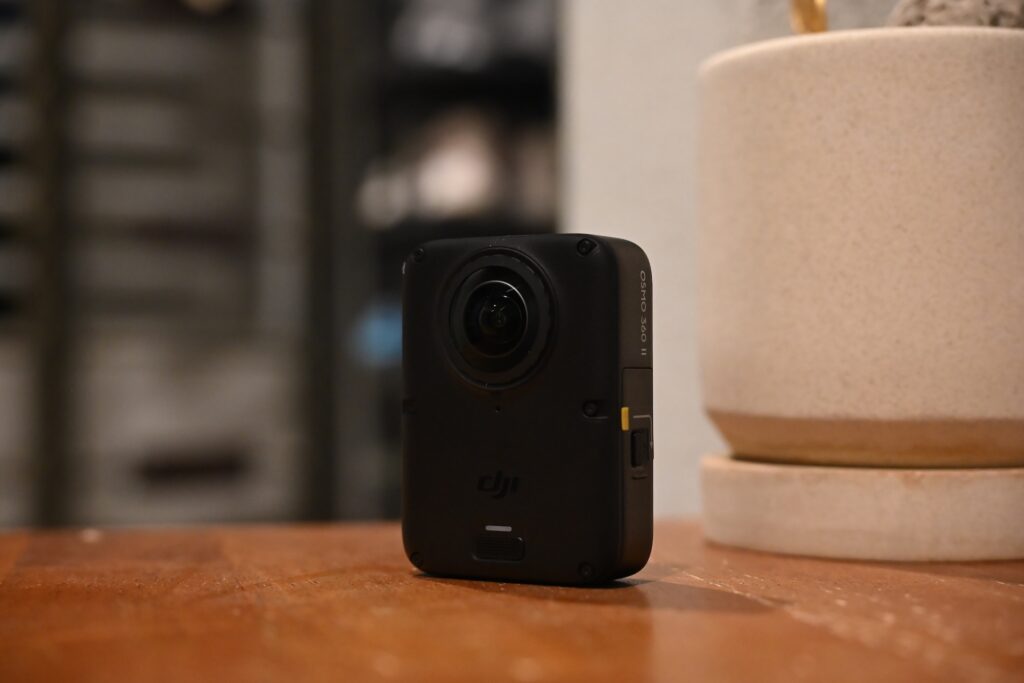
The DJI Osmo 360 II is the company’s latest attempt to make that workflow feel less like punishment and more like freedom.
On paper, this is an iterative update rather than a ground-up redesign. DJI retains the dual square-sensor layout and native 8K panoramic recording of the original Osmo 360, but adds stronger durability, more usable low-light performance, improved software and a number of refinements aimed squarely at solo creators and outdoor users.
A square sensor that finally makes technical sense.
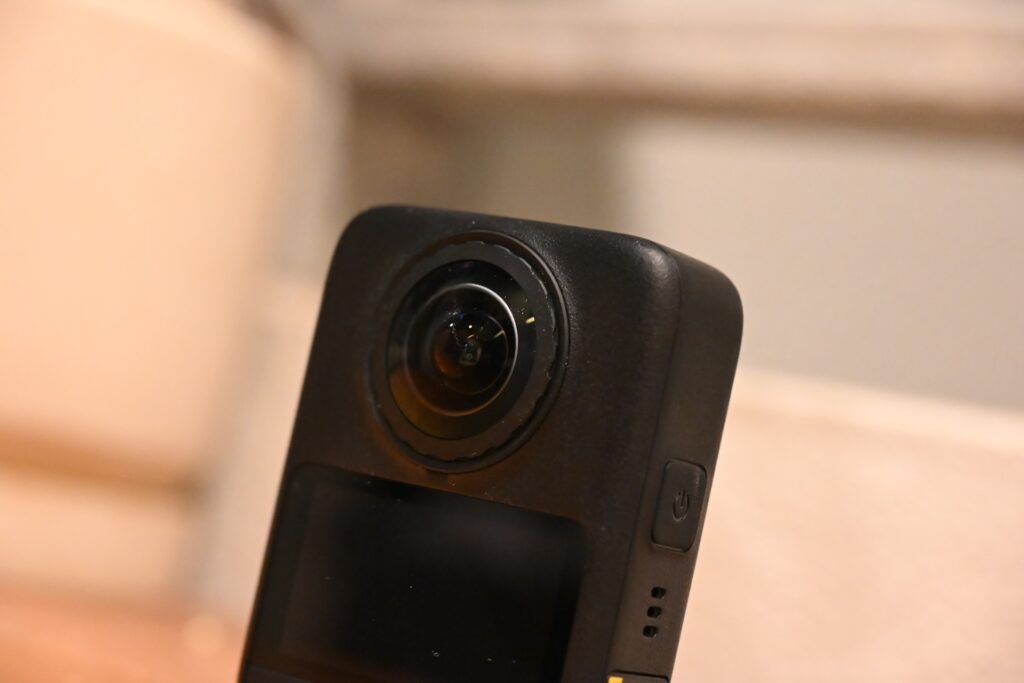
DJI continues to use its unusual 1/1.1-inch square CMOS sensors, rather than conventional rectangular ones. A square sensor allows DJI to utilise more of the available imaging area for spherical capture, with the company claiming a 25 per cent improvement in sensor utilisation alongside reduced power consumption.
More importantly, the Osmo 360 II delivers up to 14.5 stops of dynamic range, which is particularly valuable in the exact environments where action cameras tend to struggle.
Its relatively large 2.4μm pixels, combined with an f/1.9 aperture, also help keep motion and lower-light footage reasonably clean. For a small spherical camera, the sensor performance is genuinely impressive.
Spotlight Follow is useful, but not magic.
One of the new software features is Spotlight Follow. Select yourself as the subject, and the camera attempts to keep you centred within the final reframed video, regardless of how the physical camera rotates or swings around on its pole.
In theory, and mechanically, it works well. The camera was generally capable of keeping track of me while walking and moving through uneven terrain.
The problem appears afterwards. The resulting framing tends to crop quite aggressively, which inevitably reduces image quality.

For casual clips this may be perfectly acceptable, but I would be reluctant to use the output for commercial work or more demanding YouTube production.
Lens durability is this camera’s biggest real-world improvement.
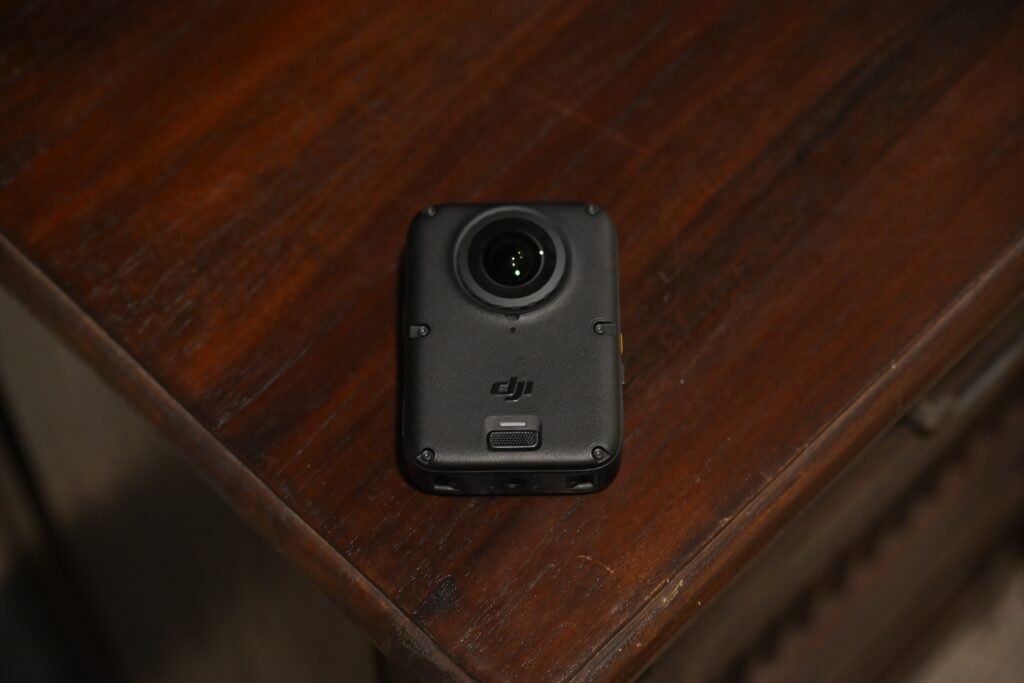
360 cameras have always possessed one deeply inconvenient design flaw: their lenses stick out. That is necessary for panoramic capture, but it means the most vulnerable part of the camera is also the part most likely to make contact with rocks, tables, branches and whatever else happens to be nearby.
The original Osmo 360 made matters worse by using lenses that were not user-replaceable. Scratch one badly and the entire camera became a service-centre conversation.
DJI has fixed that here. The Osmo 360 II’s outer lens elements now use a stronger second-generation coating created through an upgraded ion-sputtering process. DJI claims a 150 per cent increase in surface strength, with laboratory testing involving up to 2,000 steel-wool rubs while maintaining strong water-beading properties.
Plus, the outer lenses are now user-replaceable. Damage one and you can purchase the official Lens Replacement Kit, unscrew the outer element, install a fresh one, run an automatic calibration routine on the camera, and continue shooting. Hallelujah.
This is exactly how an adventure camera should have been designed from the beginning.
8K sounds enormous. Reframed 8K is another matter.
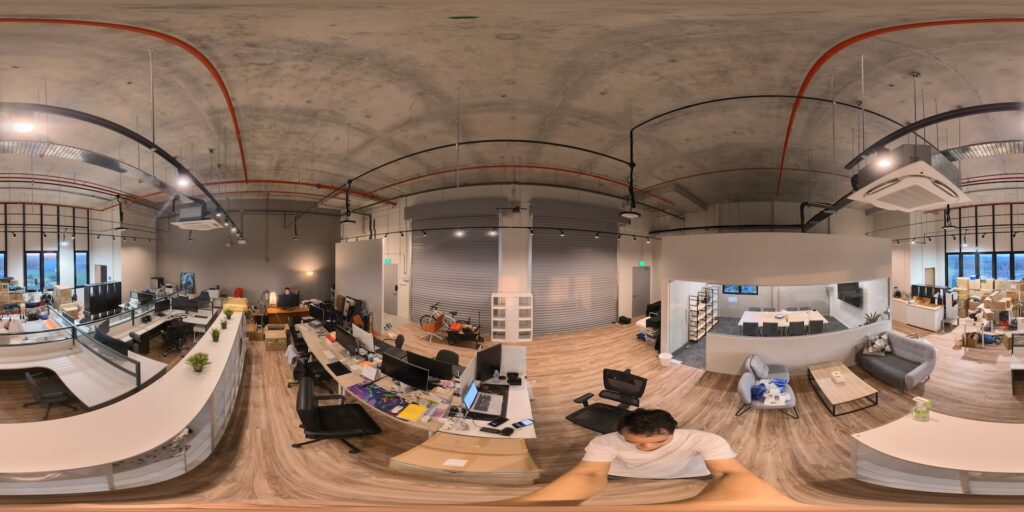
DJI advertises 8K/60fps spherical video, which is spectacular. The camera records an enormous 7680 x 3840 image, but those pixels are spread across an entire 360-degree sphere.
Once you reframe that spherical footage into a conventional 16:9 image, you are only selecting a small portion of the original capture. A standard 90-degree field of view uses roughly one quarter of the available horizontal image.
Do the arithmetic and you end up with approximately 1920 horizontal pixels of true optical information in that particular crop. In other words, the giant 8K file often produces something closer to native 1080p detail when reframed conventionally.
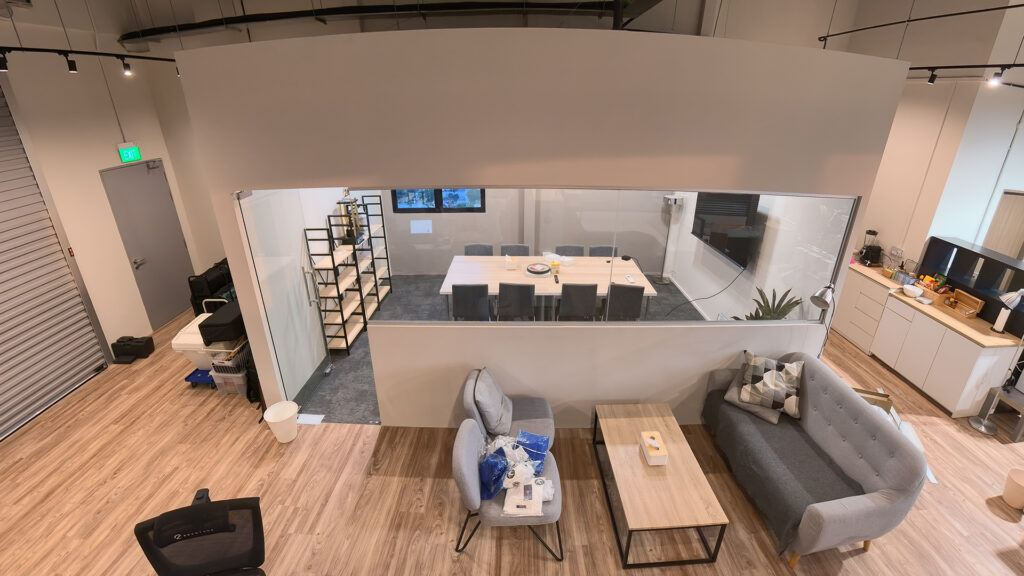
DJI can upscale that export to 4K, and it looks perfectly respectable for social media or as a supporting shot within a larger YouTube edit. But this is not the same as recording true 4K directly through a conventional camera.
Do not buy the Osmo 360 II because you saw “8K” on the box and assume every crop will look like an 8K cinema camera. Obviously, it will not.
Single-Lens Action Mode is the quality escape hatch.
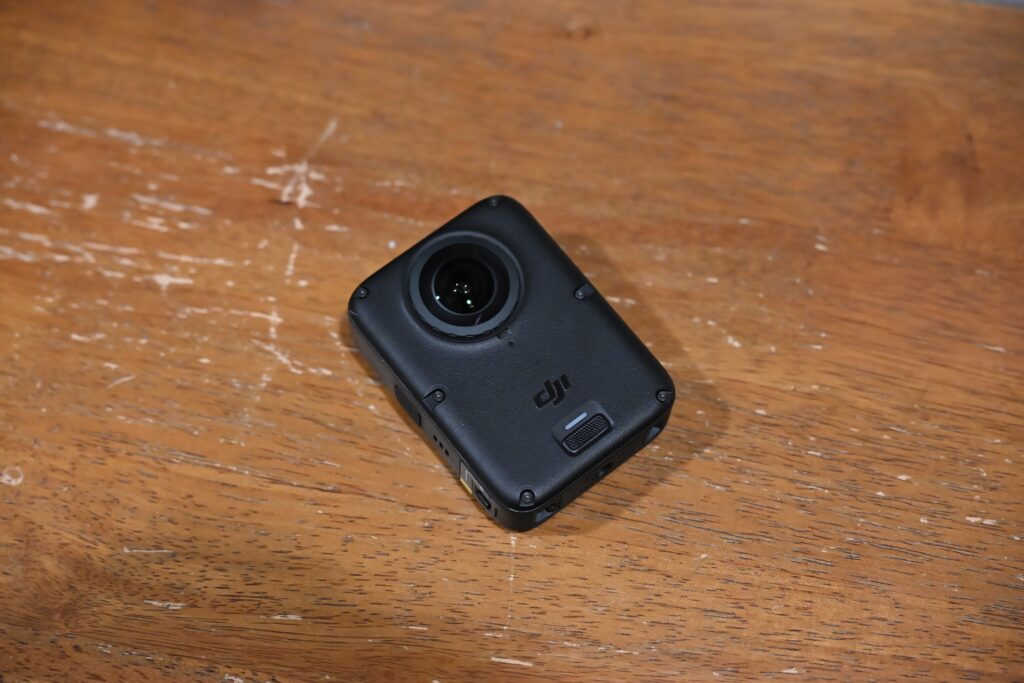
Thankfully, DJI provides a solution for situations where you already know what you want to film. Switch to Single-Lens Action Mode and the camera records a conventional 4K/60fps image from one lens.
Now the sensor is no longer spreading its pixels around an entire virtual sphere, and the result is noticeably sharper. This makes the Osmo 360 II a more useful hybrid than you might initially expect.
Use 360 capture when the whole point is freedom of framing. Use single-lens mode when outright clarity matters more. It sounds obvious, but it solves one of the category’s biggest problems.
The Osmo 360 II also supports 4K spherical slow motion at 240fps. DJI Studio can push things further using AI frame interpolation, producing up to the equivalent of 64x panoramic slow motion.
At its most aggressive, the result resembles an enormously slowed cropped 8K sequence at an effective 480fps. It is partly computational wizardry, of course, but used selectively, it works. Water splashes, running, mountain-bike movement and similar sequences benefit most.
120MP stills are more useful than expected.
Photography is another area where the Osmo 360 II becomes more versatile. Its 120MP HDR 360 Photo mode produces images measuring 15520 x 7760 pixels. The advantage is not simply having a giant panoramic still, but rather what you can extract from it.
Shoot once, then crop several different conventional photographs from the same spherical image later. That is particularly useful when photographing unpredictable events or locations where you cannot easily return to reposition the camera.
DJI’s AI High-Precision Smart Stitching also improves seam handling, reducing misalignment and distortion when subjects cross the stitch boundary. No 360 stitch is completely invisible under all circumstances (as seen in the teddy bear above), but the system is becoming increasingly convincing.
There is also a 16K 360 Timelapse mode. That resolution sounds excessive until you remember that reframing throws away a large proportion of a spherical image.
The extra detail gives you significantly more room to reposition the virtual camera after the fact. There is even a dedicated Clouds mode, which makes sense given how well panoramic capture suits moving skies and landscape sequences.
It is a niche feature. But if you use it, you will probably be glad the resolution is there.
Low-light performance is better than it has any right to be.
DJI has improved night performance with SuperNight 2.0, which uses an updated AI noise-reduction algorithm to clean up high-ISO footage more aggressively.
There is still a limit, as obviously this is not a full-frame mirrorless camera wearing a novelty hat. But, the Osmo 360 II handles evening streets, shaded environments and darker outdoor scenes more convincingly than I expected. For a camera primarily intended for action and travel, that broader usability is welcome.
Internal Storage is a huge blessing.
The Osmo 360 II includes 105GB of high-speed internal storage, and this is one of my favourite features. Memory cards are easy to forget, easy to lose, and increasingly expensive.
Having substantial internal storage means the camera remains functional even if you arrive somewhere and realise the microSD card is still inside your computer.
File transfers are handled through USB 3.1 or Wi-Fi 6, which is important because 8K 360 files become enormous very quickly.
Storage is not exciting. Running out of it is.
Built-in audio is good enough, but external mics make more sense.
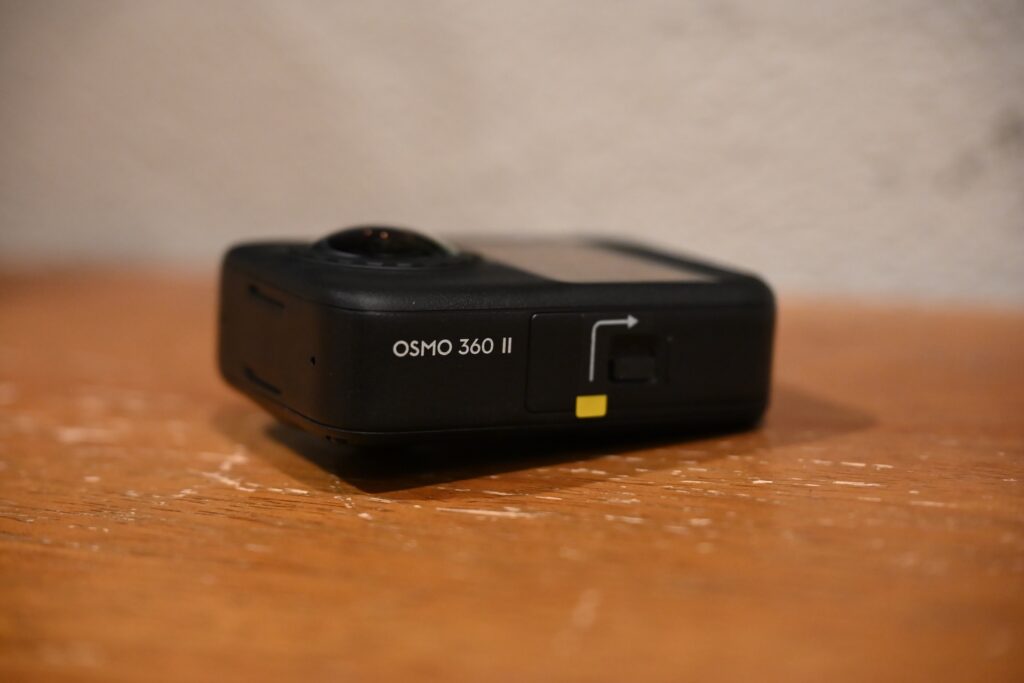
The Osmo 360 II uses a four-microphone array with built-in wind-noise reduction.
For casual recording, the audio is decent. But if image quality is already being compromised through reframing, I am not sure anyone should expect the built-in microphones to suddenly provide studio-quality sound.
More importantly, DJI’s OsmoAudio ecosystem allows direct wireless microphone connections without an external receiver. Compatible models include the DJI Mic 3, Mic 2, Mic Mini 2S, Mic Mini 2 and original Mic Mini.
Dual-channel recording is supported, which is particularly useful for interviews or two-person adventure content because it keeps the rig simple. Just plonk the camera in the centre, hit record, and away you go.
Battery life is decent, and the ecosystem helps.
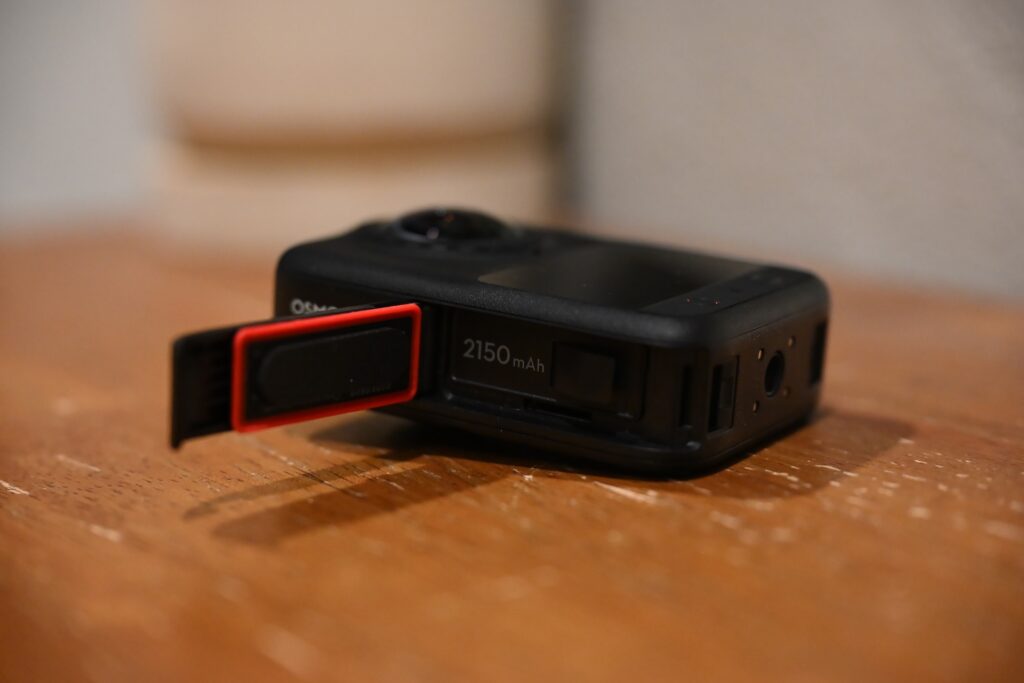
Power comes from a 2,150mAh removable battery shared with the wider Osmo Action family. DJI quotes around 100 minutes of continuous 8K/30fps recording.
Fast charging reaches 80 per cent in approximately 22 minutes. For longer days, the optional Battery Extension Rod adds around 180 minutes of additional runtime.
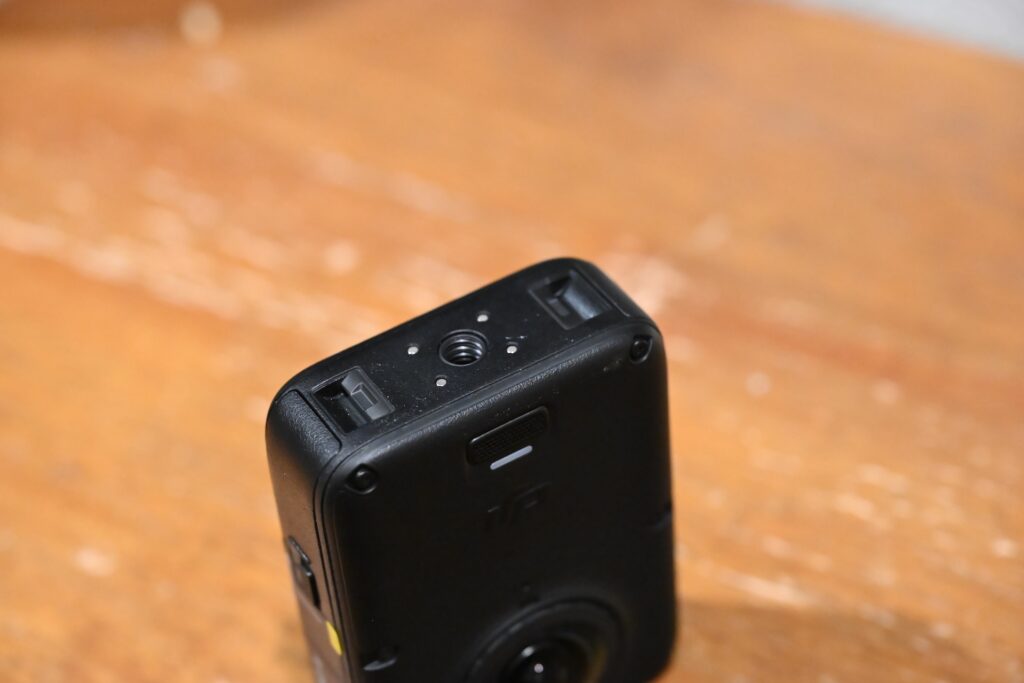
The Osmo 360 II uses DJI’s dual-direction quick-release system alongside a standard quarter-inch thread and magnetic attachment points. If you already own recent Osmo Action equipment, there is a good chance much of it will continue working.
That reduces both clutter and expense. Always appreciated.
Editing remains the elephant in the room.
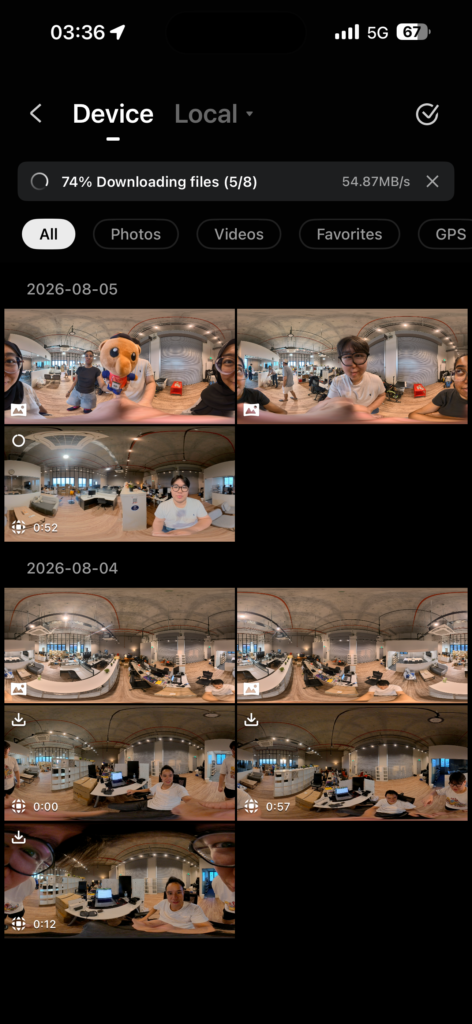
And now we arrive at the problem every 360 camera still carries around with it: editing.
DJI has made meaningful improvements, where 360 Editing 2.0 tools can analyse footage and automatically select angles, making it easier to produce a conventional reframed video. There is also an AI One-Tap Edit function for quick social-media turnarounds.
For simple clips, these tools work well enough, but longer edits remain labour-intensive. The camera records 8K footage at bitrates around 220Mbps, which means desktop editing requires reasonably serious hardware.
A modern Apple Silicon Mac or PC with a capable dedicated GPU is advisable if you want smooth playback, colour grading and tolerable export times. There is no way around the sheer volume of information being processed.
And then there is keyframing. Reframing a 360 clip once is simple, boing it repeatedly across a long timeline quickly becomes tedious.
This is the strange middle ground where 360 video currently sits. It is technically friendly enough for amateurs to use, but demanding enough that longer, polished edits still feel like professional work.
Price: Premium, but a price you can stomach.
The DJI Osmo 360 II Standard Combo is priced at SGD$699. The more comprehensive Adventure Combo rises to SGD$799.
DJI Care Refresh is also available, covering accidental, collision and water damage with replacement options under one- or two-year plans.
At this price, the Osmo 360 II is not merely competing against other 360 cameras, but competing against DJI’s other cameras.
The Osmo Action 6 offers excellent conventional action-camera performance. The Osmo Pocket 4 brings genuine mechanical stabilisation, ActiveTrack and sharper true-4K footage. Move further up to the Pocket 4P and you gain even stronger dynamic range and considerably more conventional filmmaking flexibility.
Do you want the best possible image of the shot you deliberately composed, or do you want to capture everything and decide what the shot should have been afterwards?
The Osmo 360 II is built entirely around the latter.
Verdict: freedom first, fidelity second.
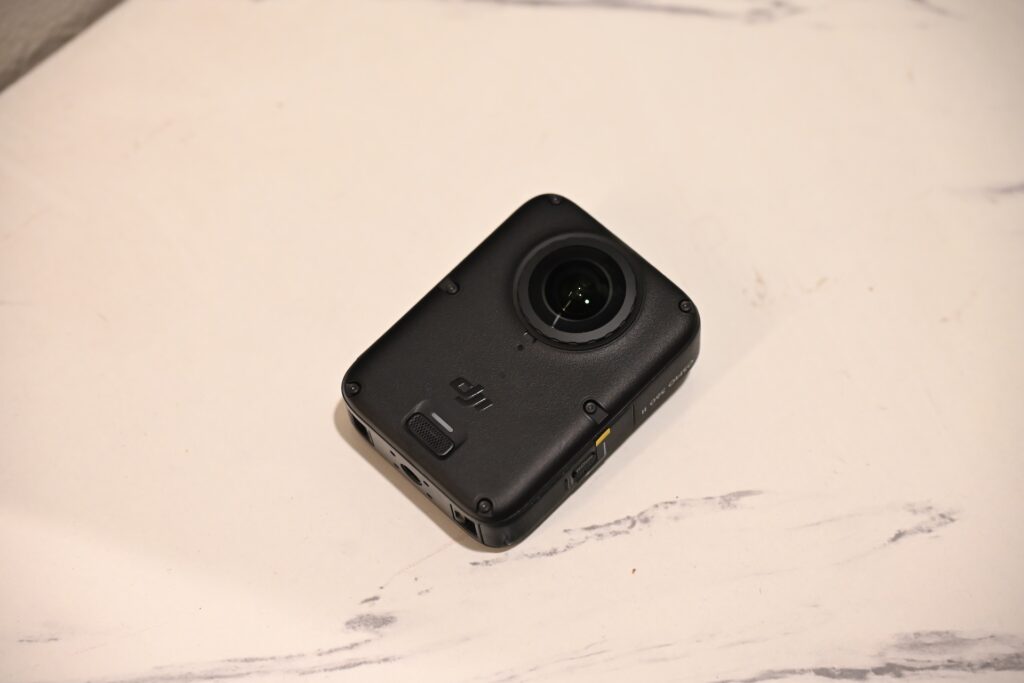
The DJI Osmo 360 II is probably the first 360-degree camera that has made me properly appreciate the category.
Not because it suddenly beats a conventional camera at image quality. What it does extraordinarily well is remove the burden of filming while you are trying to experience something.
Concentrate on what you are actually doing rather than whether the camera happens to be pointing five degrees too far to the left, then decide later what the audience should see. That freedom is the Osmo 360 II’s greatest strength.
So should you buy one?
If you enjoy composing every shot, probably not. If you want to capture the entire experience without constantly thinking like a camera operator, absolutely consider it.
The Osmo 360 II does not make the best-looking footage DJI can produce, but it does something arguably more valuable for the right person.
It lets you forget about filming for a while.
Liked this? Check out more articles on Futr tech here.