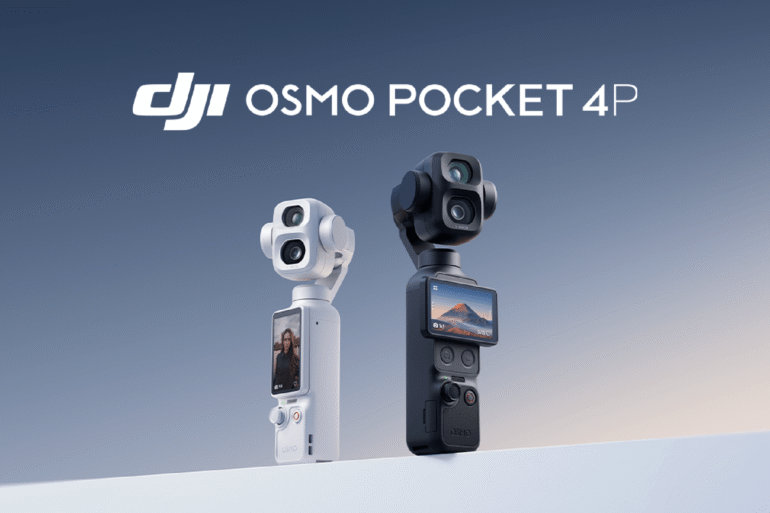
The Osmo Pocket 3 showed just how capable a pocket-sized gimbal camera could be. The Pocket 4 refined that formula. Now, with a second 60mm camera, improved tracking, stronger battery life and an unexpectedly useful remote controller, the DJI Osmo Pocket 4P takes the concept considerably further.
Content creation cameras have spent the past few years converging on the same destination.
Action cameras have become increasingly sophisticated. Mirrorless cameras have shrunk while becoming more powerful. Smartphones continue to nibble away at traditional camera territory with increasingly convincing stabilisation and computational imaging.
In 2026, however, the battle feels more concentrated than ever. Everyone appears to be chasing the same prize: the perfect camera for the modern creator. And few companies have pursued that goal as relentlessly as DJI.
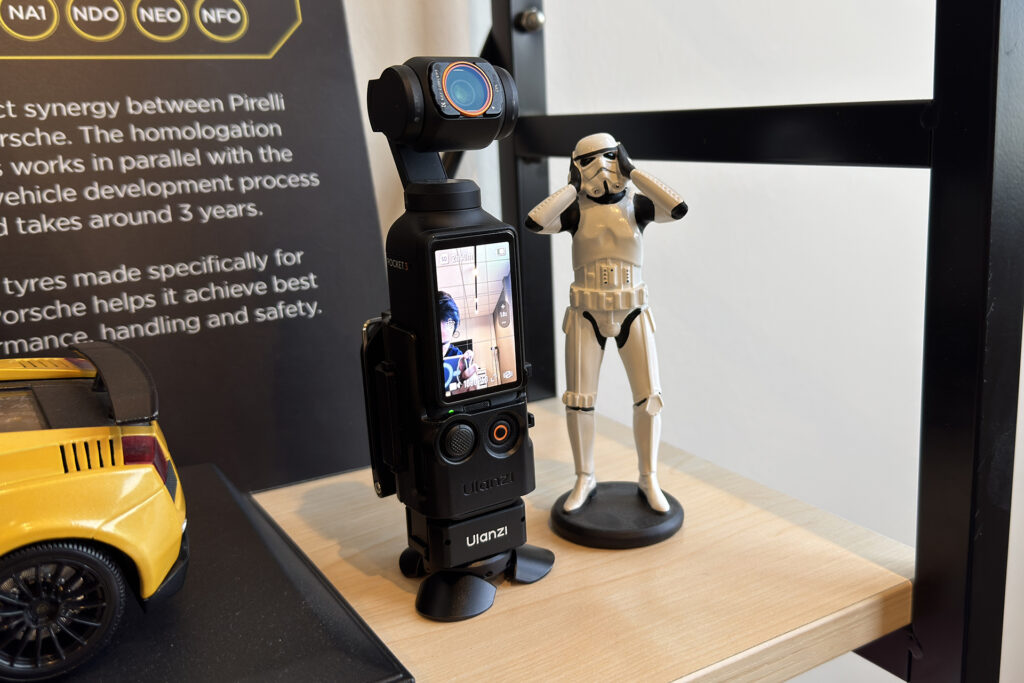
Three years ago, DJI released what would become one of the most influential cameras in this space. The Osmo Pocket 3 combined a 1-inch sensor, three-axis mechanical gimbal and remarkably simple interface into something small enough to disappear into a jacket pocket.
Landscape photography trip? Bring it.
YouTube shoot? Bring it.
Behind-the-scenes footage? Bring it.
It was the photographic equivalent of a Swiss Army knife: not necessarily the most specialised tool in the drawer, but probably the one you would reach for most often.
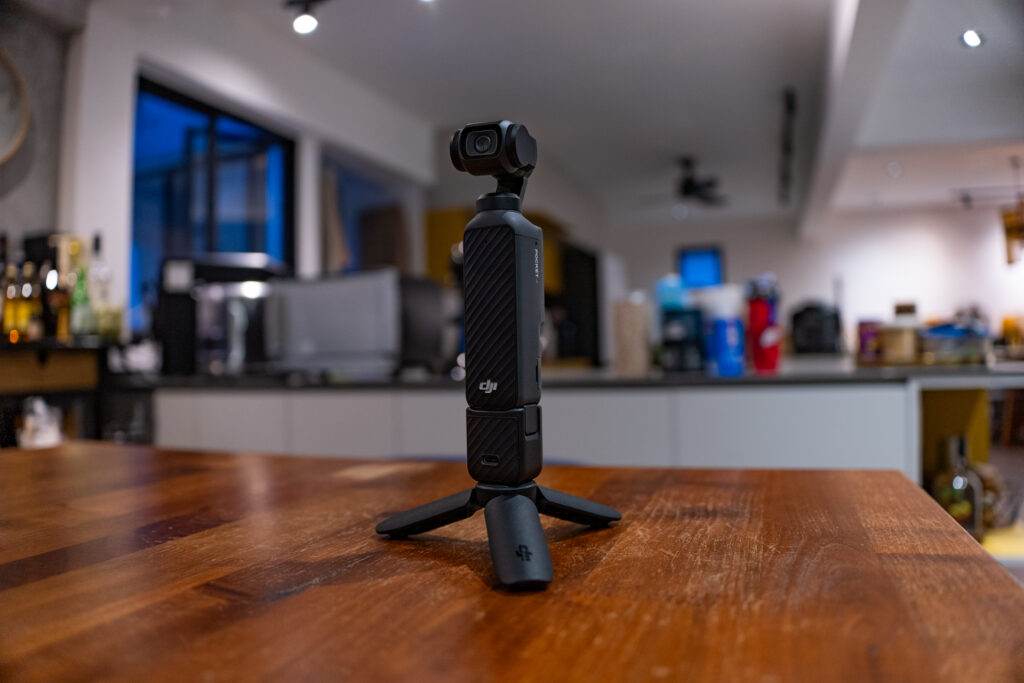
Fast-forward to 2026, and DJI has produced not one successor, but two.
The Osmo Pocket 4 arrived first, bringing worthwhile improvements to battery life, tracking, dynamic range and slow motion. Then came the considerably more ambitious Osmo Pocket 4P, or Pocket 4 Pro as many have already taken to calling it.
I spent several weeks with the Pocket 4P before launch, and what became apparent fairly quickly was this: the most important improvement is not simply better image quality. It is flexibility.
Familiar on the outside, rather different underneath
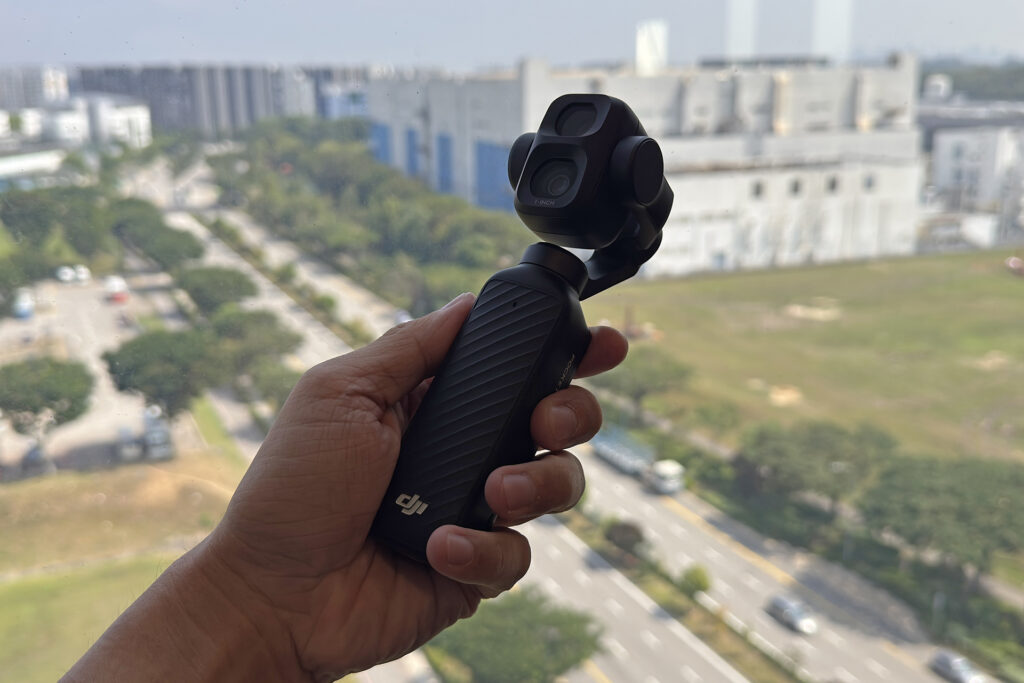
Pick up the Pocket 4P after using a Pocket 3 or Pocket 4 and there is very little culture shock.
The touchscreen remains responsive, DJI’s menu layout is straightforward, and the general shooting experience feels reassuringly familiar. This is evolution rather than reinvention, which is probably wise considering how intuitive the Pocket platform has already become.
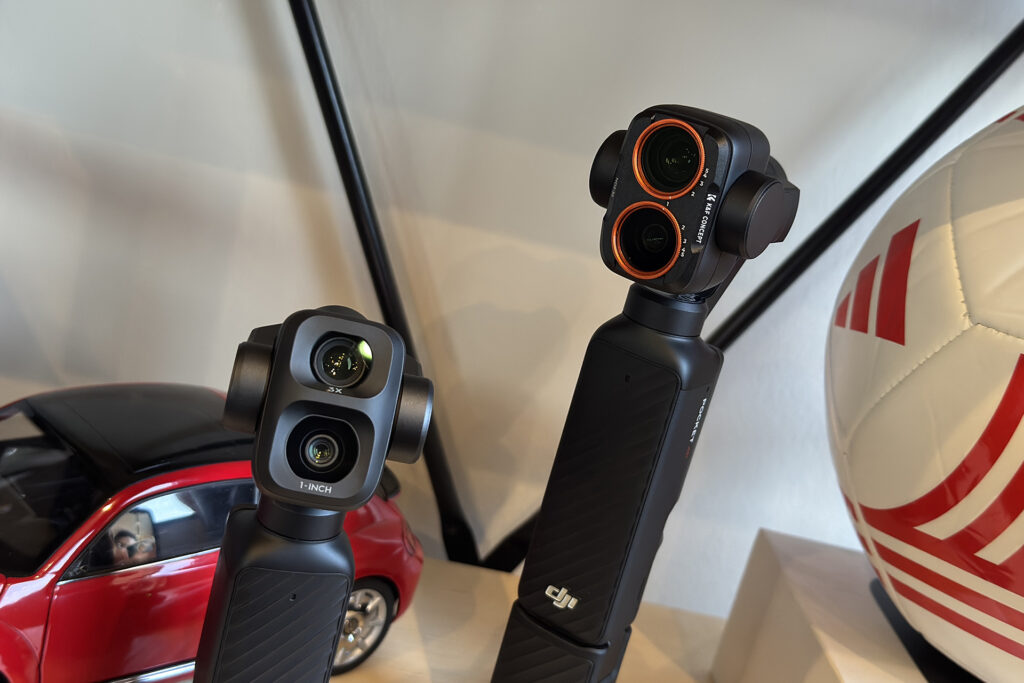
For the first time in the Pocket series, there are two dedicated lenses. The first is the familiar 20mm-equivalent wide-angle camera, while the second is a new 60mm-equivalent medium telephoto.
The Pocket series has traditionally been excellent at the wide-angle, hold-it-in-front-of-yourself style of filmmaking associated with travel and vlogging. What it has never been particularly suited to is compression, portrait work or more deliberate subject isolation.
The 60mm camera changes that dramatically. And once you have it, going back to a single focal length feels surprisingly restrictive.
Image quality: more room to work with
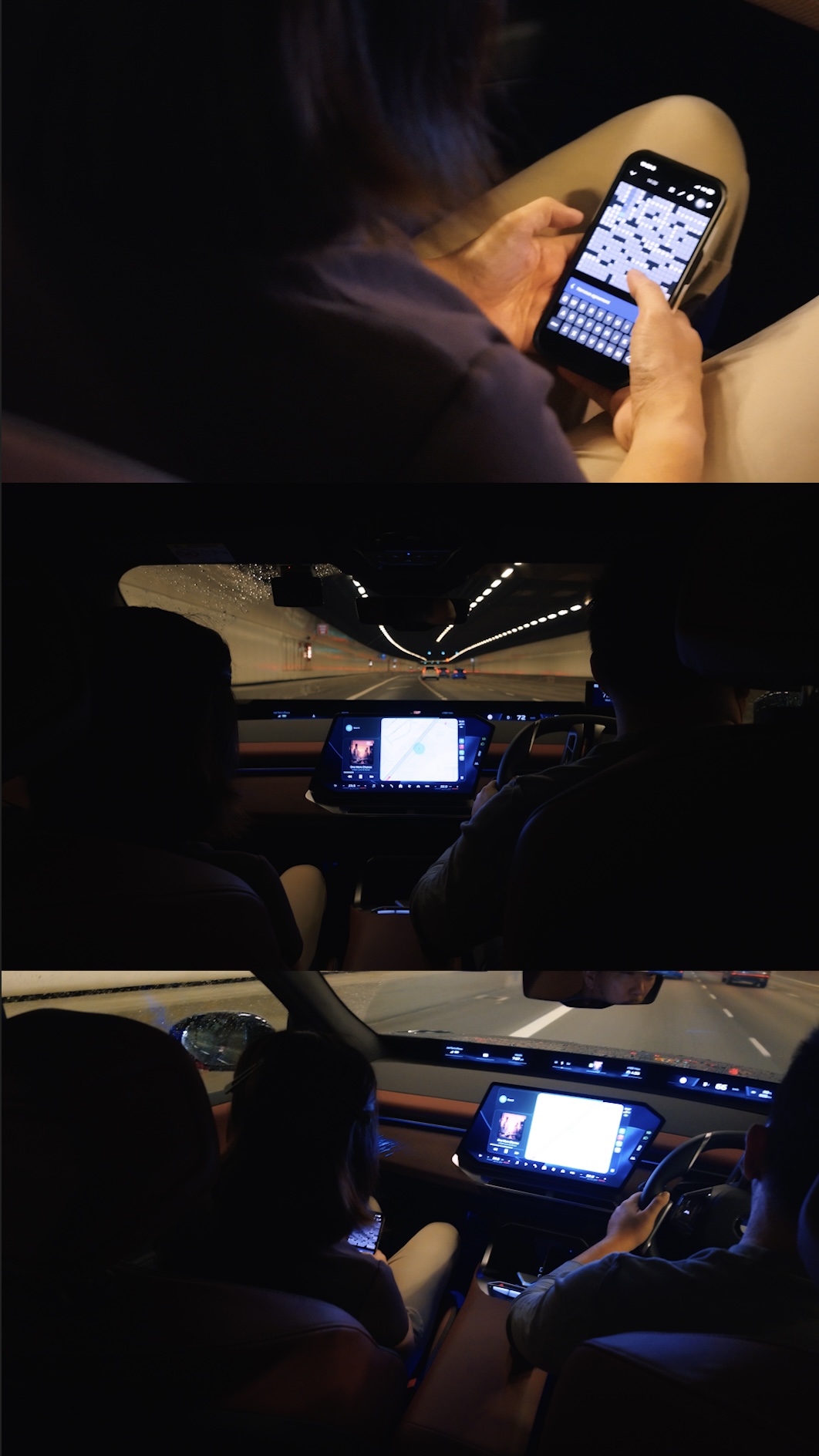
The Pocket 4P produces excellent footage from its primary 20mm camera.
Colours are well judged, detail is strong, and dynamic range has taken another step forward. DJI’s D-Log 2 profile offers considerably more latitude during colour grading, particularly when recovering bright skies or pulling detail out of darker areas.
DJI claims up to 17 stops of dynamic range, and the improvement becomes particularly apparent in difficult lighting conditions.
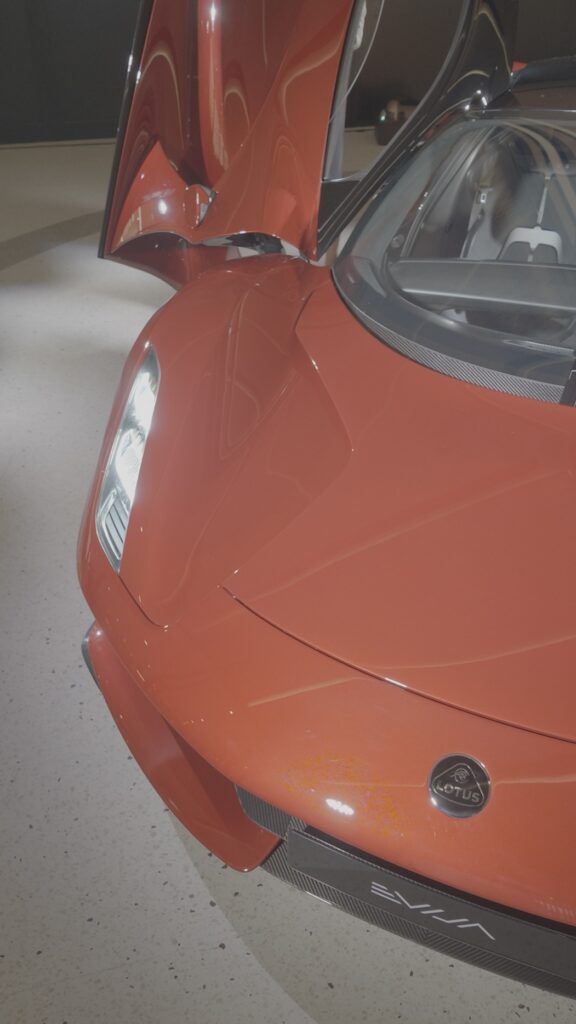
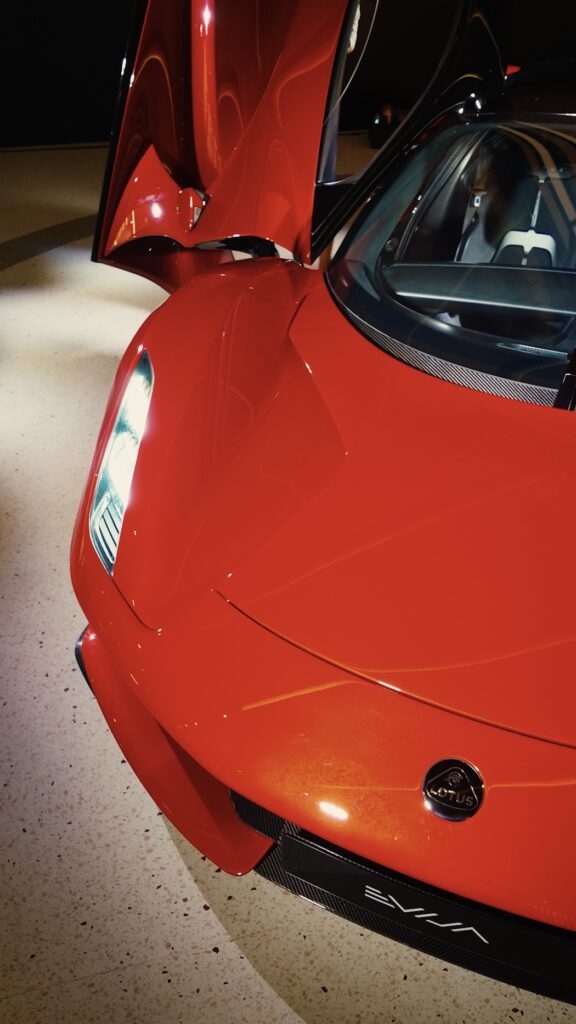
Sunrise and sunset are the obvious examples. These are scenes where cameras often have to choose between preserving a bright sky and retaining detail on the subject below. With D-Log 2, the Pocket 4P gives you considerably more room to negotiate that compromise in post-production.
The footage also responds well to more aggressive grading without immediately falling apart, which is precisely what creators who prefer working with log footage will want. DJI has additionally introduced false colour monitoring, a tool typically associated with considerably more specialised video cameras.
False colour essentially assigns different colours to brightness levels, making it easier to identify areas that are underexposed, properly exposed or approaching clipping. It is not especially glamorous, but for someone who regularly grades footage, it is genuinely useful.
More recently, DJI has added a 10-bit HDR profile through a software update, increasing the Pocket 4P’s versatility further. The same update also addressed an exposure shift that previously occurred when moving between the 1x and 3x cameras.
But D-Log 2 comes with a frustrating caveat
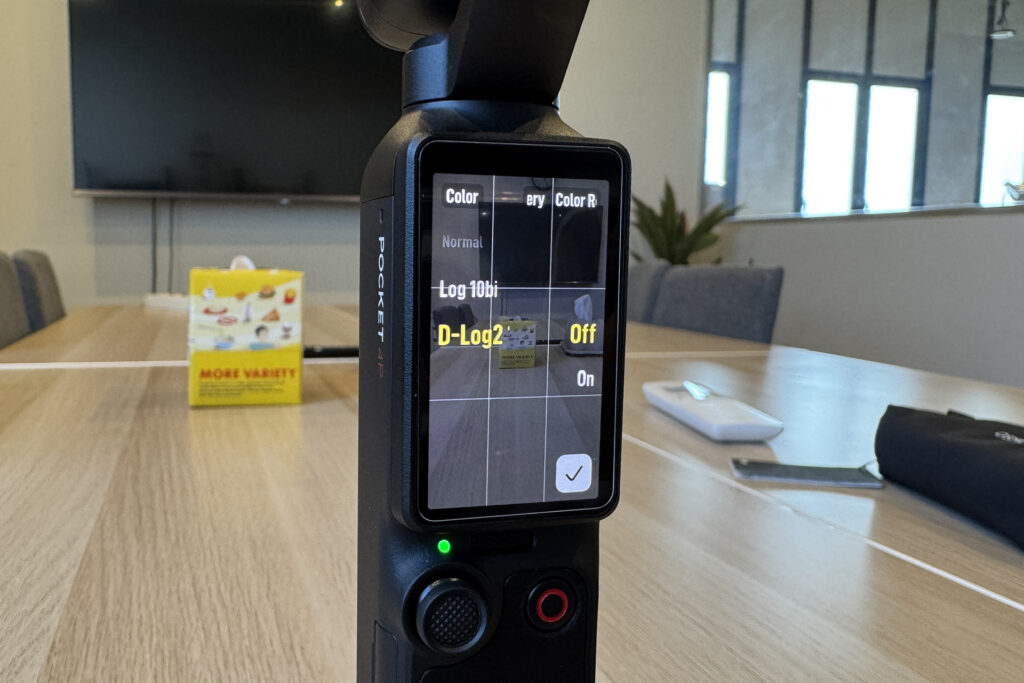
For all the Pocket 4P’s improvements, there is one decision I find difficult to understand. D-Log 2 is only available with the 1x camera.
That means the 60mm lens, the very feature that unlocks some of the Pocket 4P’s most interesting creative possibilities, cannot use DJI’s highest dynamic-range profile. You can still record in standard log with the telephoto camera, but switching requires a trip into the menus.
A more elegant solution would be for the camera to automatically transition from D-Log 2 to the appropriate standard log profile whenever the 60mm lens is selected. Hopefully this is something DJI can address through software.
Because as things stand, the camera gives you two excellent paintbrushes but insists one of them must use a different pot of paint.
The 60mm lens is the reason to buy this camera
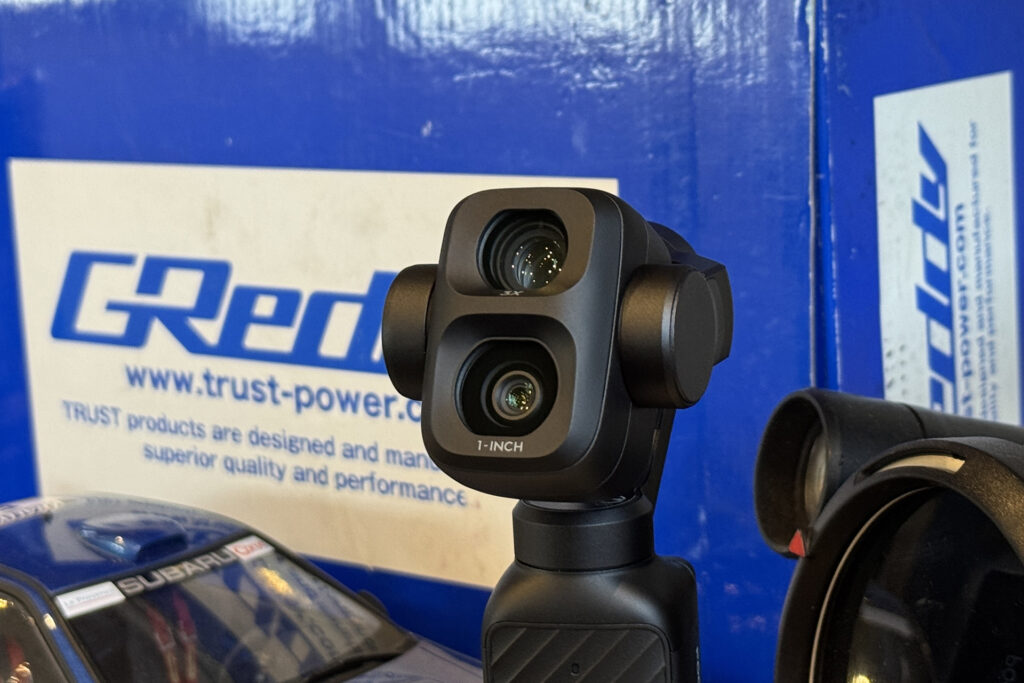
If there is one feature that defines the Pocket 4P, it is the new 60mm camera. Subjects are rendered with more flattering proportions, backgrounds appear more compressed, and there is considerably more visual separation between foreground and background.
Talking-head videos suddenly look less like traditional vlogging and more like something captured on a larger camera with a short telephoto lens. Portrait work benefits enormously too. The greater compression and shallower-looking depth of field give faces more prominence within the frame, while backgrounds become softer and less distracting.
During testing, the 60mm camera quickly became my preferred lens whenever I was filming another person. It simply looks more deliberate. The 20mm lens tells you where someone is. The 60mm lens tells you who they are.
Zoom: from practical to slightly ridiculous
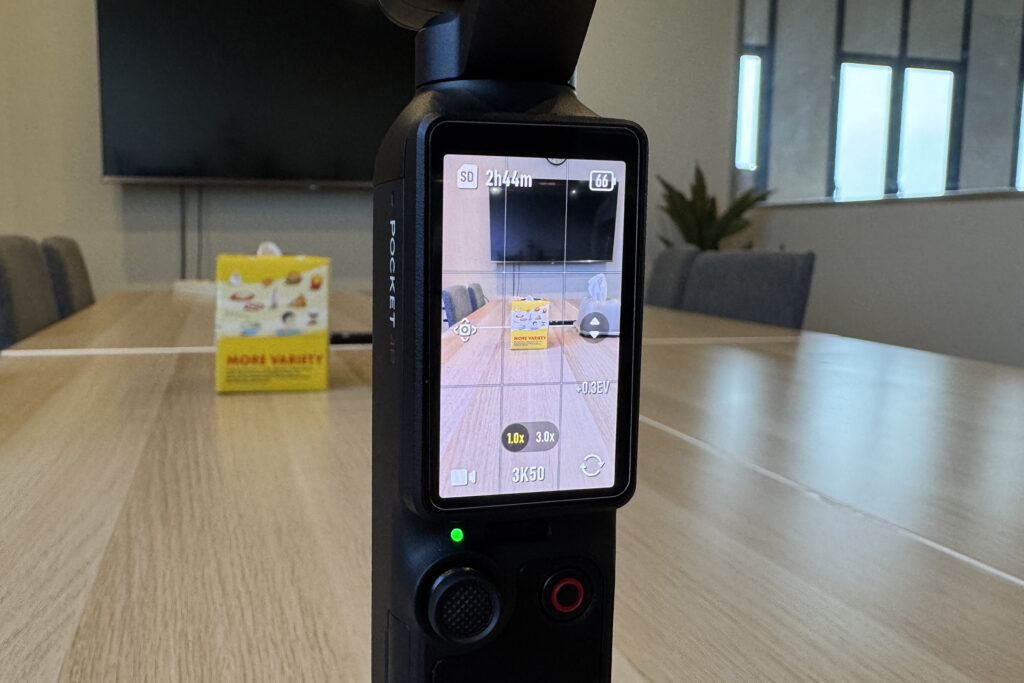
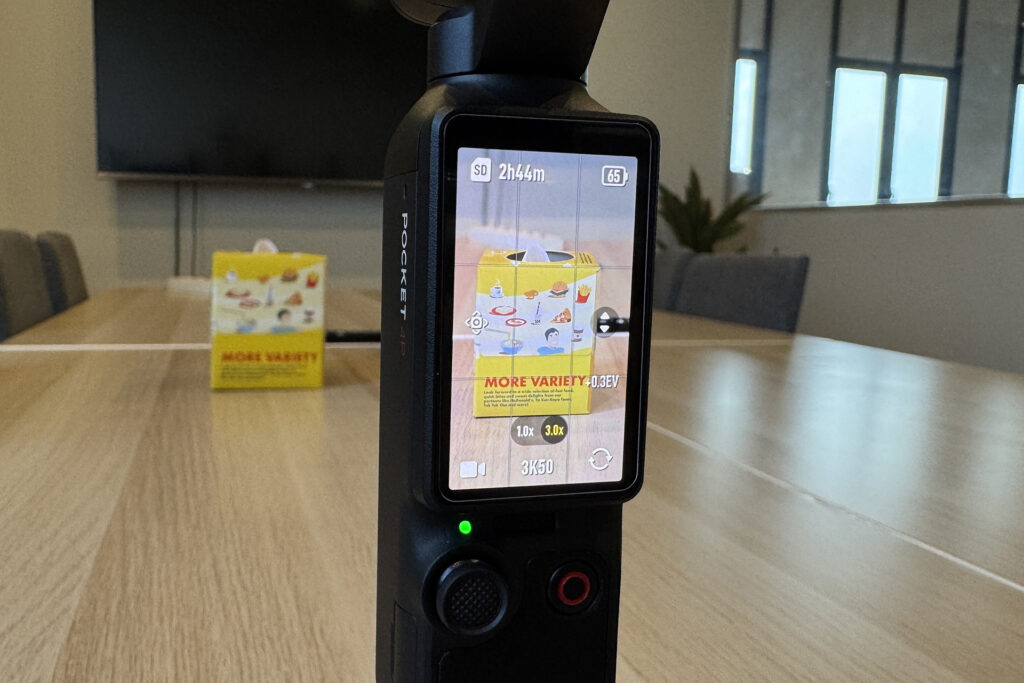
The Pocket 4P also introduces a much more flexible zoom system. A single press of the dedicated zoom button switches directly to the 3x camera. Double-press it, and you move to a claimed 6x lossless zoom. Hold the control, and you can continue all the way from 1x to 12x.
The 6x setting is surprisingly convincing, although I would hesitate to call any digitally assisted zoom entirely “lossless” without qualification. Still, the results hold up impressively well.
Even the 12x digital zoom can remain useful for social media or viewing on smaller screens. Put the same footage onto a large monitor, and the reduction in detail becomes much more obvious, but that is hardly surprising given the amount of cropping involved.
The important thing is that the zoom range changes how you can use the Pocket 4P. A Pocket camera used to encourage you to move closer. This one can finally let you stay where you are.
Frame Tap: the accessory I did not expect to use so much
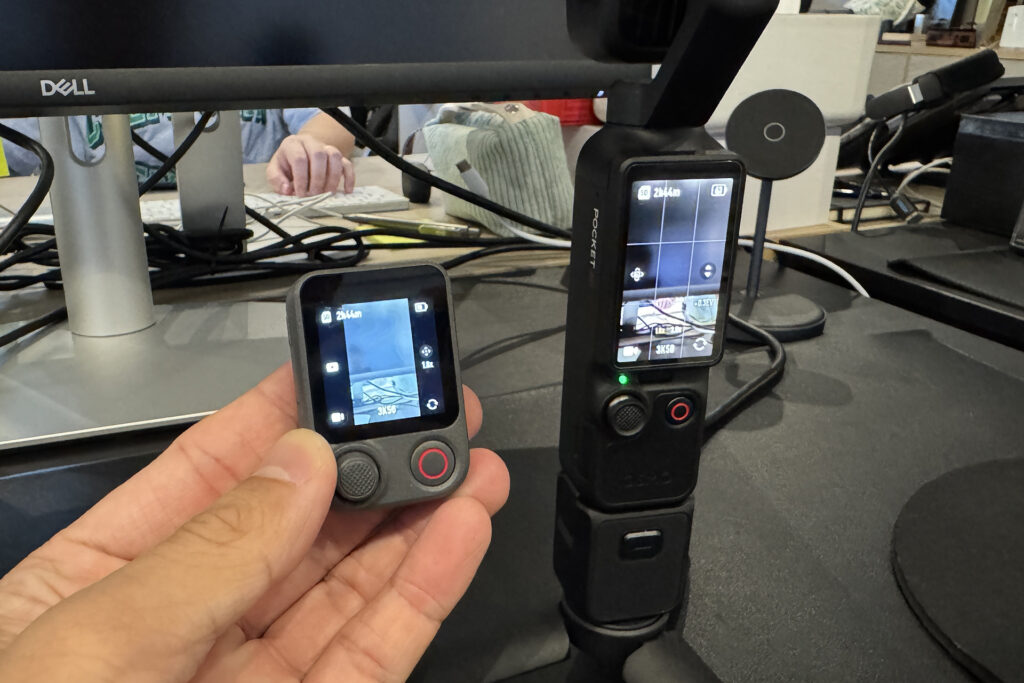
Every new camera seems to arrive with one feature that looks mildly interesting during the announcement and then becomes indispensable in real life. With the Pocket 4P, that feature is Frame Tap.
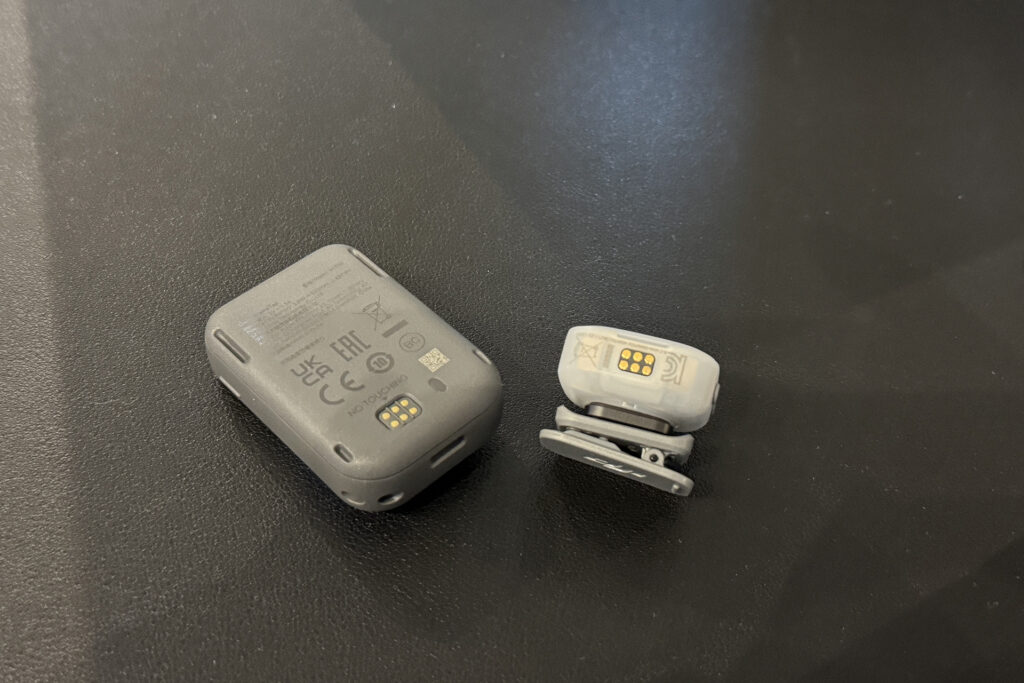
It effectively acts as a remote control and monitoring unit, allowing you to check framing, control the gimbal, activate ActiveTrack and adjust zoom from a distance.
During testing, I was comfortably using it at distances approaching 30 metres. There were several shots I attempted during testing that I simply would not have bothered with previously. I could position the Pocket 4P on a beach, beside a path or close to a cliff edge, walk away, and then adjust framing or tracking remotely.
Instead of repeatedly running back to the camera to reposition it, I could operate it from where I intended to stand. It genuinely begins to feel like having a second camera operator. A very small one, admittedly.
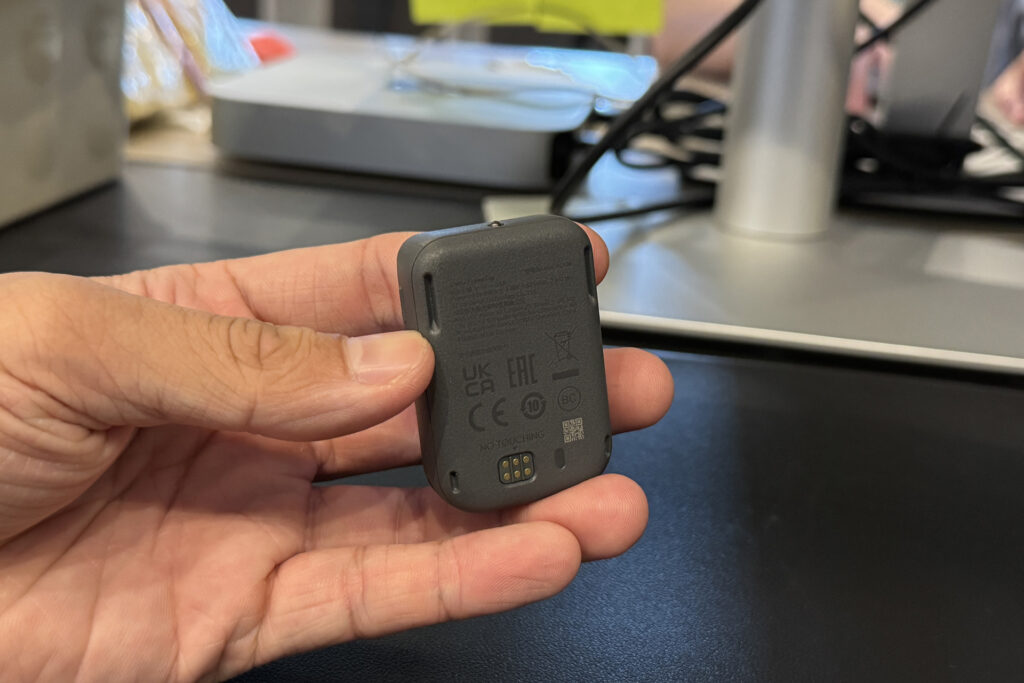
My only complaint is physical rather than functional. There is no particularly elegant way to attach Frame Tap directly to the camera when it is not in use, which means it becomes yet another small piece of equipment with ambitions of disappearing into the depths of a camera bag.
A mounting solution would have been welcome.
ActiveTrack 8.0: impressively capable, with one odd weakness
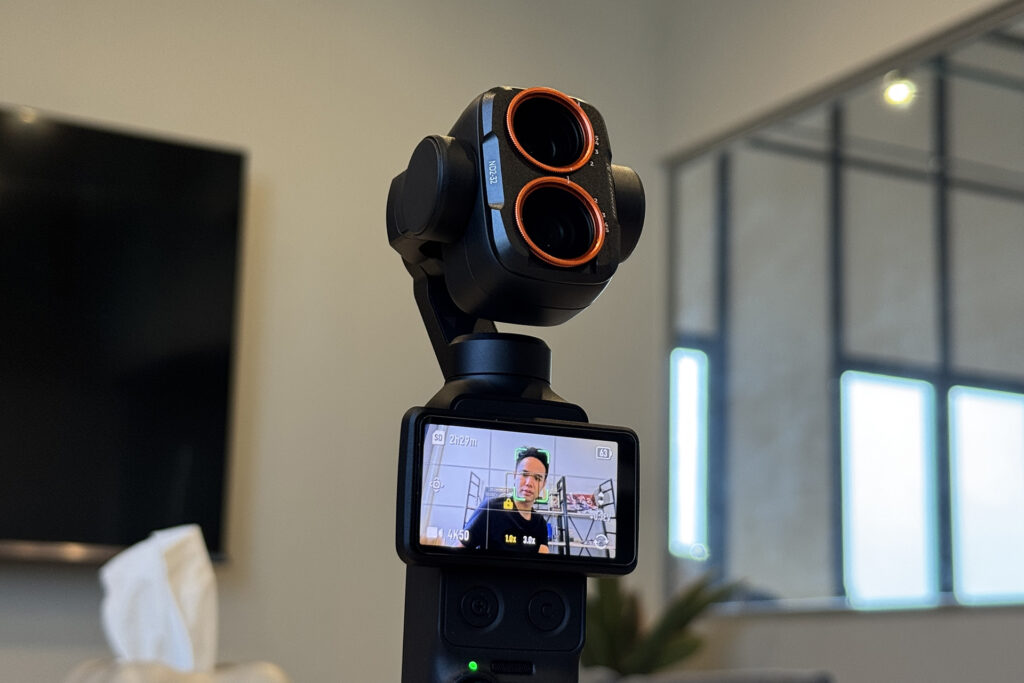
DJI’s tracking systems have become steadily more sophisticated, and ActiveTrack 8.0 is the most capable version I have used so far.
Tracking remains smooth across the Pocket 4P’s considerable zoom range, from 1x all the way through to 12x. The camera can rapidly identify faces, placing a tracking box around them, while a press of the 5D control activates face tracking.
Whether I was walking towards the camera, moving laterally or filming myself, the system generally maintained a confident lock. This remains one of the Pocket platform’s strongest qualities for solo creators.
Curiously, however, ActiveTrack 8.0 sometimes seems slightly less eager to reacquire a subject after completely losing it than ActiveTrack 7.0 on the standard Pocket 4. That is unexpected considering the newer designation. Again, it feels like something software could resolve.
Stabilisation remains the Pocket’s secret weapon
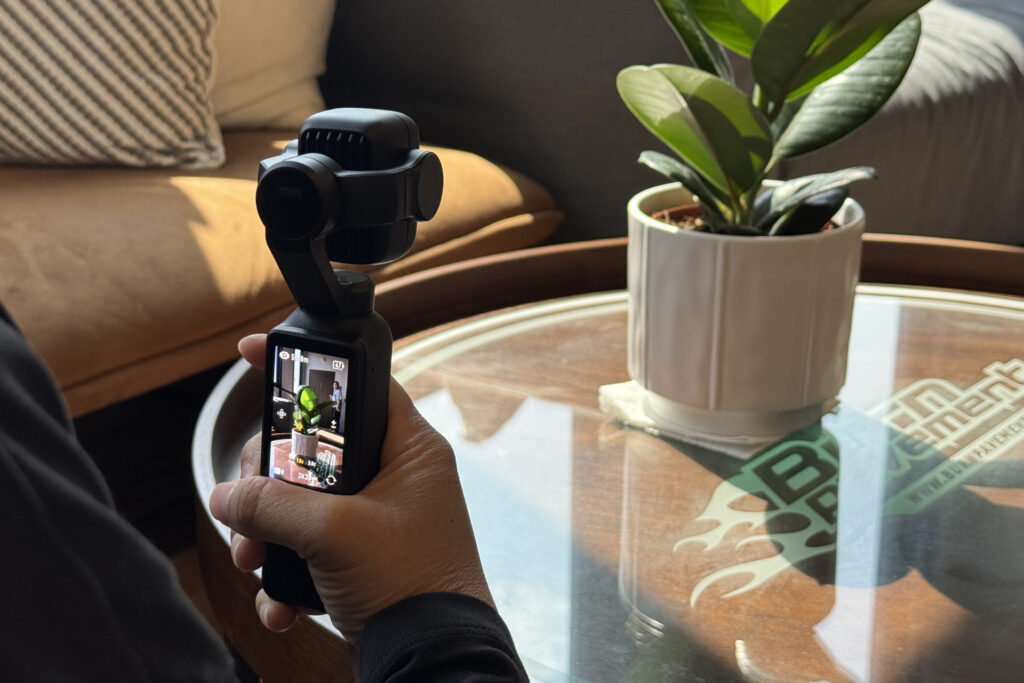
Mechanical stabilisation has always been the Pocket series’ greatest advantage over smartphones and conventional compact cameras, and that remains true here.
The Pocket 4P’s three-axis mechanical gimbal produces movements that feel natural rather than digitally corrected. Walking shots glide, panning feels controlled, and slow movements retain the deliberate character you expect from a physical stabiliser.
4K at 240fps: slow motion with purpose
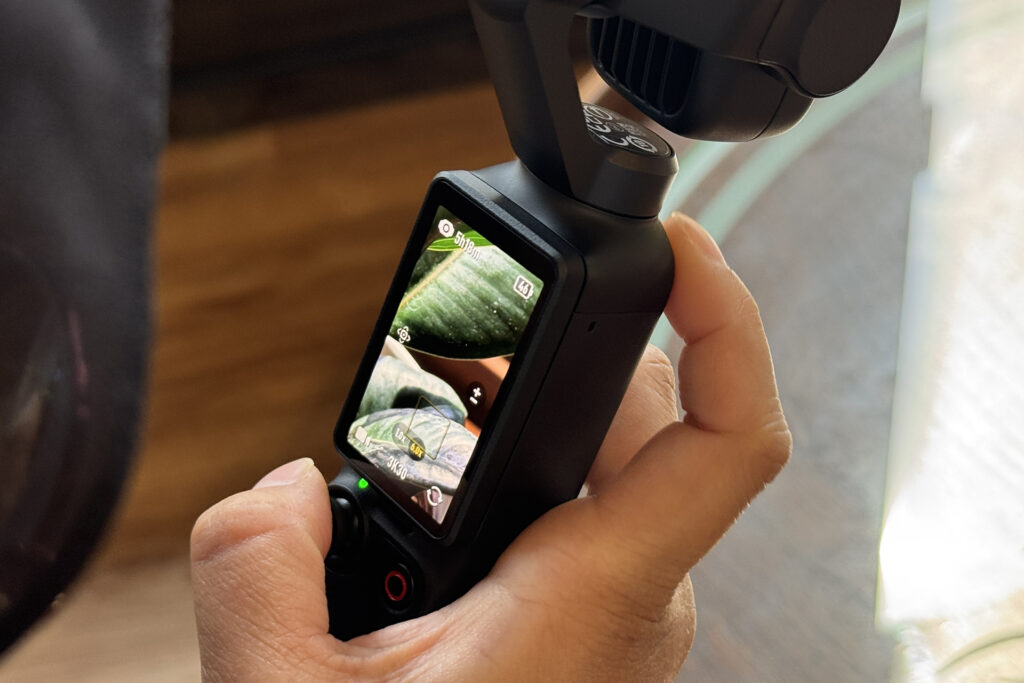
Another highlight is 4K recording at up to 240fps. Used sparingly, it looks excellent.
Water, fabric, hair movement, vehicles and action sequences suddenly acquire a sense of drama that standard frame rates cannot replicate. And importantly, shooting slow motion in 4K leaves considerably more room for reframing or cropping afterwards.
There is, however, another limitation here. The higher frame-rate modes (120fps, 200fps and 240fps) do not support log recording.
For casual slow motion this is unlikely to matter. For productions where colour consistency across multiple cameras and frame rates matters, it becomes more inconvenient.
Audio: already excellent, and better within DJI’s ecosystem
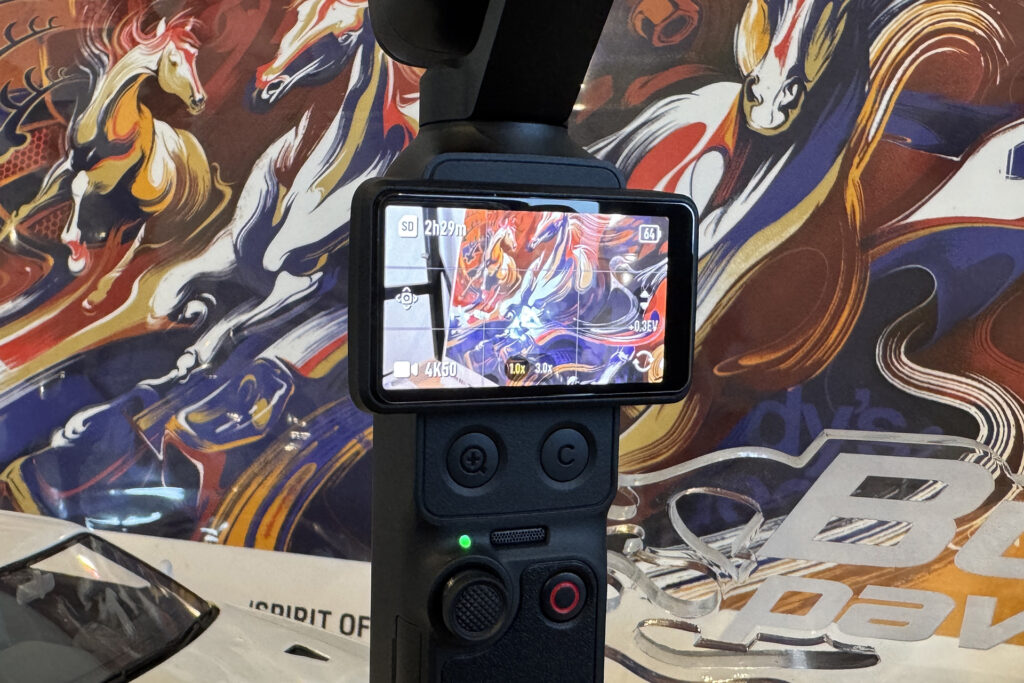
The Pocket 4P contains three built-in microphones, and audio quality remains excellent for a camera of this size. DJI also provides redundant AAC audio recording, creating an additional backup file. It is one of those features you may use for months without thinking about.
Then one day something goes wrong, your primary audio becomes unusable, and suddenly it feels like the cleverest idea anyone has ever had.
The Vlog Combo also includes a DJI Mic Mini 2, which integrates neatly into DJI’s wider OsmoAudio ecosystem. The Mic Mini 2 itself does not include internal recording, but for straightforward presenter work it provides a simple and effective wireless solution without cluttering the camera.
Battery life: more stamina, more heat
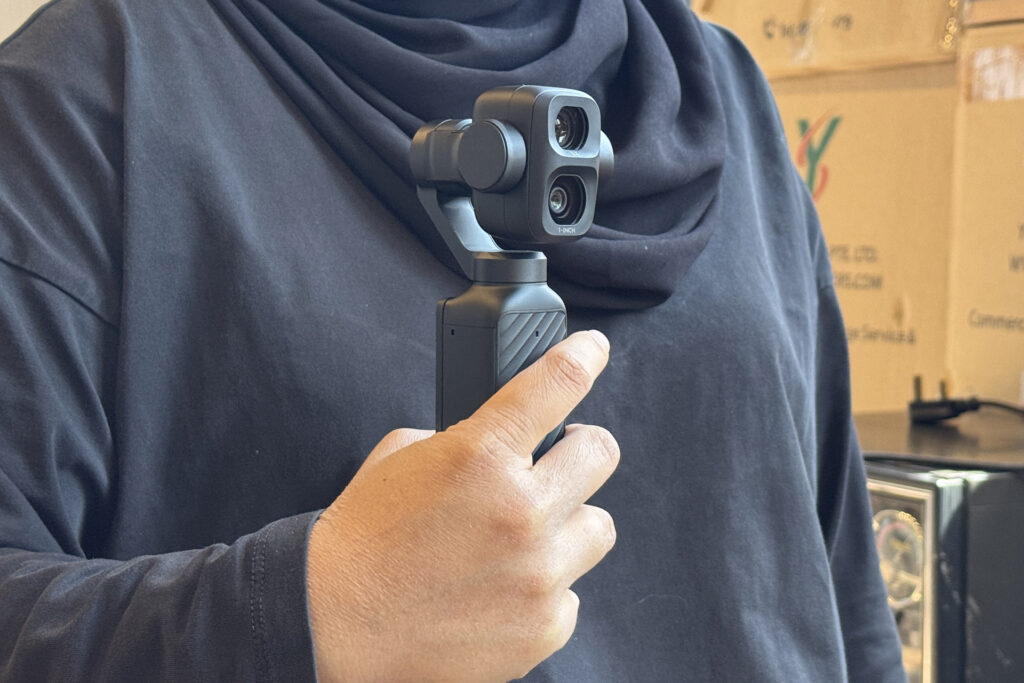
The Pocket 4P moves from the Pocket 3’s 1,300mAh battery to 1,545mAh, giving noticeably longer recording times. That improvement is welcome because a camera this easy to carry tends to get used far more often than expected.
Existing Pocket 3 owners also receive some good news: the battery extension grip remains compatible. Besides increasing endurance further, the grip also improves the physical balance of the Pocket 4P, which has become somewhat more top-heavy because of its dual-camera arrangement.
During extended recording and charging, I did notice the camera becoming fairly warm. It never produced an overheating warning or suffered any obvious performance degradation, but the heat was noticeable enough to mention.
Internal storage: one less thing to forget
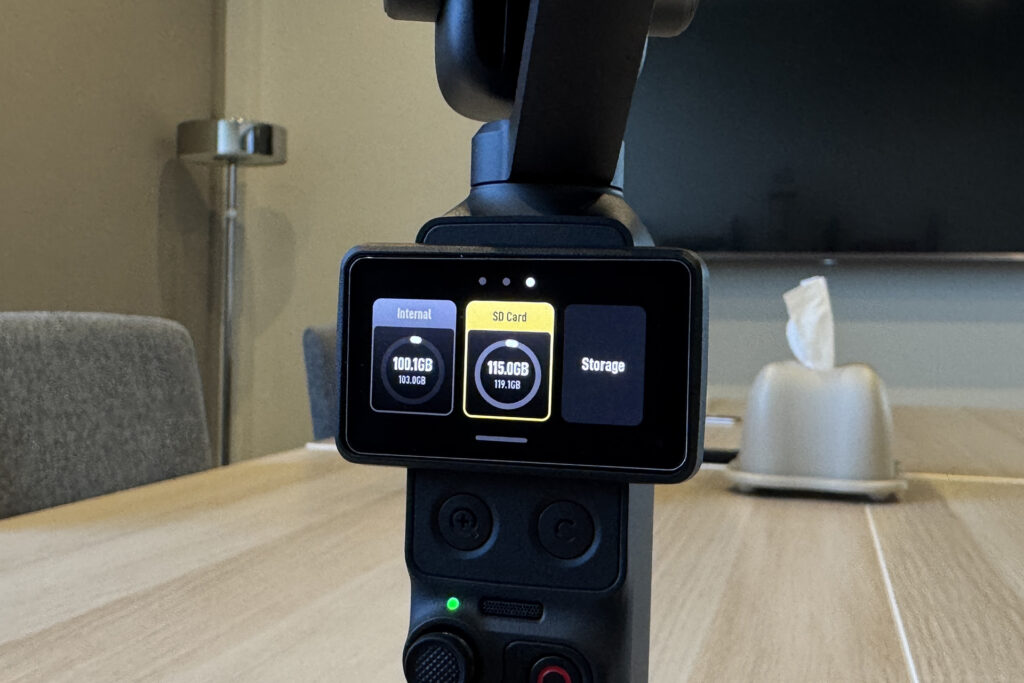
The Pocket 4P includes internal storage, which sounds like a footnote until the day you arrive somewhere without a memory card.
Anyone who has used cameras long enough has done it. You have batteries. You have lenses. You have microphones. You have three different charging cables for reasons nobody can explain… and the SD card is sitting peacefully inside your laptop at home.
Internal storage does not replace removable media for longer shoots, but it does mean forgetting a card is no longer the immediate end of the production day. That peace of mind is worth having.
A few things still need work
No camera is perfect, and the Pocket 4P certainly has areas where DJI could improve.
The D-Log 2 restriction to the 1x camera remains the biggest frustration. Having two lenses but inconsistent profile support complicates both shooting and post-production.
High frame rates also lack log recording, while the dedicated low-light mode is available only at certain focal lengths. Vertical video remains limited to 3K, which feels slightly strange in a product designed so heavily around modern social content.
Protection is another concern. I would have liked DJI to include a more substantial gimbal or camera protector. The everyday pouch is useful, but it does not provide the same reassurance as the gimbal clamp supplied with the Pocket 4 or the hard case that accompanied the Pocket 3. A delicate dual-camera gimbal is precisely the sort of thing I would rather not discover bouncing around unprotected at the bottom of my bag.
Still photography remains another missed opportunity. The Pocket 4P can record RAW files, yet usable manual photographic controls remain limited. More direct control would make its still-image capability substantially more interesting.
Lens filter changes could also be more elegant. A magnetic system would have made filters faster to swap and easier to stack.
And finally, DJI continues to use proprietary charging arrangements for accessories such as the Mic Mini 2 and Frame Tap. In a world increasingly standardised around USB-C, that feels unnecessarily fussy.
Is this finally the upgrade?
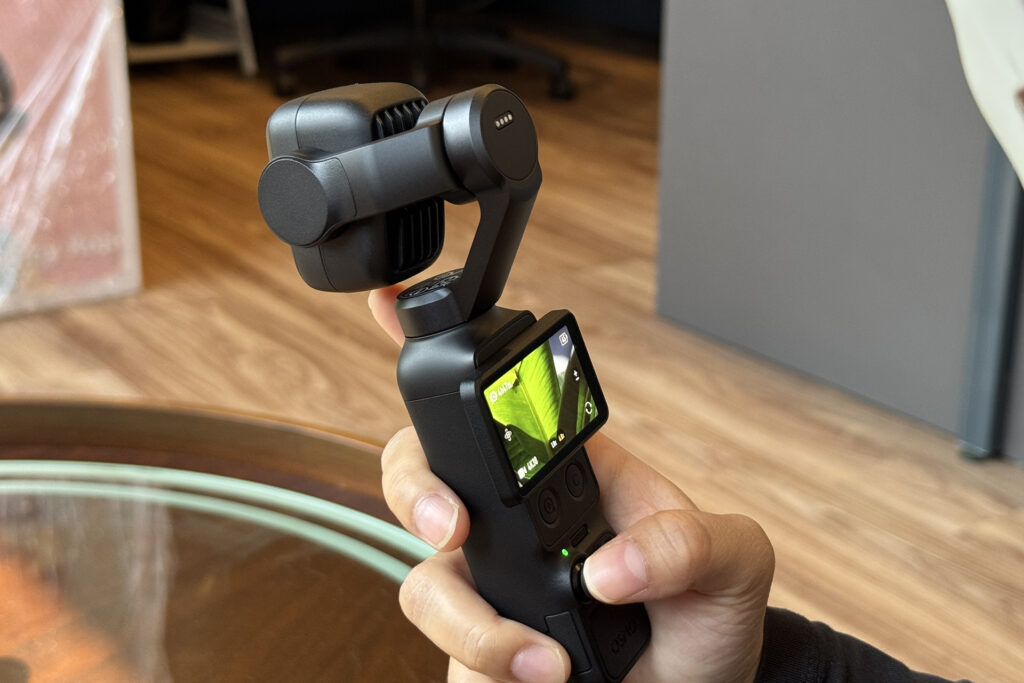
The DJI Osmo Pocket 3 remains an excellent camera. If you use yours primarily for family videos, casual travel clips or straightforward vlogging, there is no urgent reason to replace it. Image quality remains strong, stabilisation remains excellent, and the basic user experience is still remarkably good.
But if content creation forms a meaningful part of your work, the Pocket 4P finally presents a convincing argument.
- The 60mm camera fundamentally expands how the Pocket can compose a scene. Frame Tap allows shots that previously required another person.
- ActiveTrack 8.0 gives solo operators greater confidence.
- D-Log 2 brings more post-production latitude.
- 4K/240fps expands creative options.
- Internal storage adds reassurance.
Taken individually, each is an incremental improvement. Together, they change the type of work the camera can reasonably attempt.
Verdict: the Pocket finally becomes a system
After several weeks with the DJI Osmo Pocket 4P, what stands out is not any single specification, but rather how complete the package has become.
Casual users will appreciate how easy it remains to operate. Travel vloggers gain one of the most flexible camera systems available in such a small package. Full-time creators benefit from improved imaging, tracking and focal-length flexibility. And filmmakers may find it useful as either a lightweight secondary camera or even an A-camera when carrying a larger setup simply makes no sense.
It is not going to replace a full-frame cinema rig on every production. The entire point is that it can deliver an extraordinarily high percentage of that capability while occupying roughly the same amount of bag space as a television remote.
Three years ago, DJI proved a serious content-creation camera could fit in your pocket. Now it has begun to prove that an entire camera crew almost can too.
Liked this? Check out more articles on Futr tech here.