
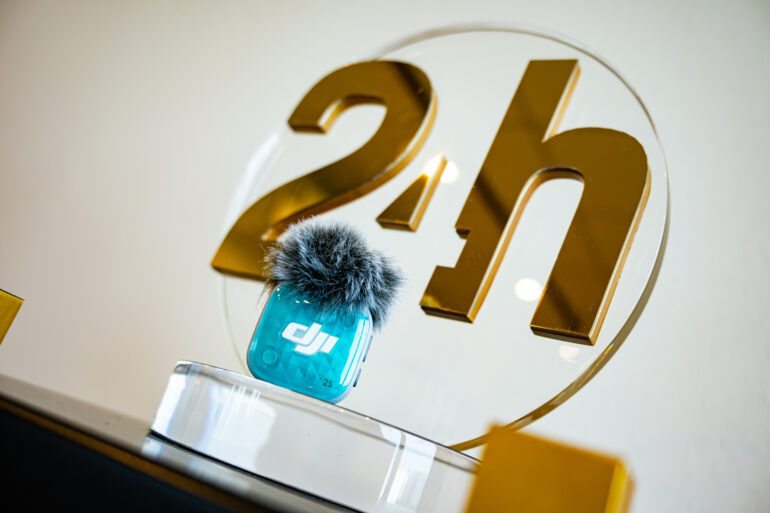
With 32-bit float internal recording, support for four transmitters and faster file transfers through its redesigned charging case, the DJI Mic Mini 2S brings professional safeguards to a remarkably small wireless microphone system.
It looks much like the Mic Mini 2 that launched months prior, but beneath the colourful covers lies a far more capable production tool. It retains the compact transmitter, interchangeable magnetic covers and simple clip-on design. Yet DJI has quietly added the feature many creators had been asking for all along: internal recording.
Each 12g transmitter now carries 16GB of onboard storage and can record 32-bit float audio independently. The receiver supports as many as four transmitters, while the charging case doubles as a high-speed file reader.
None of these changes sounds especially theatrical, but together they transform the Mic Mini 2S from a convenient creator accessory into something approaching a genuinely professional audio system.
What’s the difference?
The simplest explanation is that the Mic Mini 2S is a Mic Mini 2 with a safety net.
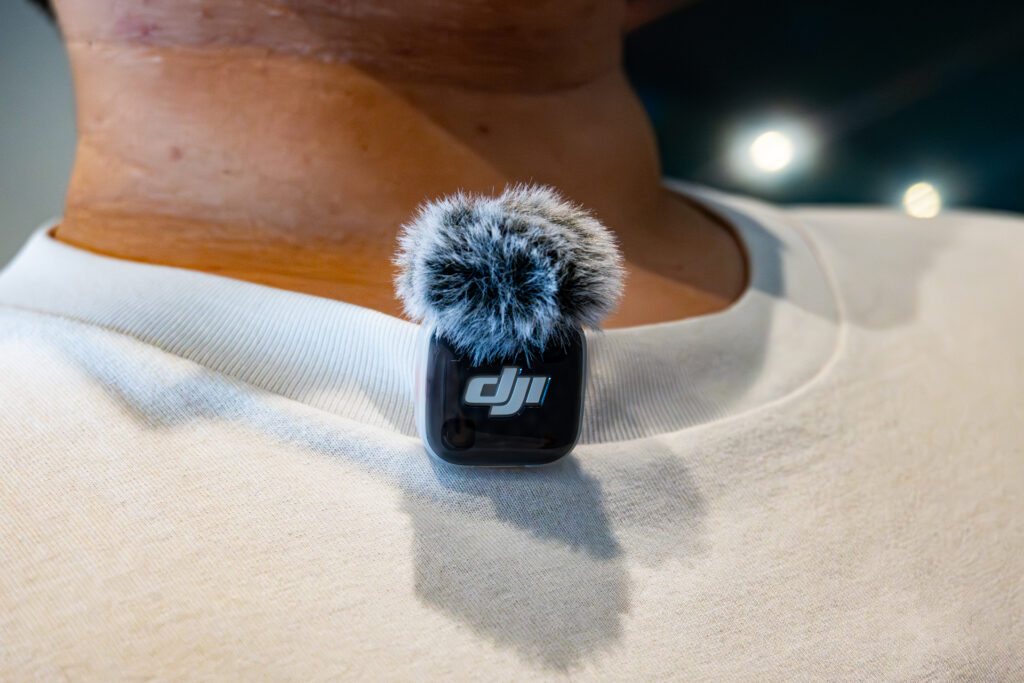
The core formula remains the same: a small omnidirectional transmitter clips directly onto clothing, sends 48kHz/24-bit audio wirelessly to a receiver and connects directly to compatible DJI cameras through the company’s OsmoAudio system.
The major difference is that the transmitter now records locally. Should the wireless signal drop, the camera battery fail or the receiver lose power, the original audio remains safely stored on the microphone itself. Each transmitter can store approximately 28 hours of 24-bit audio, or around 22 hours in 32-bit float.
Internal recording is disabled by default and must first be activated through DJI Mimo. Once enabled, recording can be started from either the transmitter or receiver. The system can also begin recording automatically when receiver power runs low, ensuring the transmitter continues capturing even if the wireless chain is interrupted.
Mimo also lets users choose between raw and processed internal files. Processed recording saves space and includes DJI’s audio treatment. Selecting Original File preserves an untouched backup, but the three voice presets will not be applied to that internal track. The sound sent to the receiver may therefore differ from the locally recorded version.
Anyone who has completed an interview only to discover a damaged or missing audio track will understand why this matters. A wireless microphone without internal recording can feel rather like driving without a spare tyre: most journeys will be uneventful, but the one failure you do encounter may be catastrophic.
The Mini 2S therefore sits alongside the standard Mic Mini 2 rather than replacing it. Above both is the more sophisticated DJI Mic 3, which retains features such as timecode, a touchscreen receiver and 32GB dual-file recording. The older DJI Mic 2 also remains relevant because it includes a 3.5mm input for an external lavalier microphone.
DJI’s range has consequently become rather crowded, but the Mini 2S occupies a persuasive middle ground. It remains small and straightforward, while adding the safeguards that more serious work demands.
There are four headline differences between the Mic Mini 2S and the Mic Mini 2. The first is the aforementioned 16GB of internal storage, with support for either conventional 24-bit recording or 32-bit float. The second is the receiver’s ability to manage four transmitters simultaneously, twice the previous limit.
Third, the charging case can transfer recordings directly to a camera or smartphone at up to 34MB/s. DJI says a 30-minute 24-bit file can be moved in approximately eight seconds. Finally, gain can now be adjusted independently at both transmitter and receiver level, across a range of -12dB to +12dB.
Noise cancellation has also shifted to NPU-based processing, where a dedicated neural processing unit handles the computational work, with DJI claiming clearer voices and less distortion than before. Two levels remain available (Basic and Strong), although both must be selected through the DJI Mimo application rather than directly on the hardware.
Bluetooth has moved to version 6.0, promising a more robust connection, while the rear clip is now detachable and can rotate through 90 degrees. The redesigned charging case finally accommodates the mobile receiver and 3.5mm cable as well. This eliminates one of the Mic Mini 2 case’s stranger omissions.
The price of progress: one gram
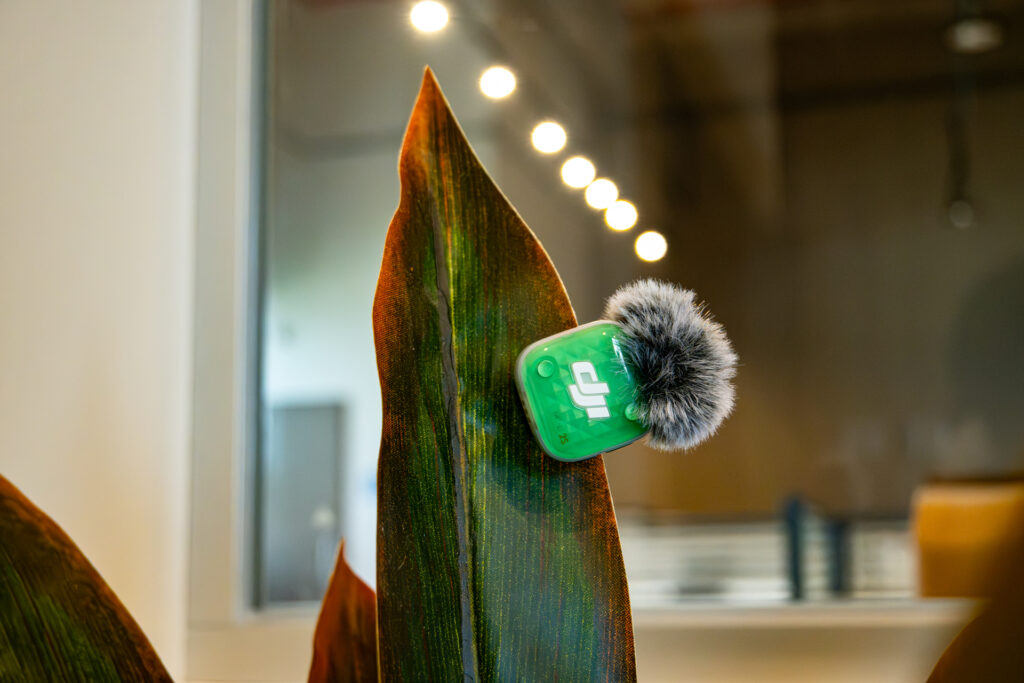
There are compromises, though you may require laboratory equipment to notice the first one.
The transmitter has gained a gram, rising from 11g to 12g. With the magnetic attachment fitted, it weighs approximately 15g. For context, it remains light enough that its presence on a collar is barely noticeable. In fact, the additional weight gives the tiny transmitter a slightly more substantial feel in the hand.
Battery endurance has fallen modestly. DJI quotes up to 11 hours for each transmitter, down from 11.5 hours, while receiver runtime falls from 10.5 to 10 hours. Total endurance with the charging case drops from 48 to 40 hours.
Does this matter? For most productions, probably not. Even a busy day of interviews and pieces to camera is unlikely to involve 11 consecutive hours of active recording. The case also supports rapid charging, with five minutes connected to power providing about one hour of operation. Receiver charging has improved too, falling from one hour and 40 minutes to approximately one hour and 10 minutes.
The quoted battery figures assume internal recording and noise cancellation are disabled, so actual endurance will be shorter when all systems are active. Even so, the Mini 2S remains comfortably capable of covering a full production day.
The charging case becomes part of the workflow
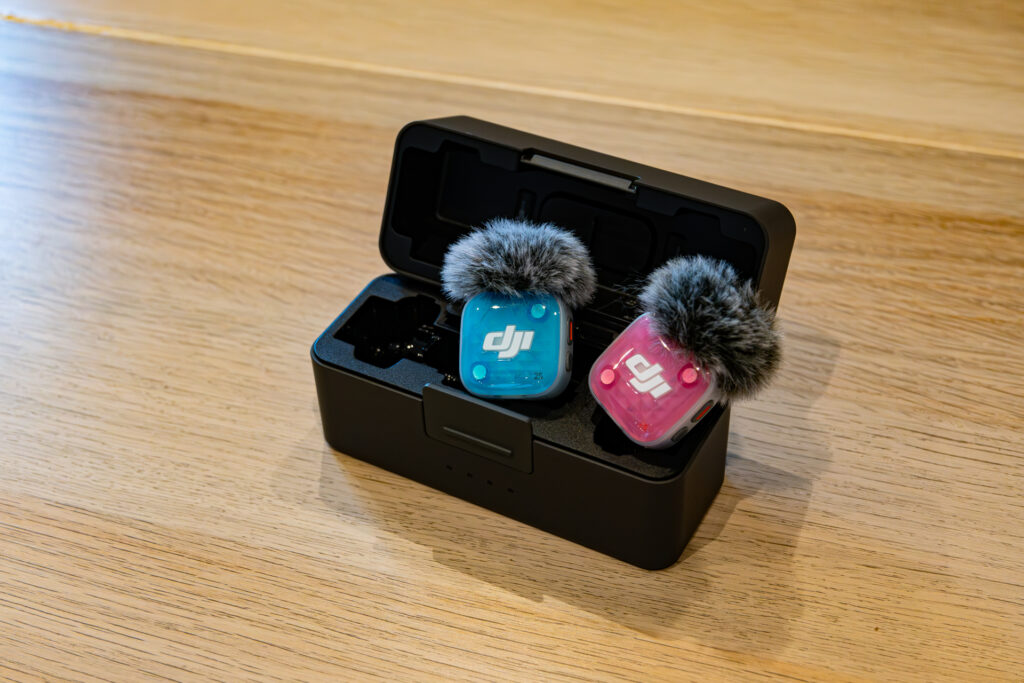
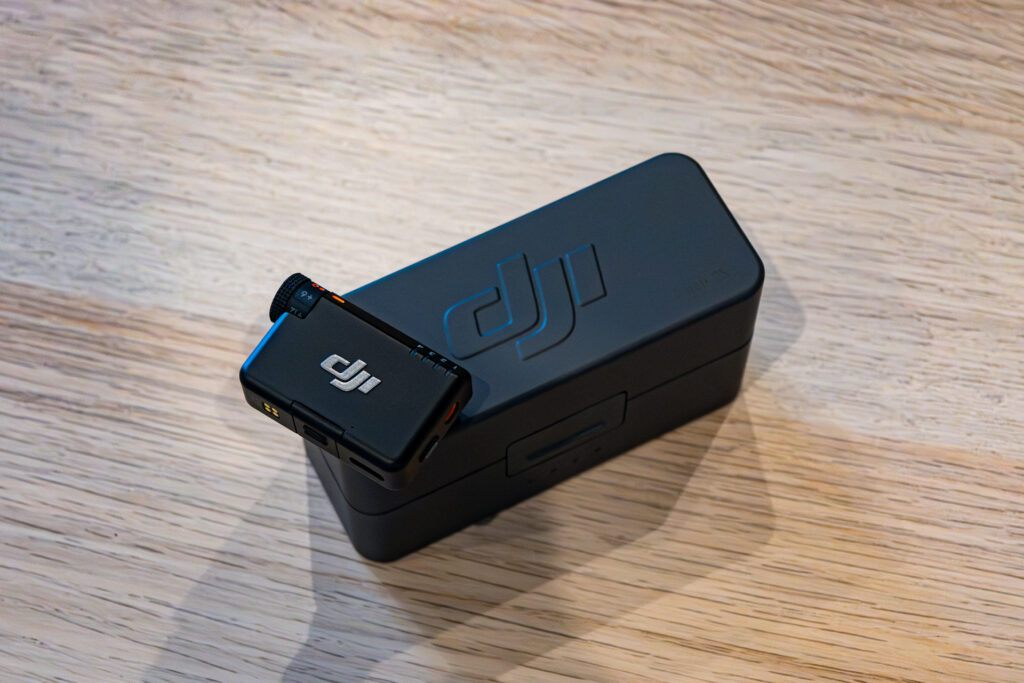
The redesigned case stores two transmitters, the main receiver, mobile receiver, two mounting clips, two magnets, two windscreens and the 3.5mm audio cable. More importantly, it now acts as a card reader.
Rather than connecting each transmitter individually, recordings can be transferred through the case at up to 34MB/s. This is roughly twice the quoted transfer performance of the Mic 3 and makes backing up files substantially less tedious.
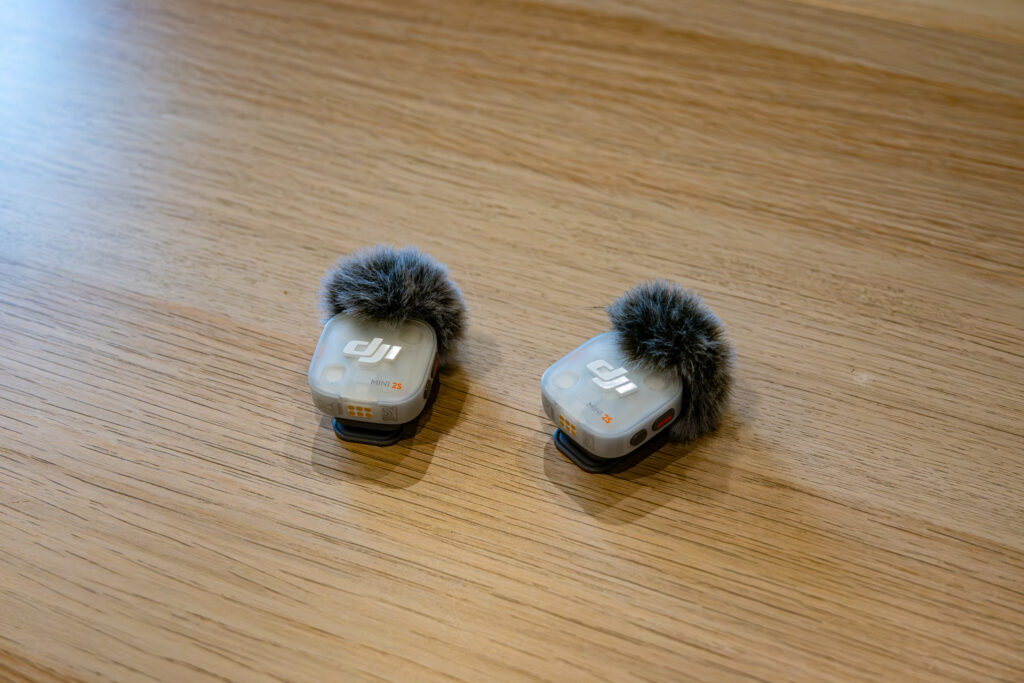
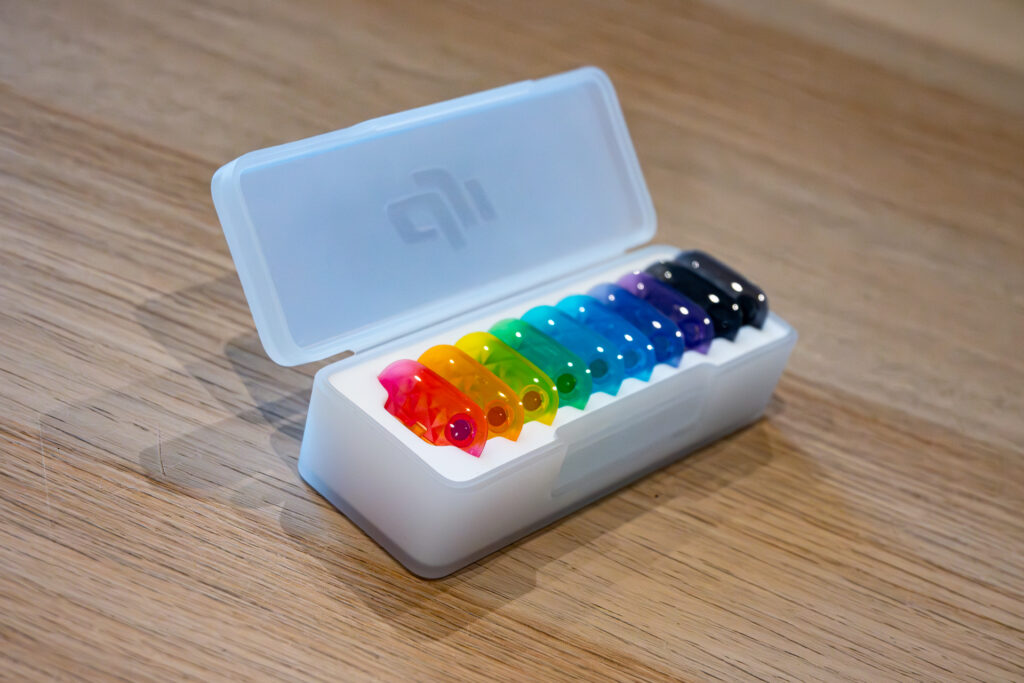
The magnetic covers introduced with the Mic Mini 2 also return in eight colours.
Audio quality and voice presets
The Mini 2S transmits 48kHz/24-bit audio and records internally in either 24-bit or 32-bit float. Its omnidirectional microphone captures sound from all directions, making precise orientation less critical when clipped to clothing.
The frequency response spans 20Hz to 20kHz with the low-cut filter disabled, or 100Hz to 20kHz with it active. The latter removes low-frequency rumble from air-conditioning, traffic and handling noise, though it can also reduce some of the natural warmth in deeper voices.
DJI quotes an equivalent noise level of 22dBA, while the same three voice presets introduced on the Mic Mini 2 return here.
Regular is the balanced, neutral option and provides the best starting point for users who intend to equalise their recordings manually. Bright lifts the treble, helping voices cut through in busier environments. Rich adds greater low-frequency body, which can make thinner voices sound fuller without additional post-production.
The presets are useful, but best viewed as starting points, much like picture profiles on a camera. Rich can suit studio-style voiceovers, Bright can add intelligibility outdoors, and Regular keeps the recording honest.
DJI also claims a maximum range of 400m with a clear line of sight. Testing in an open field broadly supported that figure. Some signal breakup appeared near the limit, but audio remained solid under favourable conditions.
Should you buy the DJI Mic Mini 2S?
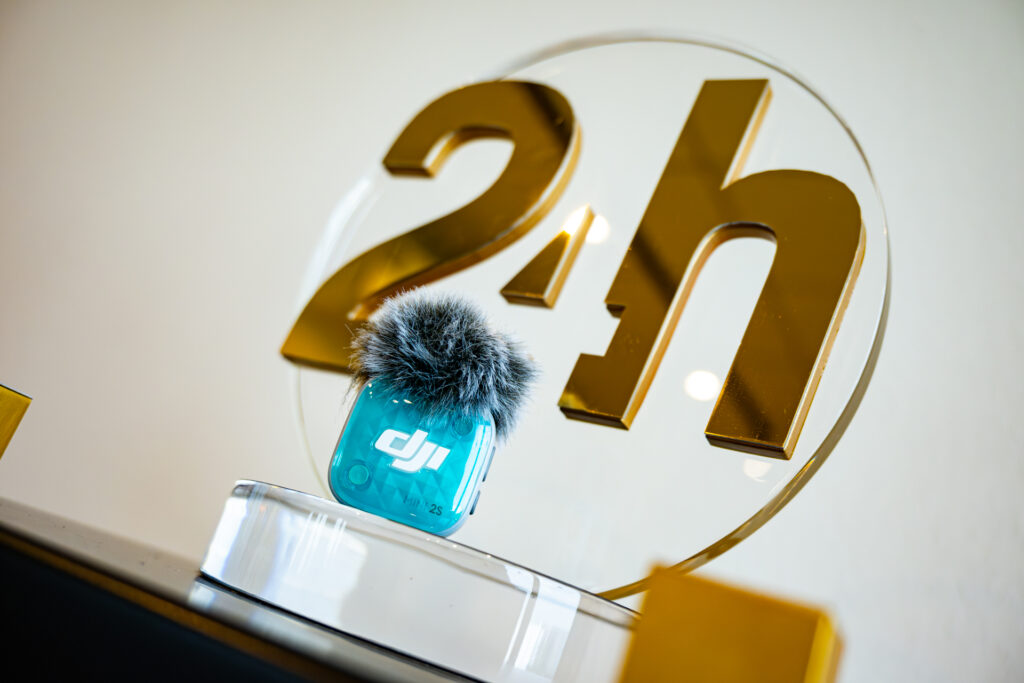
The Mic Mini 2S makes sense for creators who require backup recording, regularly film more than two people, or transfer internal files often enough to appreciate the faster charging-case workflow.
It is also an excellent match for owners of recent DJI Osmo cameras. Direct integration through OsmoAudio keeps the setup small, tidy and quick, exactly what a compact creator system should be.
Existing Mic Mini 2 owners who generally record one subject at a time have less reason to upgrade. The basic audio path remains broadly similar, and the earlier model continues to provide excellent results for straightforward pieces to camera. Those requiring timecode and more advanced production controls should consider the Mic 3.
The DJI Mic Mini 2S does not reinvent the compact wireless microphone. It simply adds the features that stop compactness from becoming a liability. It feels like a proper production tool, one that happens to weigh less than a house key.
Liked this? Check out more articles on Futr tech here.