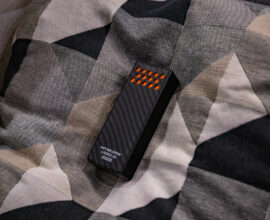

Signia MaX is a new hearing aid platform that uses four dedicated Deep Neural Networks to analyse not just background noise, but speech, environmental conditions and the wearer’s own voice at the same time.
Signia touts it as the world’s first multi-dimensional AI hearing aid platform with four DNNs, all working together through what the company calls Acoustic Intelligence.
At the centre of the platform are four task-specific Deep Neural Networks. One detects speech. Another recognises the wearer’s own voice. A third analyses the surrounding environment, while the fourth deals with noise.
Rather than operating independently, the four networks continuously share information with one another, allowing the hearing aids to make processing decisions based on the full listening environment rather than one isolated input.

According to company-cited testing, 97 per cent of wearers performed better with Signia MaX in noisy group conversations compared with key competitors, while MaX also ranked first for signal-to-noise ratio performance in group conversation in noise.
The platform’s RealTime Conversation EnhancementAI feature can identify and enhance several conversation partners at once and now processes 75 per cent more data points per second than Signia IX.
Own Voice ProcessingAI recognises the wearer’s own voice without requiring in-clinic calibration, while Ambient Scene AdaptationAI continuously adjusts to changing surroundings rather than relying only on fixed listening modes.
Dynamic Noise ControlAI, meanwhile, attempts to understand not only what the noise is, but where it comes from and whether the wearer is currently in conversation before deciding how much of it to suppress.
All of this depends on substantially more computing power. The new Signia MaX chip delivers 54 times more processing power than the previous generation, while also providing twice the memory and 50 per cent better energy efficiency.
Signia also combines the platform with its ear-to-ear technology, allowing both hearing aids to stay synchronised as the environment changes. This lets the system operate as a coordinated binaural setup, rather than treating each ear as a separate device. That should make directional processing more consistent, particularly in busy environments where sound is moving around the listener.
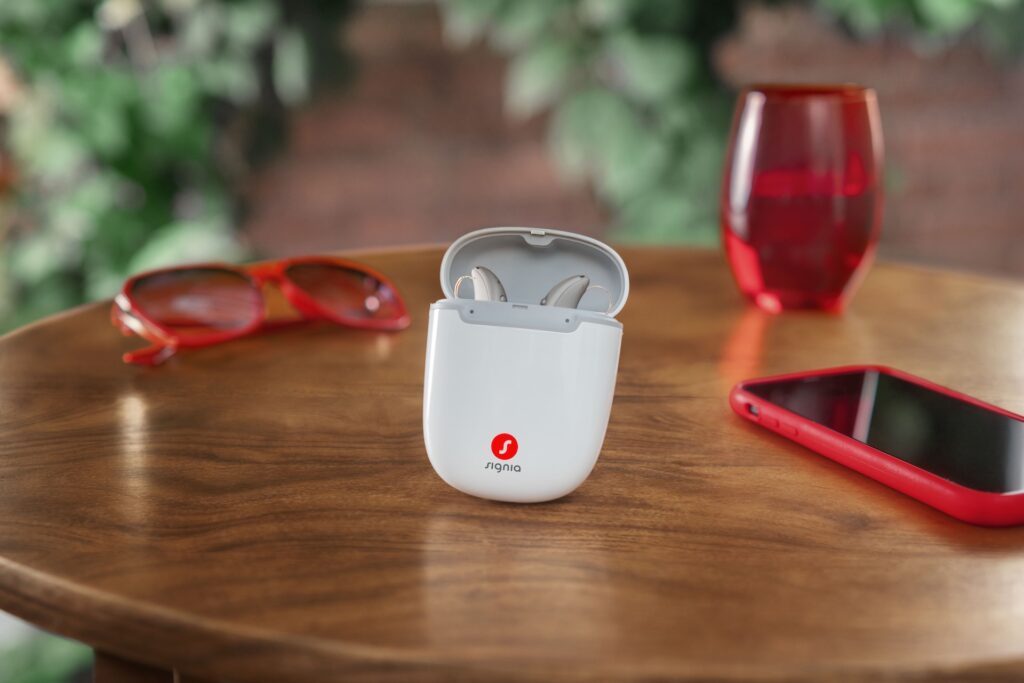
The first hearing aid to use the new platform is the Signia Pure C&G MaX. It is a receiver-in-canal design and will be available in eight colours.
The hearing aid ships with a compact portable charger capable of storing up to four full charges. A complete charge takes four hours, while 30 minutes of charging provides up to six hours of use.
Connectivity is handled through Signia’s new OneConnect Technology. This includes Bluetooth Classic, LE Audio, Telecoil and Auracast support, giving hearing care professionals a single platform capable of working across a wide range of phones and audio environments.
Full Auracast functionality will be enabled through a firmware update via the Signia One app by March 2027.
The wearer should not have to think about neural networks, scene analysis or processing power while trying to follow a conversation. The technology should simply make the conversation easier to stay in. That is the challenge Signia is attempting to solve.
Liked this? Check out more articles on Futr tech here.