
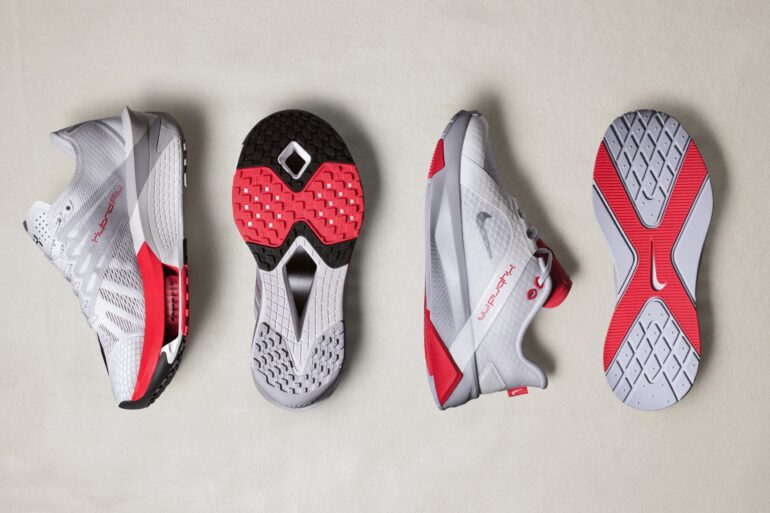
Nike Hybrid is a new performance footwear system developed specifically for athletes who move between running and strength-based movements.
Hybrid racing is changing the way athletes train. Instead of specialising in one discipline, competitors are expected to run, lift, push, pull and move through repeated high-intensity stations with very little respite. It is a format that asks a lot from the body, and quite a lot from a pair of shoes too.
Until now, that has usually meant compromise. A responsive running shoe may feel quick over distance but less secure when pushing a sled or performing lunges. A traditional training shoe, meanwhile, may offer the stability needed for strength work, but feel heavy and flat once the running starts.
Nike Hybrid is designed to bridge that gap.
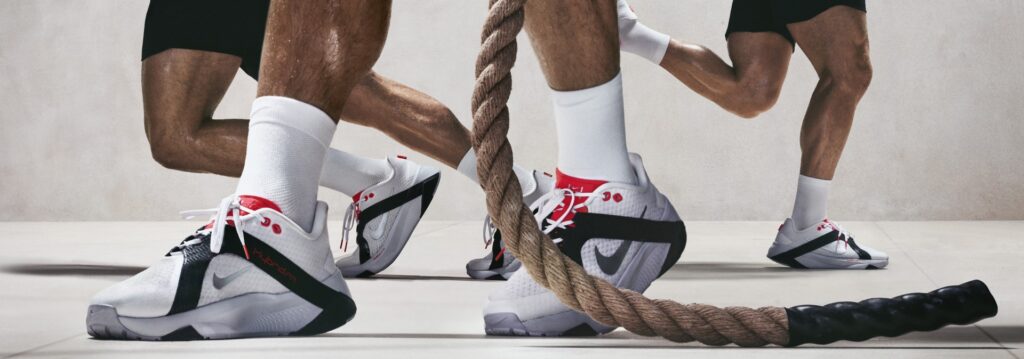
The system launches with two distinct models: the Nike Hybrid Fly, developed for race day, and the Nike Hybrid RN, designed for everyday hybrid training. Together, they form what Nike describes as an evolving platform intended to support the different demands athletes face in training and competition.
The shoes draw on several of Nike’s established performance technologies, including Air Zoom, ZoomX and ReactX foam, as well as carbon-fibre Flyplate construction. The company says the system was developed with input from both elite and everyday hybrid athletes, with testing focused on movements such as sled pushes and pulls, lunges, rowing, ski erg work and running.
Nike Hybrid Fly: built for race day
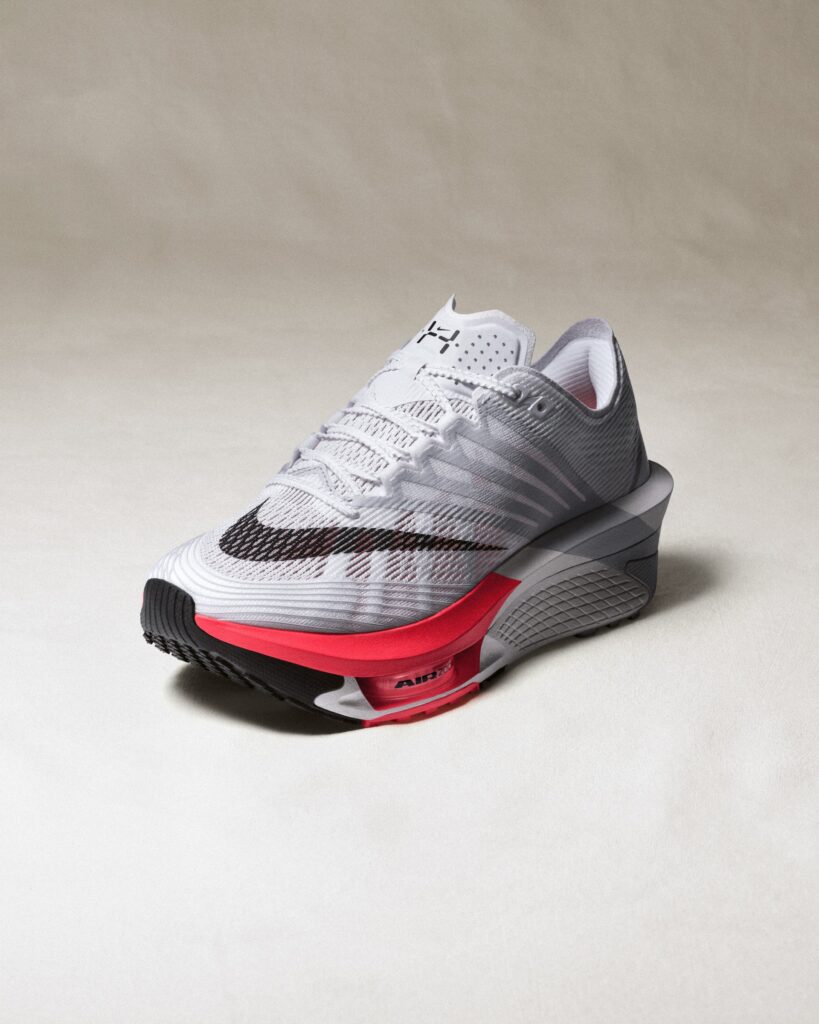
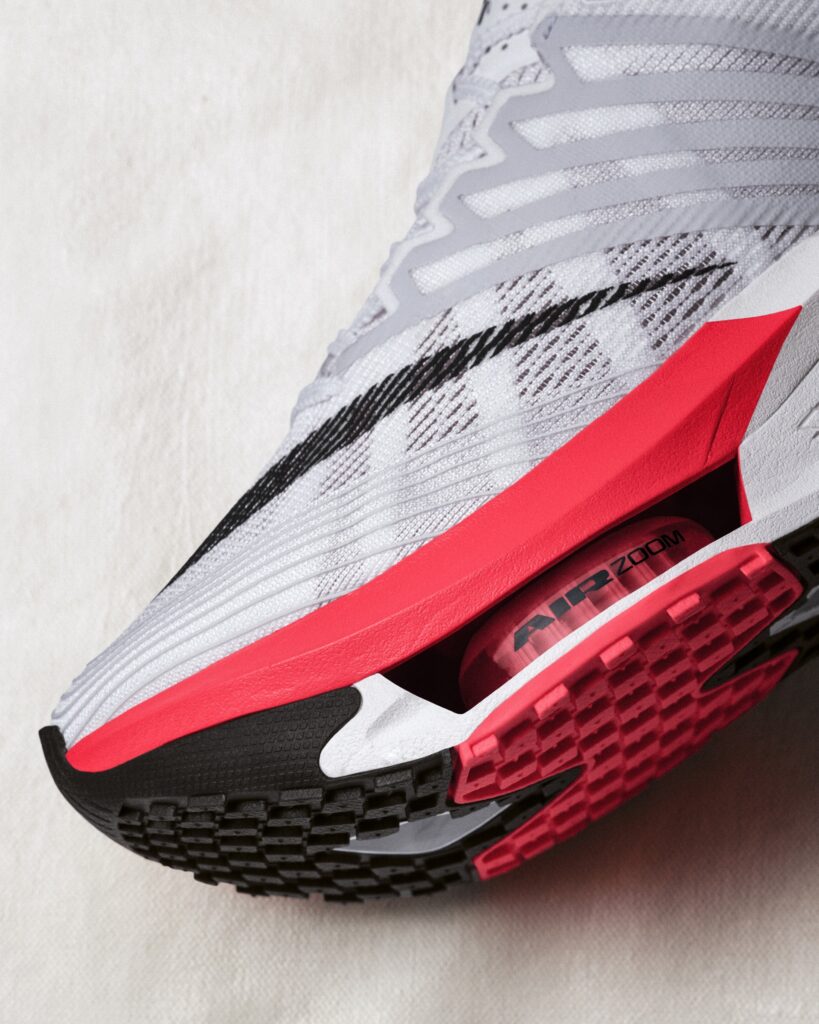
The Hybrid Fly is the more competition-focused of the two. Its construction combines ZoomX foam, a full-length carbon Flyplate and dual Air Zoom units in the forefoot, with the aim of maintaining responsiveness and speed during the running sections of a hybrid race.
That matters because, for many competitors, the running segments are where the largest gaps can open up. But speed is only half the problem. Once the athlete moves onto the race floor, the shoe also needs to feel planted and predictable.
To address that, Nike has given the Hybrid Fly a wider, more stable base intended to reduce the small corrective movements athletes often make when moving between running and strength stations. Four-zone traction, sticky rubber and sidewall wraps are used to improve grip across different surfaces, while race lockdown laces and a lightweight engineered mesh upper help keep the foot secure.
The upper is also reinforced with zoned haptic lines for added structure and durability.
Nike Hybrid RN: for daily training
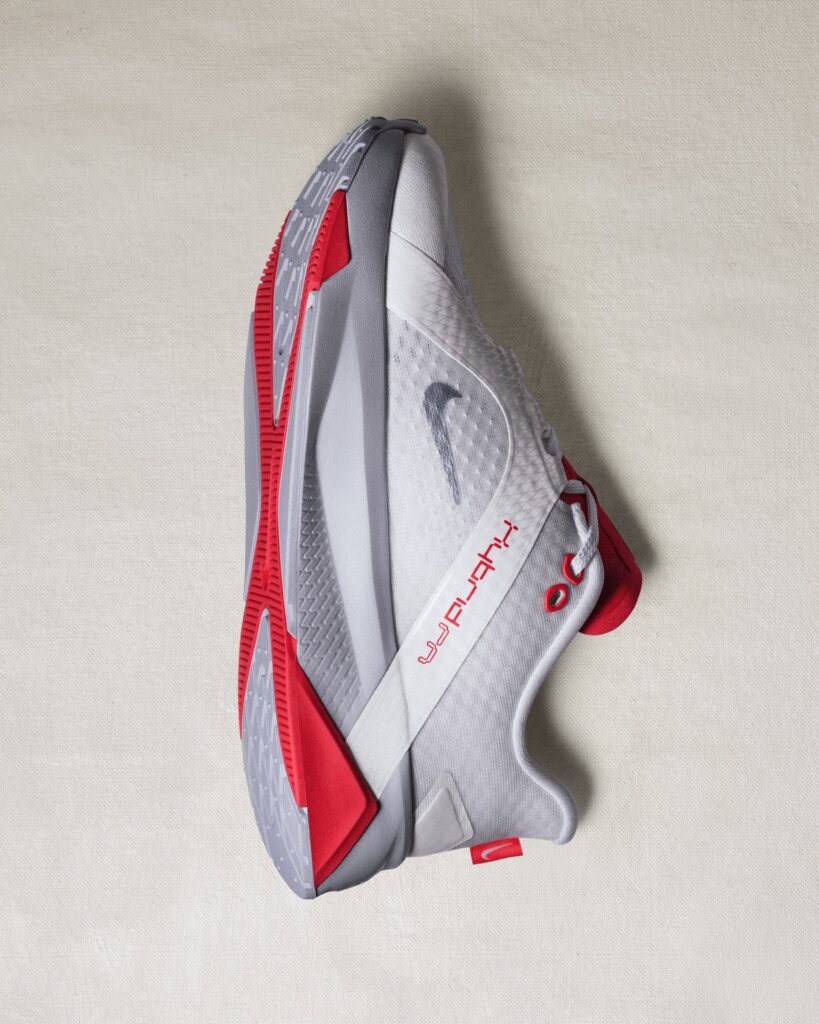
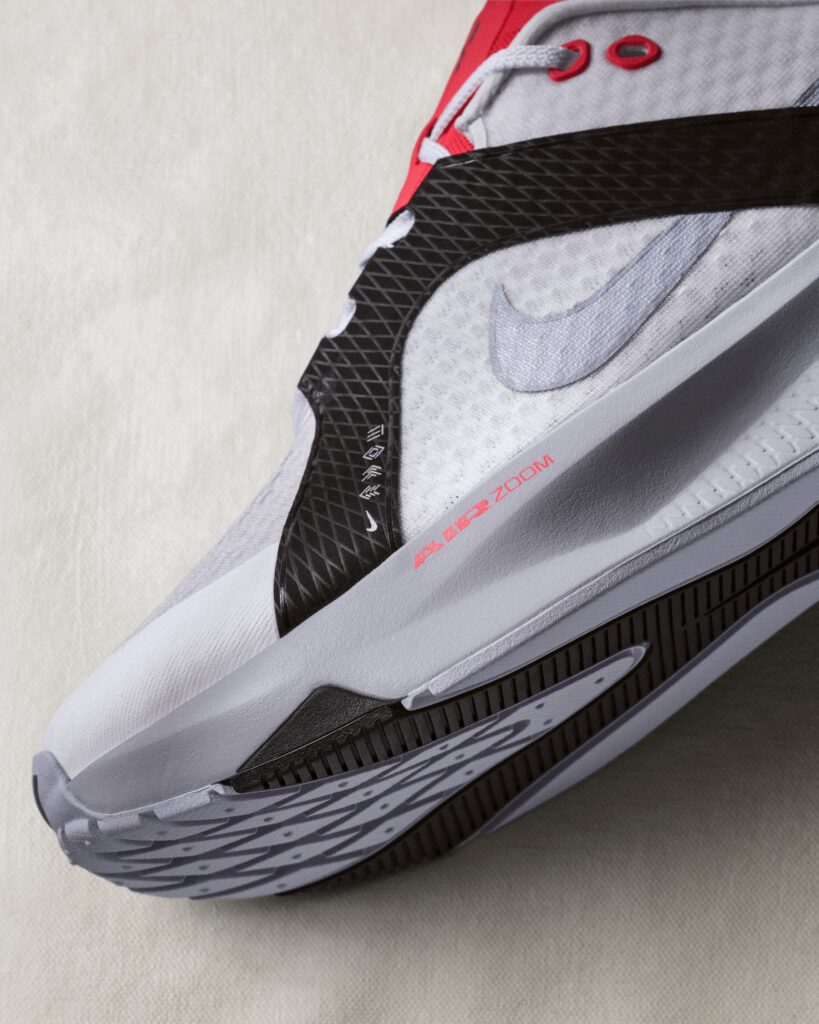
The Hybrid RN takes a more everyday approach. Instead of ZoomX foam and a carbon plate, it uses ReactX foam and a forefoot Air Zoom unit to provide a smoother and more durable ride for repeated training use. The emphasis here is on versatility rather than outright race-day aggression.
A wide outsole provides stability during lifts, while X-shaped upper overlays help secure the foot during transitions. Nike has also fitted a dual-rubber outsole for traction across different surfaces, alongside an engineered mesh upper intended to balance comfort and support.
A category that now needs its own shoes
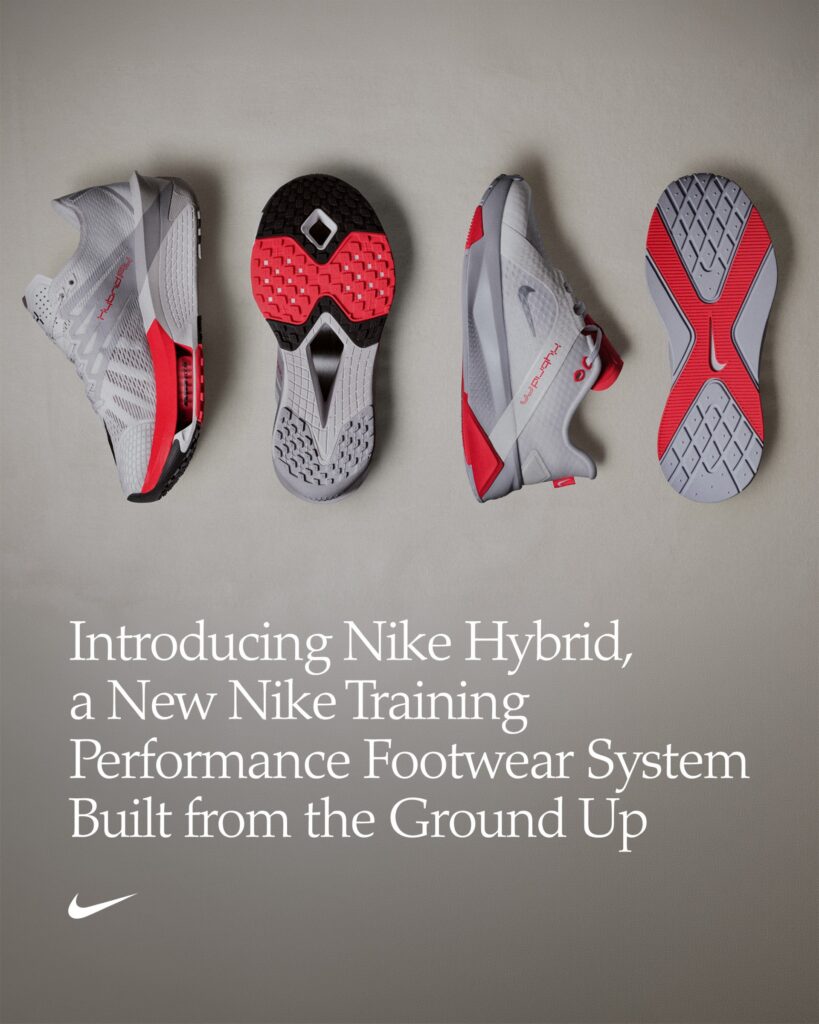
Nike’s move into dedicated hybrid footwear reflects how quickly the discipline has matured. Hybrid racing is no longer simply running with a few gym exercises attached. The demands are specific enough that athletes now have clear expectations around traction, stability, cushioning and responsiveness, often within the same minute.
The Hybrid system is Nike’s attempt to solve that problem with two purpose-built options rather than one shoe expected to do everything. The Hybrid Fly handles the sharper end of competition, while the Hybrid RN covers the repetitive realities of training.
The Nike Hybrid RN will launch globally on 8 October through Nike and selected retail locations. The Nike Hybrid Fly will follow globally in April 2027.
Check out more news articles on Futr here!