
Sony has launched the RX10 V in Singapore, reviving its all-in-one superzoom camera line with a fifth-generation model aimed at hobbyists who want broad shooting flexibility without carrying several lenses.
The new camera retains the RX10 series’ defining feature: a built-in ZEISS Vario-Sonnar T* 24-600mm equivalent lens with a relatively bright F2.4-4.0 aperture.
That 25-times optical zoom range stretches from wide-angle everyday photography to distant wildlife and sporting action, all within a single body.
Rather than asking users to choose lenses before leaving home, the RX10 V simply tries to be ready for almost anything. A family outing, a school sports day, or a bird perched inconveniently far away can all be approached with the same camera.

The RX10 V features a 1.0-type stacked Exmor RS CMOS sensor with approximately 20.1 effective megapixels, paired with Sony’s BIONZ XR image processor. The larger sensor and bright integrated lens are also intended to produce smoother background separation than a conventional small-sensor superzoom, particularly at longer focal lengths.
Macro capability adds another layer of versatility. The camera can focus from approximately 3cm at the 24mm end of the zoom range, while tele-macro photography is possible from about 72cm at 600mm. Sony says the processor also improves noise control at medium and high ISO settings, helping retain colour, texture and detail in indoor or lower-light conditions.
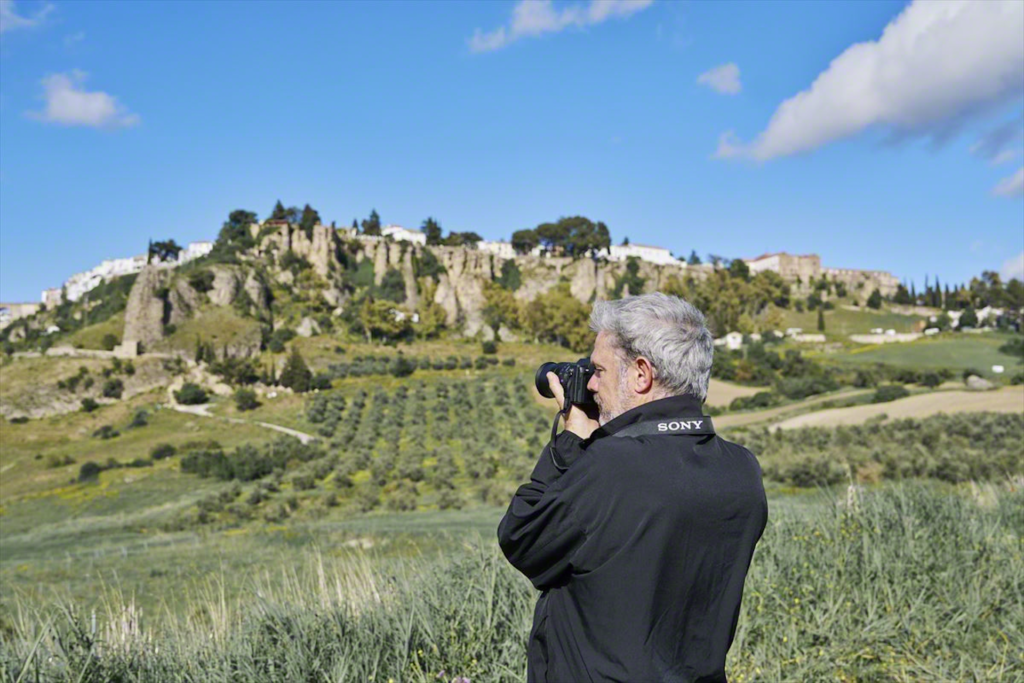
The RX10 V includes 12 Creative Look presets, allowing users to adjust colour and texture in-camera. Its updated D-Range Optimiser provides a broader range of adjustment, reaching Level 8, and can lift shadow detail in strongly backlit scenes without requiring more involved post-processing.
The more substantial upgrade, however, is autofocus. Sony has equipped the camera with an AI processing unit and Real-time Recognition AF, bringing over technology associated with its newer Alpha mirrorless cameras.
The system can recognise humans, animals, birds, insects, cars, trains and aircraft, while an automatic mode can identify the subject category without requiring the photographer to select it beforehand.

Human pose estimation allows the camera to continue identifying and following people even when their faces are turned away or obscured by helmets or sunglasses. Touching a subject activates Real-time Tracking, leaving the camera to follow movement while the photographer concentrates on framing.
For action, the RX10 V performs autofocus and exposure calculations up to 60 times per second and supports blackout-free continuous shooting at up to 30 frames per second with full AF and AE tracking. A Continuous Shooting Speed Boost function also lets users change the burst rate while shooting.

Video specifications have also moved forward. The RX10 V records 4K footage at up to 120 frames per second, allowing slow-motion playback of up to five times in 4K after the appropriate recording and editing process. Active Mode stabilisation is included for handheld filming, while the Multi Interface Shoe supports compatible digital microphones.
AI subject recognition also supports Auto Framing, which automatically adjusts the crop to keep a subject positioned within the frame during video recording. S-Cinetone offers a more finished cinematic look directly from the camera, while S-Log3 is available for users who prefer greater flexibility in colour grading. Up to 16 user LUTs can be imported for monitoring a chosen look while filming in Log.
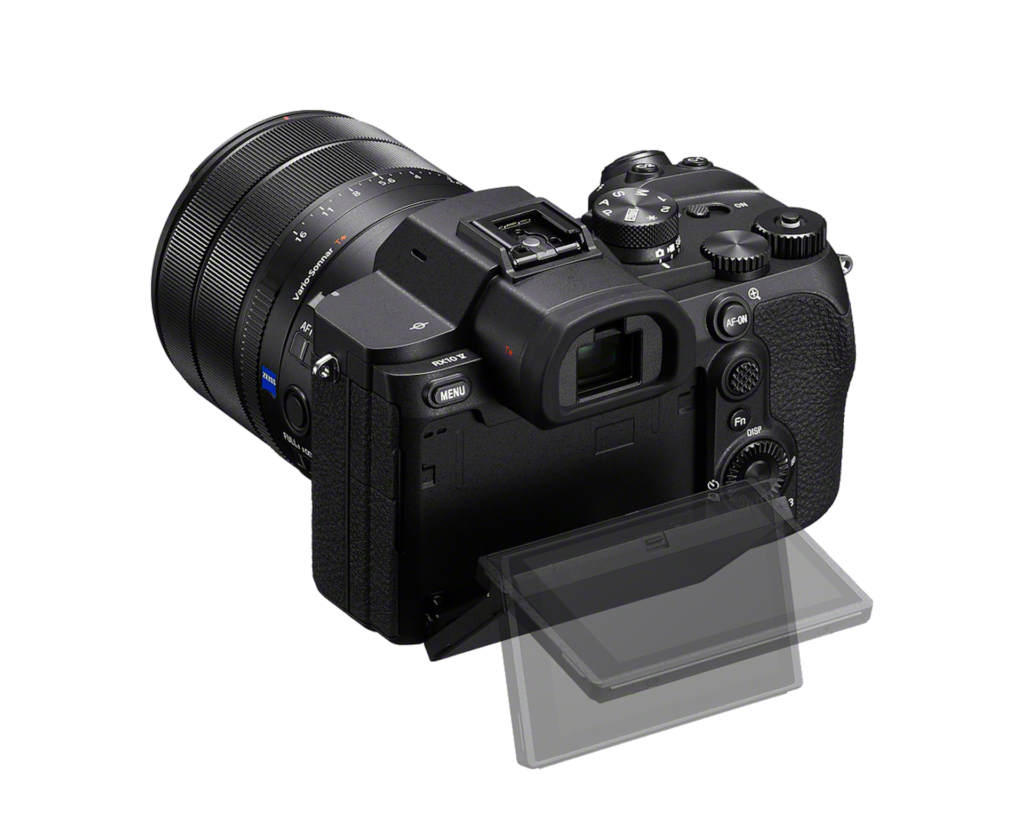
For what is likely to be used as a travel and event camera, usability matters as much as raw specification. Sony has revised the grip and controls around the design philosophy of its Alpha mirrorless range, while retaining a substantial body that should be easier to hold steadily than a compact travel zoom.
The electronic viewfinder has been upgraded to a 0.5-type Quad-VGA OLED panel with approximately 3.68 million dots and 0.78-times magnification. The rear three-inch LCD now offers approximately 1.62 million dots, providing a clearer view for composition and image review.
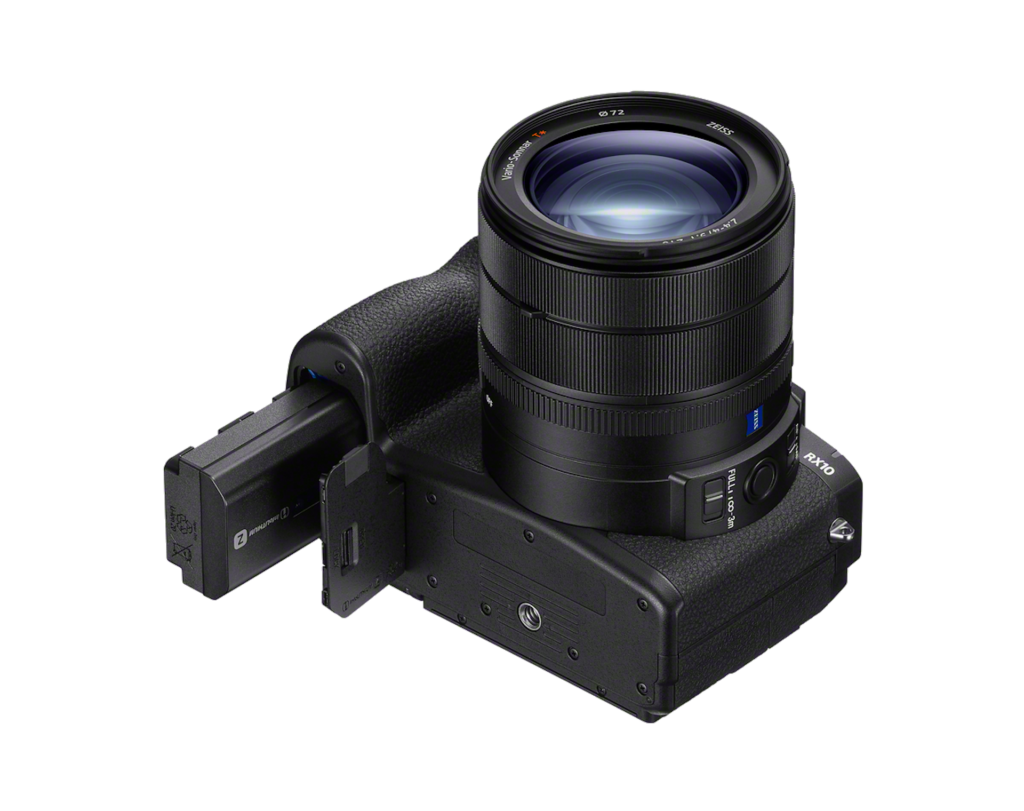
The RX10 V uses Sony’s NP-FZ100 Z-series battery and is rated for up to approximately 630 still images when using the LCD monitor, an improvement of at least 50 per cent over the RX10 IV. That is a useful gain for a camera intended to spend long days away from a charger.
The body includes dust- and moisture-resistant construction, although Sony stops short of guaranteeing complete protection. Connectivity includes dual-band Wi-Fi, USB-C data transfer and support for 4K 30p live streaming. The camera also works with Sony’s Creators’ App for smartphone transfers, remote control, cloud uploads and software updates.
The RX10 V will be available to order in Singapore from 10 July 2026 through Sony Stores and selected authorised dealers. It is priced at S$2,799.
As part of an early-bird promotion running from 10 to 31 July, buyers will receive a Wotancraft 3.5-litre Pilot Travel Camera Sling Bag in black, worth S$190, while stocks last.
Liked this? Check out more articles on Futr tech here.