
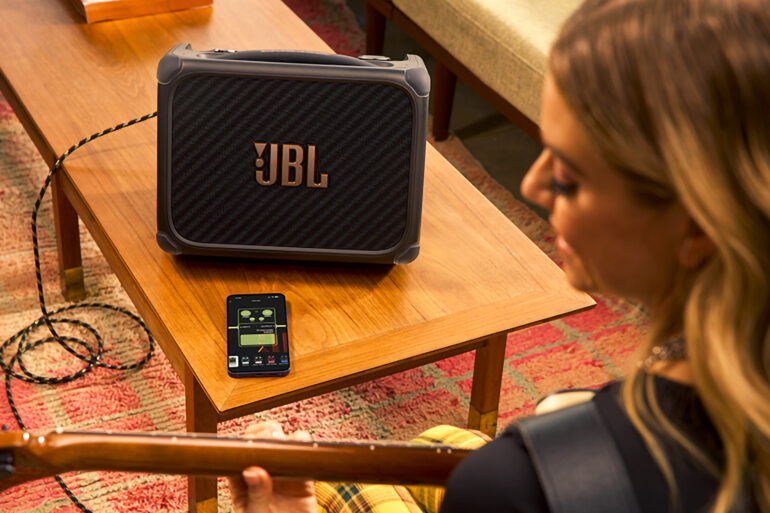
Artificial intelligence is everywhere now. Your car has it. Your fridge probably claims to have it. Even your toothbrush is one software update away from telling you that your molars need more emotional support.
So when I first heard about the JBL BandBox Trio, I will admit I rolled my eyes slightly.
Another AI-powered gadget? Another promise that technology is about to “revolutionise creativity”? We have heard that song before, haven’t we?
But then I looked closer.
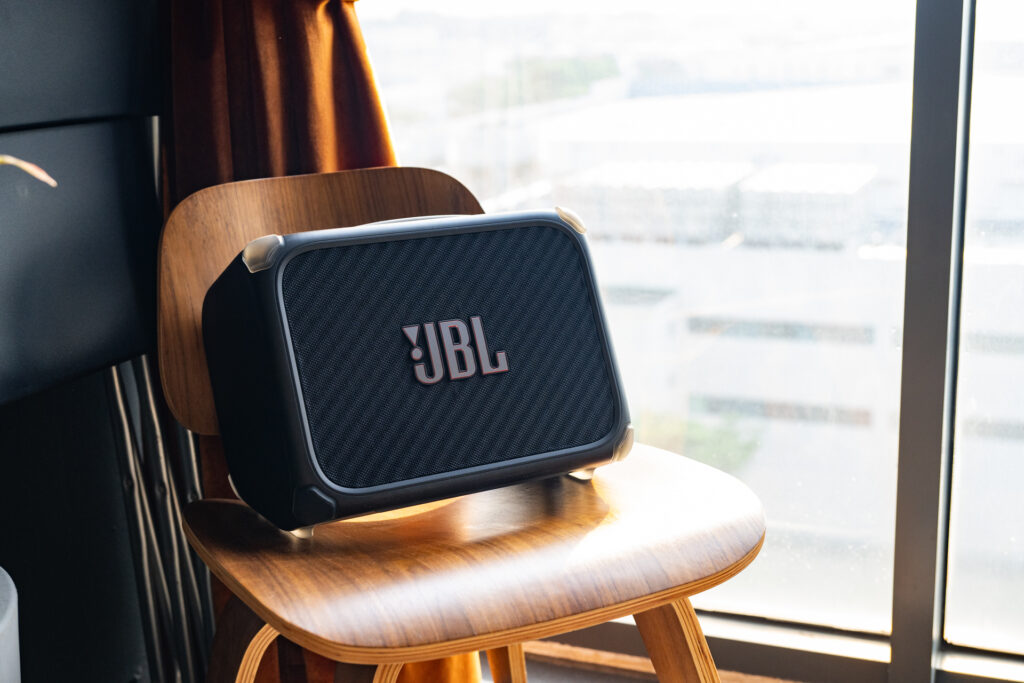
The BandBox Trio is not merely trying to be a practice amp with a trendy buzzword slapped onto the side. Alongside the smaller BandBox Solo, JBL has created a smart amplifier capable of separating a song’s vocals, drums, bass and melodic instruments in real time from streamed audio.
Unlike some AI gimmicks that feel like they were invented in a boardroom after too much coffee, stem separation is one area where AI has genuinely become useful.
So naturally, the question became: what happens when you combine that technology with a guitar amp?
A Bluetooth Speaker Wearing a Guitar Amp’s Clothing
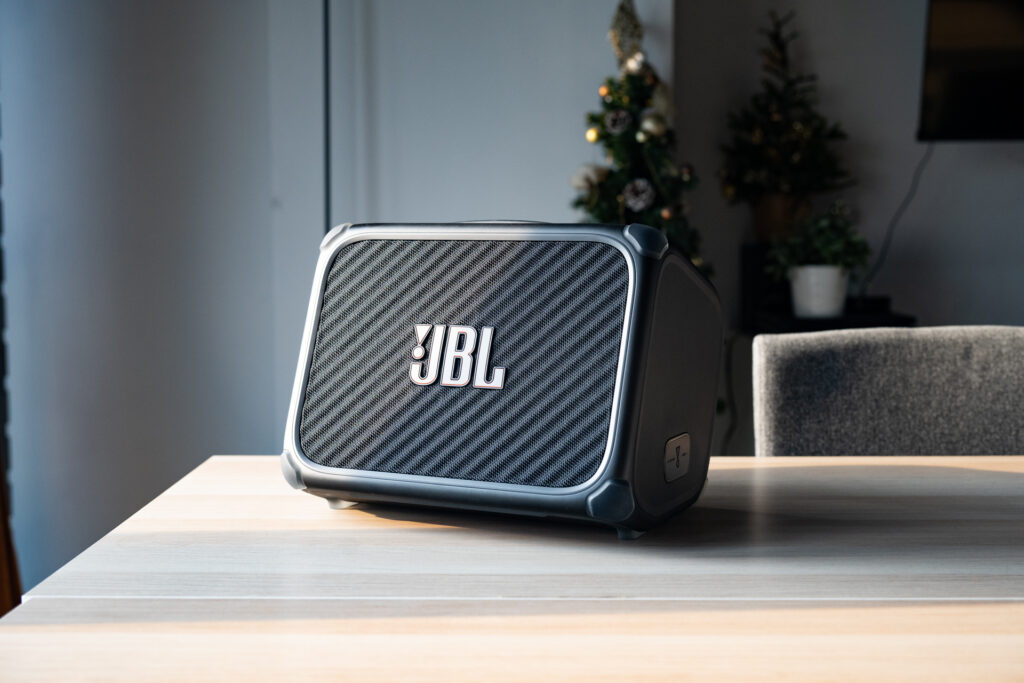
Pulling the JBL BandBox Trio out of the box, the first thing that struck me was how un-guitar-amp-like it looked.
Traditional guitar amplifiers often resemble small black cubes designed by people who distrust colour. The JBL, on the other hand, feels like it was designed by someone who owns Scandinavian furniture and appreciates good coffee.
It sits somewhere between professional music gear and a premium Bluetooth speaker, and it wears both identities rather well.
The JBL accents are tasteful without screaming for attention, while the corrugated front grille gives it a slightly industrial feel. Even the rubber bumpers around the corners feel thoughtfully designed, preventing accidental knocks during transport.
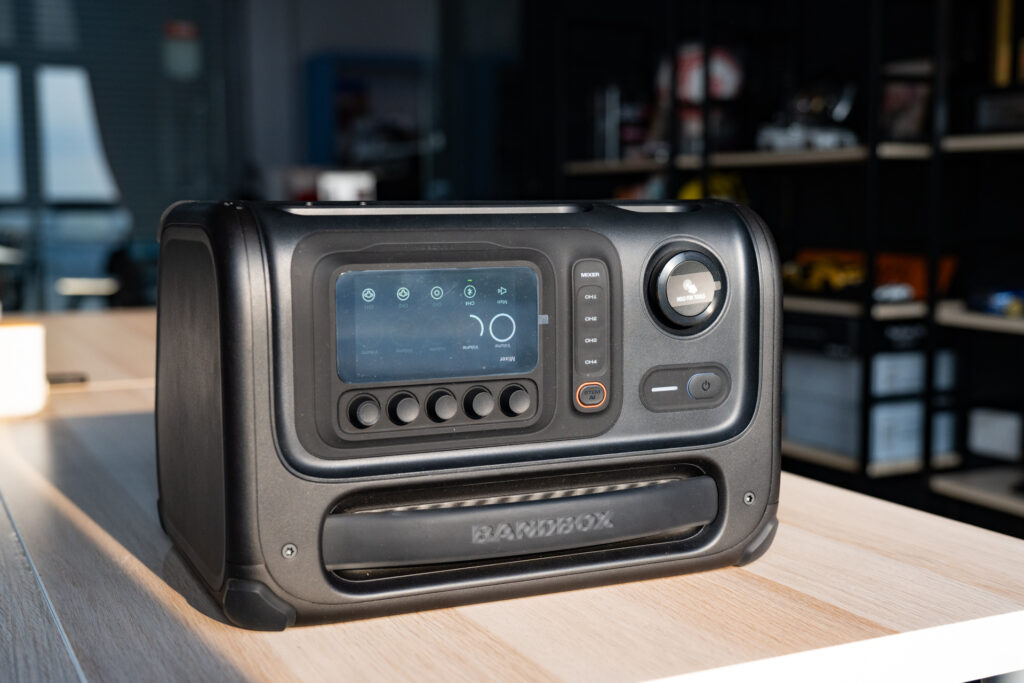
There is an odd charm to the handle too. It is made from a soft, flexible rubber that feels almost squidgy in your hand. Strange? Yes. Comfortable? Also yes.
At 8.7kg, it is not exactly featherweight, but manageable enough for carrying between your car, a busking spot, or a casual jam session without requiring a chiropractor afterwards.
The BandBox Trio can run wirelessly for up to 10 hours, depending on usage, which immediately gives it more flexibility than a traditional practice amp chained to a wall socket. There is just something liberating about the idea of bringing an amp to a park, rooftop, or casual gathering without hunting for power outlets like an exhausted airport traveller.
The Feature Set Is Surprisingly Serious
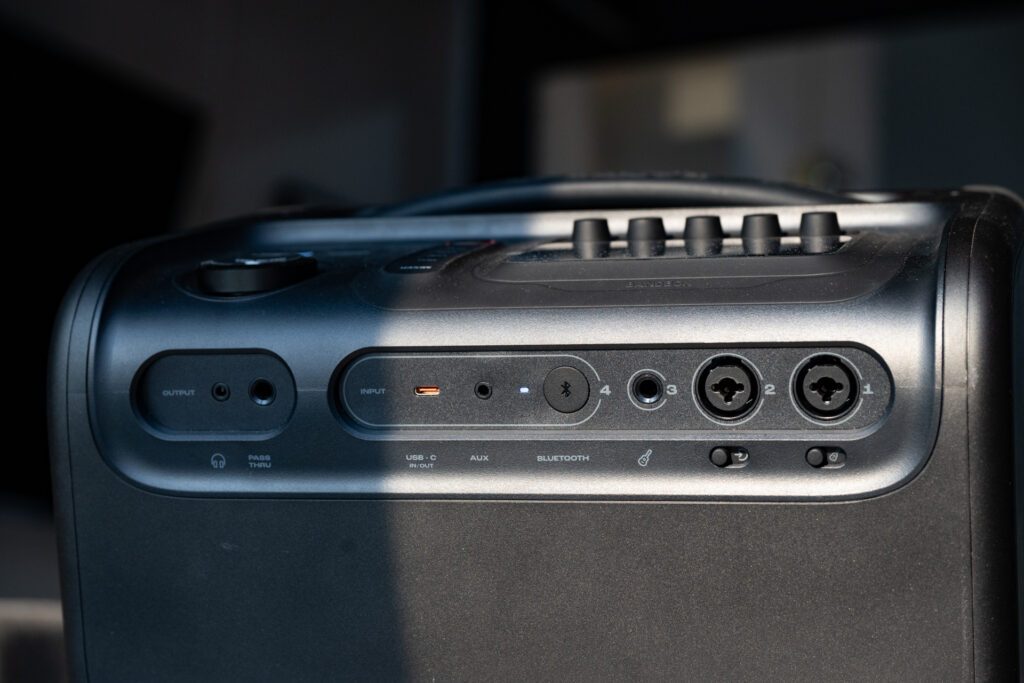
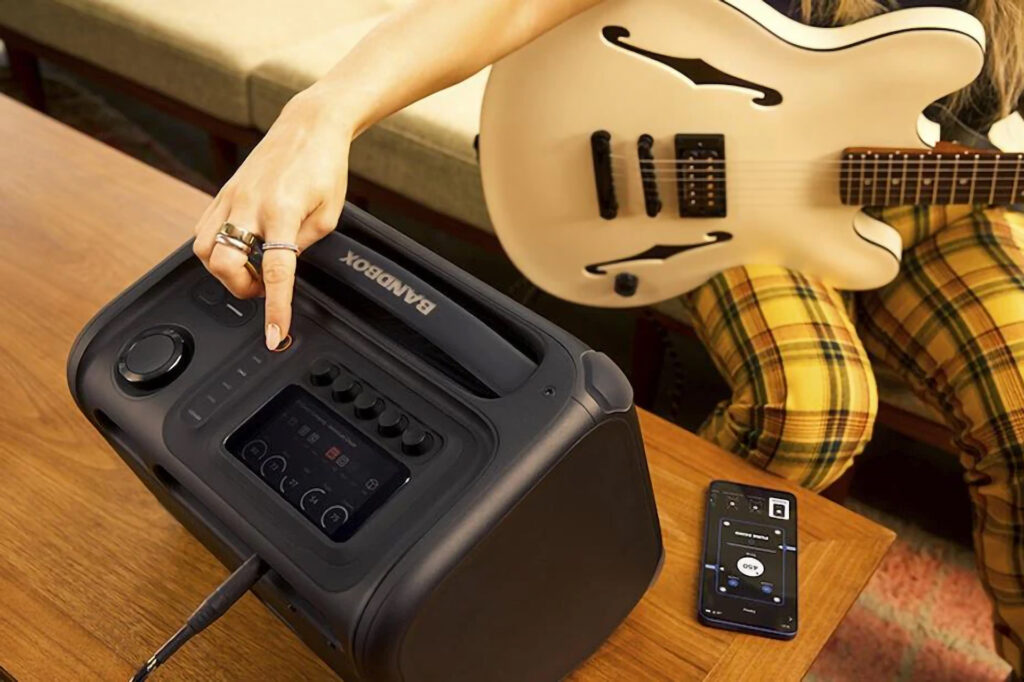
Underneath the stylish shell, the Trio is remarkably capable. It is effectively a portable PA system, Bluetooth speaker, practice rig, and mini live-performance setup rolled into one.
You get four channels, microphone inputs, Bluetooth streaming, USB-C connectivity, headphone outputs, and onboard effects. There is also a companion app offering tools such as a looper, metronome, pitch shifting and tuning functions.
The Trio pushes out 135W RMS through a 6.5-inch woofer paired with dual silk dome tweeters. For a relatively compact speaker, the low-end response is astonishingly muscular. Perhaps even slightly too muscular.
The amp models themselves occasionally inherit that heavy bass emphasis, making certain presets sound overly thick straight out of the gate. Thankfully, a little EQ tweaking quickly fixes this, but it does mean the Trio rewards users who are willing to spend time fine-tuning their tones.
JBL’s Amp Models Are Better Than Expected
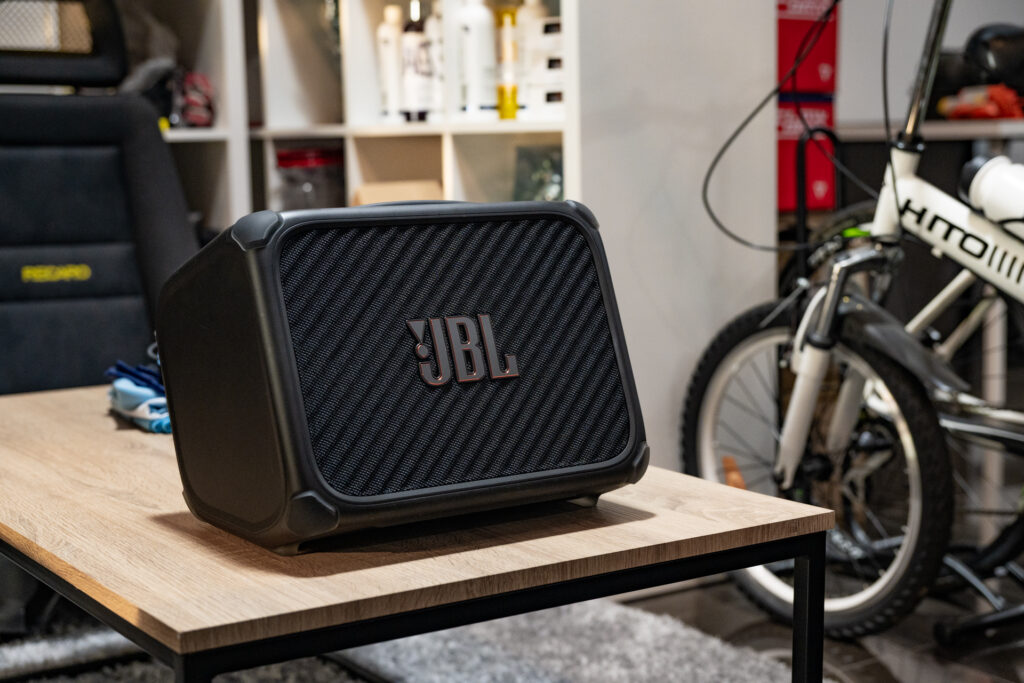
Let us be honest here: when you think of JBL, guitar amp modelling is probably not the first thing that comes to mind.
Bluetooth speakers? Absolutely.
Studio monitors? Certainly.
Portable party speakers that annoy neighbours? Without question.
But amp modelling? That’s where the JBL BandBox Trio surprised me.
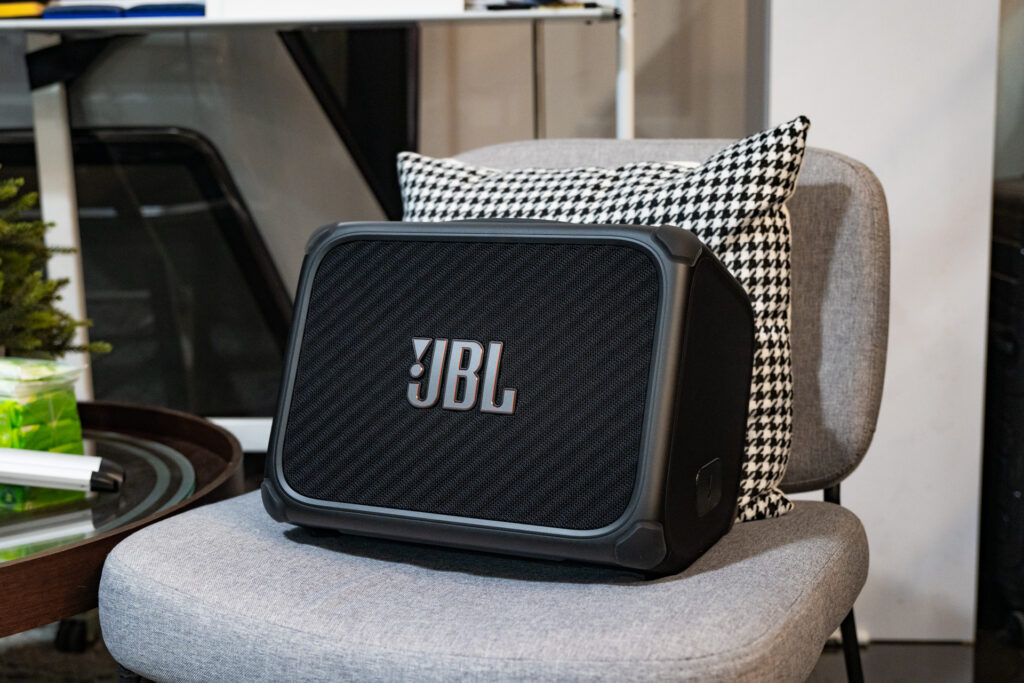
The presets are legitimately enjoyable. The Brit Crunch preset captures that classic Marshall-style growl beautifully, while the Feathered Blue model delivers warm, low-gain tones perfect for blues and country noodling late into the evening when you should probably be asleep.
No, every preset is not perfect. But JBL has wisely focused on quality over quantity. Instead of drowning users in hundreds of forgettable sounds, it delivers a tighter collection of tones that actually feel responsive and musical.
More importantly, they react naturally to your guitar’s volume knob, a detail many cheaper modelling amps still struggle with.
AI Stem Separation Is the Real Star
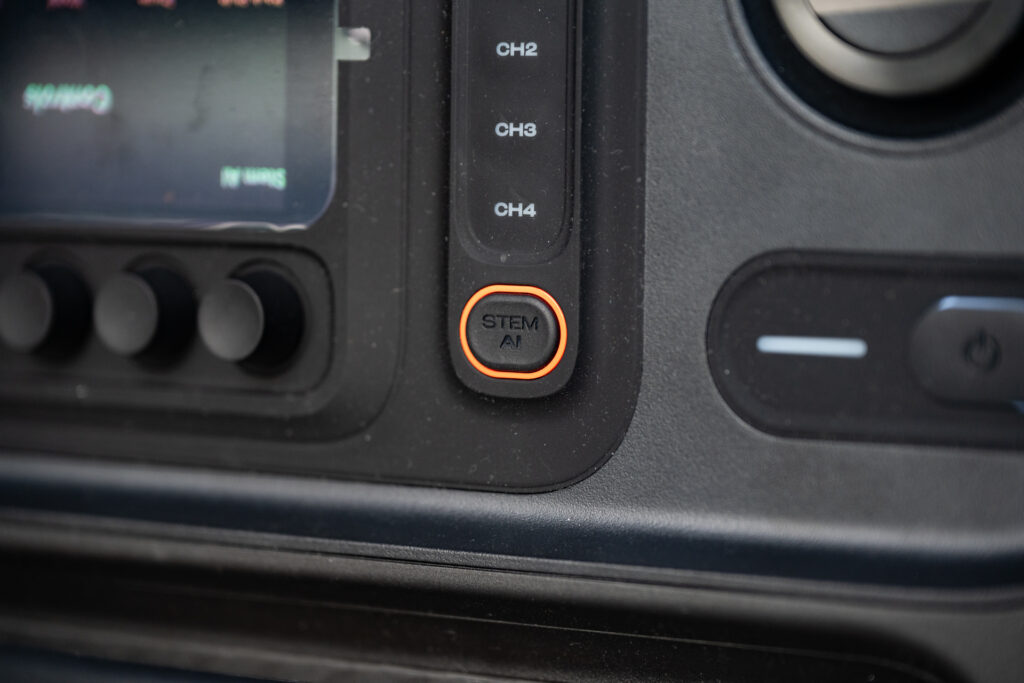
Of course, the biggest talking point here is the AI stem separation. Press the dedicated Stem AI button, stream music from your phone, and the BandBox Trio attempts to isolate vocals, drums, bass and melodic elements in real time.
Naturally, I had to throw something complicated at it. I chose one of my old Beatles FLAC files played from a portable DAC. Partly because if anything can confuse an AI, it is probably songs with multiple singers and instruments all overlapping one another.
The results are impressive, but imperfect.
Drum separation works exceptionally well because percussion is transient-heavy and easier for AI to identify. Vocals and melodic instruments, however, occasionally blur together.
Sometimes guitars disappear unexpectedly. Occasionally, backing vocals creep back into the mix like ghosts refusing to leave. But, for practice purposes, none of that really matters.
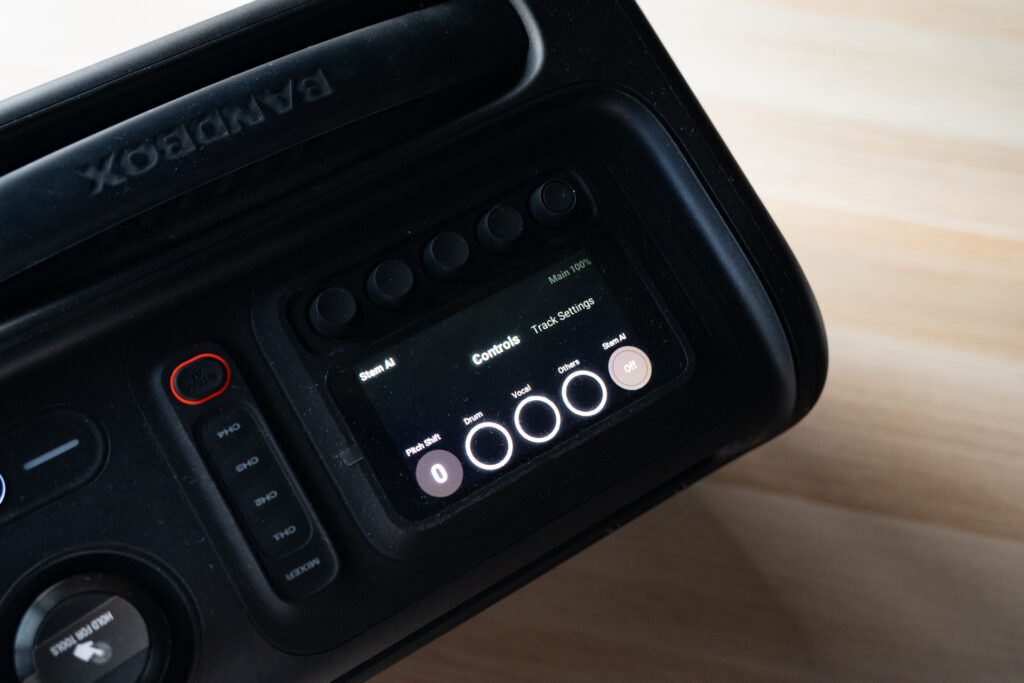
Dial down the melodic instruments, and suddenly you are jamming along to your favourite songs with surprising ease. It feels like sitting in with a band, and that is where the Trio truly shines.
For cover musicians, guitarists learning songs quickly, buskers, or players preparing for gigs, this feature is tremendously useful. Drummers, in particular, may adore it because the drum-removal function works remarkably well.
Would I trust it live? Probably not. At least, not without carefully prepared backing tracks. AI stem separation can still produce occasional sonic surprises, and nobody wants a random backing vocal suddenly appearing halfway through a performance like an uninvited wedding guest.
So, Is It Worth Buying?
I went into this JBL BandBox Trio review expecting another overhyped AI gadget. Instead, I found one of the most genuinely innovative practice tools I have used in years.
The amp models are surprisingly competent. The speaker sounds enormous. The portability is excellent. And the AI stem separation, while not flawless, is genuinely transformative for practising and learning songs.
For many players, particularly bedroom guitarists, the smaller BandBox Solo probably makes more sense financially and practically. The Trio really comes alive for musicians who busk, rehearse socially, or want a hybrid PA-and-practice setup that can also double as a very capable Bluetooth speaker.
Still, JBL deserves credit here. In a market overflowing with AI products searching desperately for a purpose, the BandBox Trio actually finds one. And a good one at that.
Liked this? Check out more articles on Futr tech here.