If you asked most people which appliance in the home is quietly chewing through electricity, they would probably point accusingly at the air-conditioner or the fridge. Few would think of the humble water heater.
In Singapore, water heaters are the third-largest household energy guzzler after air-conditioners and refrigerators, accounting for about 10% of domestic energy use.
Since 1 April 2025, the National Environment Agency (NEA) has brought household water heaters under the Mandatory Energy Labelling Scheme (MELS), putting them in the same regulated company as refrigerators, air-conditioners and clothes dryers.
To date, more than 200 water heater models have been registered and rated from one to five ticks for energy efficiency, spanning gas instantaneous, electric instantaneous and electric storage types.
From April 2026, the bar will rise again: any heater that fails to achieve at least a one-tick rating under MELS will no longer be allowed for sale. For households, the ticks are more than just stickers; a higher rating essentially means more hot water for every kilowatt-hour (kWh) of energy consumed.
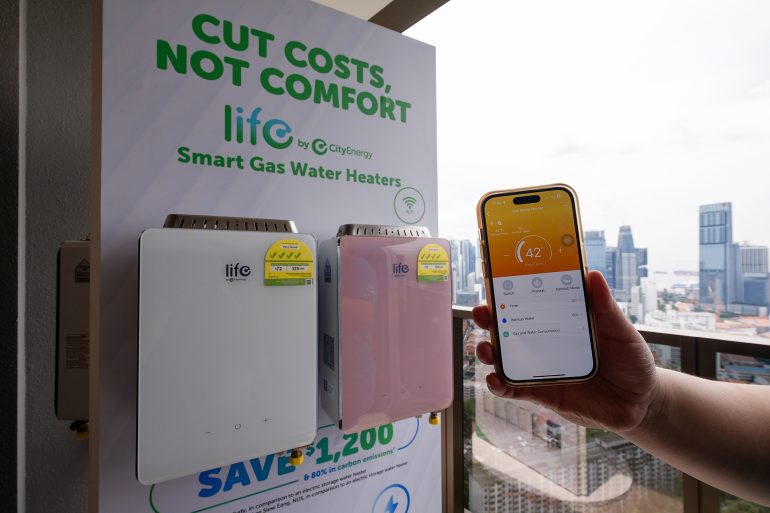
NEA’s own study found that a family switching from a one-tick electric storage heater to a four-tick gas instant model could save up to S$1,200 over the heater’s lifespan, based on three showers a day.
Cutting Carbon with Every Shower
The real game-changer, however, is carbon. Research by Associate Professor Lee Siew Eang, Honorary Fellow at the Department of the Built Environment, College of Design and Engineering, National University of Singapore, shows that gas water heaters emit around 0.1913 kg of CO₂ per kWh, compared to about 0.4085 kg for electric water heaters.
Why the gap? The answer lies in how the energy is delivered. In Singapore, most electricity is generated by burning natural gas, which means energy is lost in conversion before it even reaches your home. Town gas, on the other hand, is used directly for heating, avoiding that extra conversion step and the associated emissions. Electric storage heaters also tend to be less efficient in daily use, because they keep large volumes of water heated over extended periods. That round-the-clock readiness comes with higher standby losses.
Electric storage water heaters are estimated to emit around 400 kg of carbon per user annually, versus about 80 kg for gas instant models. Thus, switching from an electric storage unit to a gas instant heater could cut emissions by an estimated 320 kg per user per year.
If every household in Singapore were using an electric storage heater and collectively switched to gas instant heaters, the country could offset carbon emissions equivalent to planting about 1.4 million trees or removing more than 300,000 cars from the road each year.
Why Gas Water Heaters Are Gaining Ground
On the ground, gas water heaters are seeing steady adoption. City Energy, Singapore’s sole provider of piped town gas, has observed growing uptake among condominium developers over the past three years. Among new private developments with town gas connections, 70% of dwelling units now opt to install gas water heaters.
Nationwide, gas water heaters are currently used in more than 210,000 households, representing roughly 14.3% of all homes in Singapore. Installations across completed projects rose by about 210% in the period 2023–2025 compared with 2020–2022, driven by clearer efficiency messaging, updated designs that fit modern interiors, and the simple appeal of on-demand hot water.
“As households become more conscious of their energy use and taking an active role in choosing lower-carbon choices, we expect City Energy to play an even bigger role in Singapore’s sustainability journey starting with raising awareness of gas water heaters. With NEA’s labelling scheme raising awareness, more families and developers are now prioritising efficient appliances. We will continue working to make gas water heating even more accessible for modern homes.”
Mr Soh Guan Hong, Senior Vice President, Residential Sales Group Head, City Energy
How Gas Water Heaters Work Differently
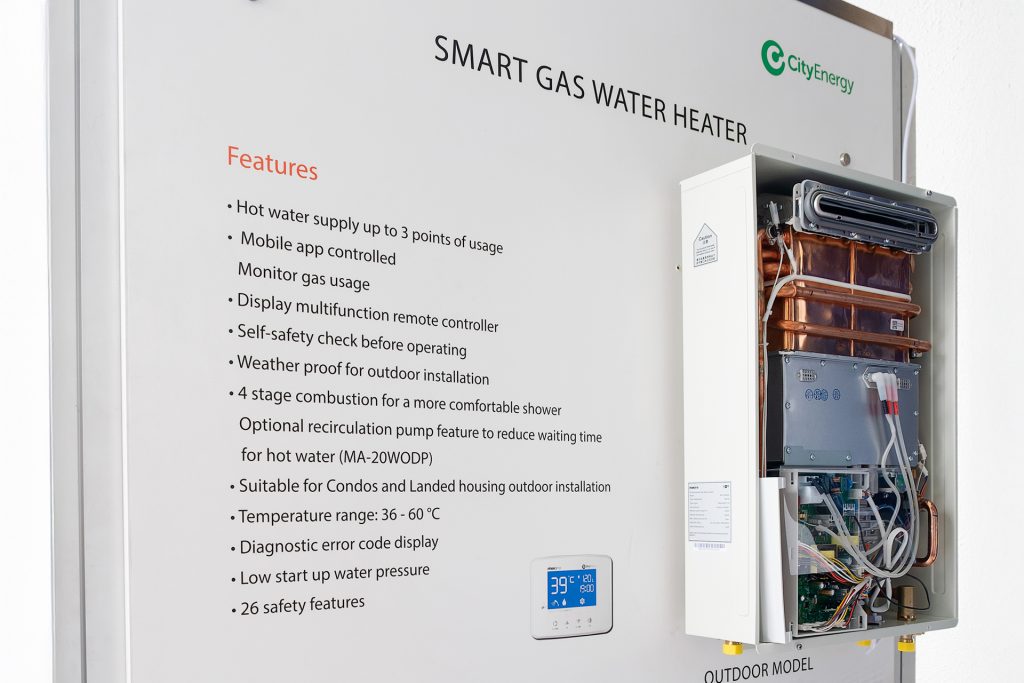
Where electric storage heaters need to reheat an entire tank to about 60°C before use, gas water heaters adopt a more targeted approach. They heat only the water required at the moment it is used. It is the difference between boiling a full kettle every time you fancy a cup of tea, versus heating just what you intend to drink.
“In planning new developments, we look closely at what adds long-term value for homeowners. Gas water heaters stand out because they are more energy efficient, and space-saving. With the national labelling scheme now in place, we see more buyers asking for appliances that meet higher energy standards. Installing gas water heaters gives our projects an edge, while also aligning with Singapore’s broader sustainability goals. It’s a choice that benefits both residents and the environment.”
Mr Koon Wai Leong, General Manager of Hoi Hup Pte Ltd
Key advantages of gas water heaters include:
Energy and Cost Efficiency
- Operate on demand, avoiding the energy losses associated with constantly keeping large volumes of water hot.
- Help households reduce wasted energy and lower utility bills, a welcome advantage as electricity tariffs fluctuate.
Convenience and Comfort
- Deliver hot water almost instantly, so there is no waiting around before a shower.
- Provide stable, consistent temperatures even during back-to-back use.
- Support strong flow rates suitable for rain showers and multi-point usage across bathrooms.
Space-Saving Design
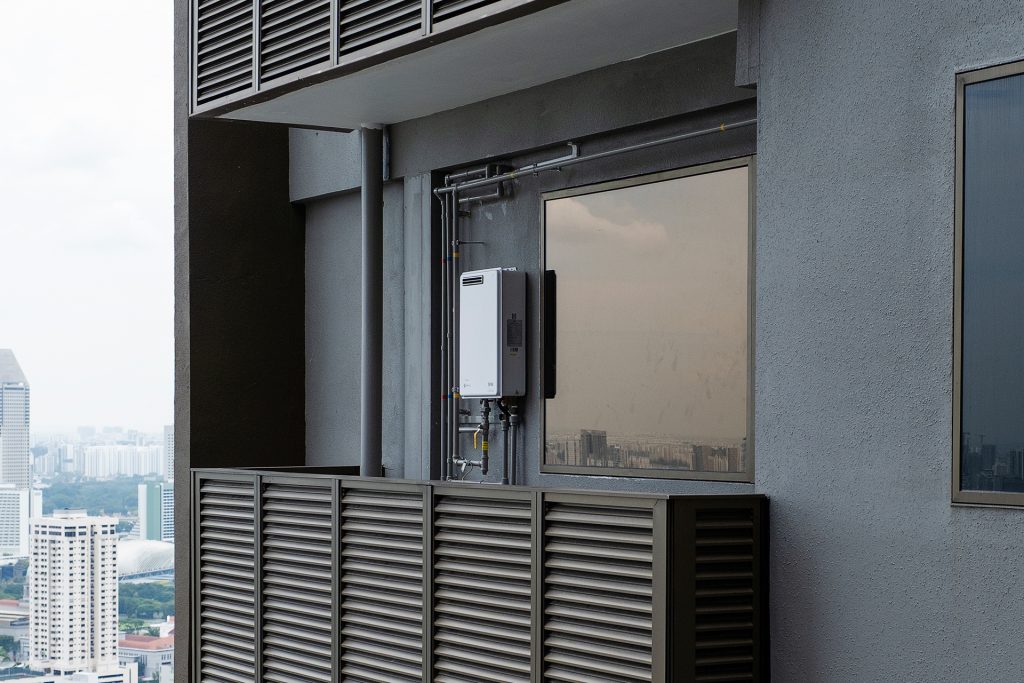
- Tankless, wall-mounted units free up precious space in bathrooms and service yards.
- Well suited for compact BTO flats, condominiums and apartments, where every square foot counts.
Life by City Energy Gas Water Heaters
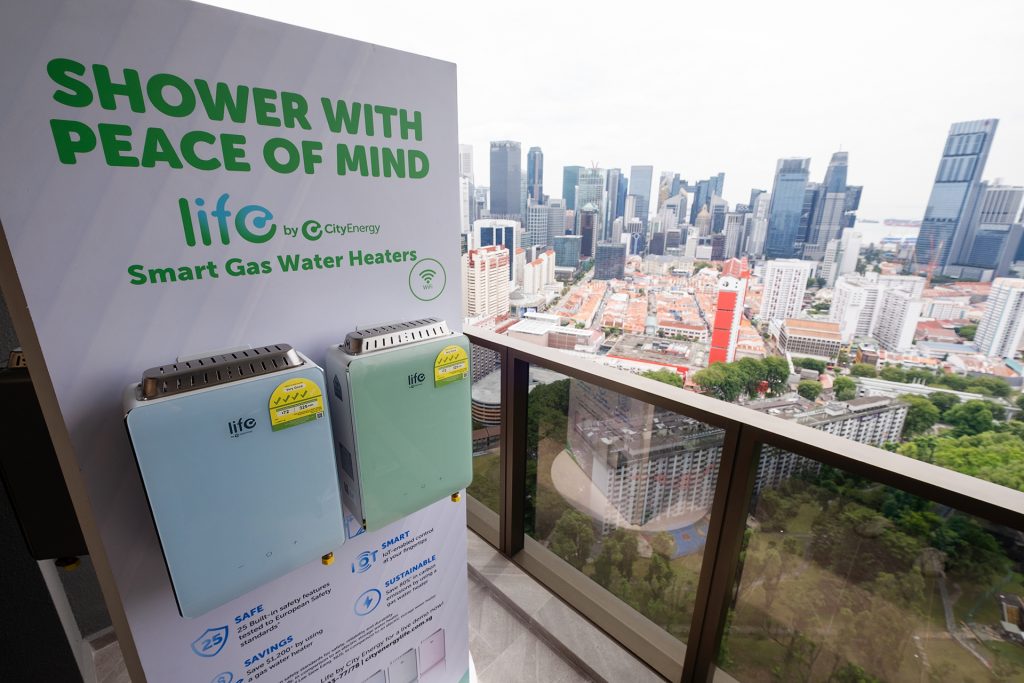
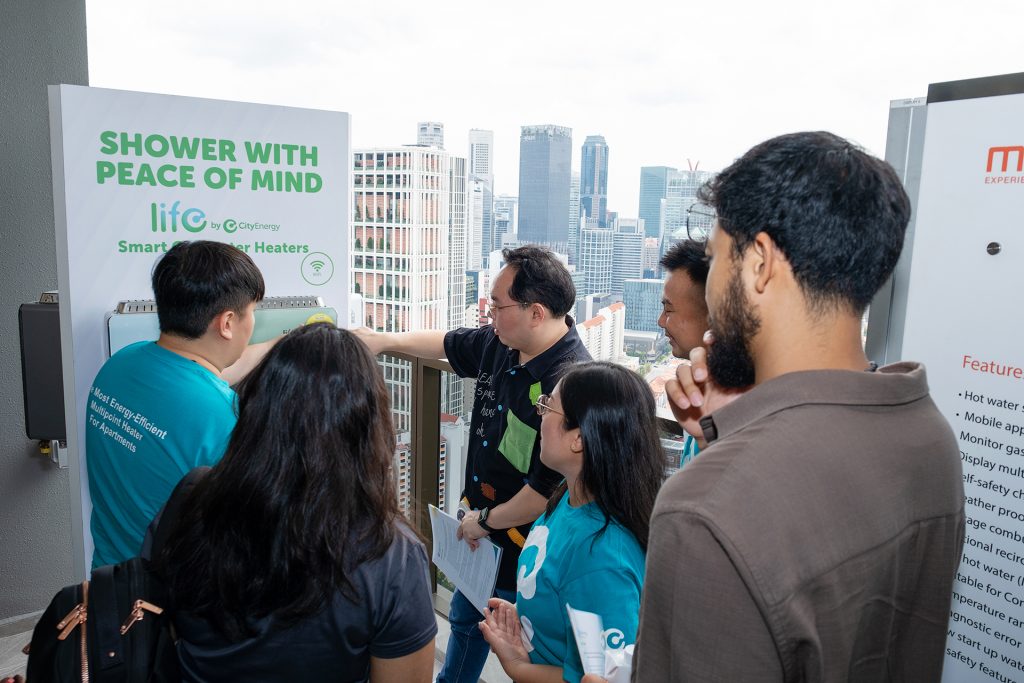
Riding on this demand, City Energy has launched its own line of gas water heaters under the “Life by City Energy” brand, targeted at HDB homeowners. These models integrate with the iAppliances app, giving users greater control over both comfort and energy use.
Designed for installation in the service yard, the heaters are compact yet stylish, available in six colour options to complement contemporary interiors rather than clash with them. By doing away with bulky storage tanks, they also eliminate the maintenance challenges and design compromises that often come with concealing traditional heaters behind false ceilings.
Life by City Energy gas water heaters feature self-adaptation technology for stable water temperatures and whisper-quiet operation, so you do not have to choose between comfort and calm. They also carry TÜV SÜD certification and incorporate 25 protective mechanisms, providing additional safety and peace of mind for families.
For homes with multiple bathrooms, households that value aesthetics, or those who want to fully enjoy a rain shower experience without worrying about running out of hot water, this range offers a blend of reliability, safety and modern convenience.
Check out more news articles on Futr here!