The DJI Mic Mini 2 is a small, stylish refinement of one of the best budget wireless mics around.
Not long ago, buying a decent wireless microphone meant spending the sort of money you’d normally reserve for a weekend getaway. You also had to dress your talent like a magician’s assistant: transmitter pack hidden somewhere, lavalier cable snaking under the shirt, and enough fiddling to kill the momentum before you even pressed record.
Then, DJI released the Mic Mini and showed us how unnecessary most of that was. A mic and transmitter in one tiny unit, good sound, and a price that did not require a second mortgage.
The DJI Mic Mini 2 is not a dramatic sequel. It is a polite improvement wrapped in more colour, a bit more personality, and a few practical upgrades that make it an even more appealing first buy for creators.
Just don’t treat it like a must-have if you already own the Mic Mini. This is more like buying the same great shirt in a nicer colour.
Design and features: small enough to forget, clever enough to rely on
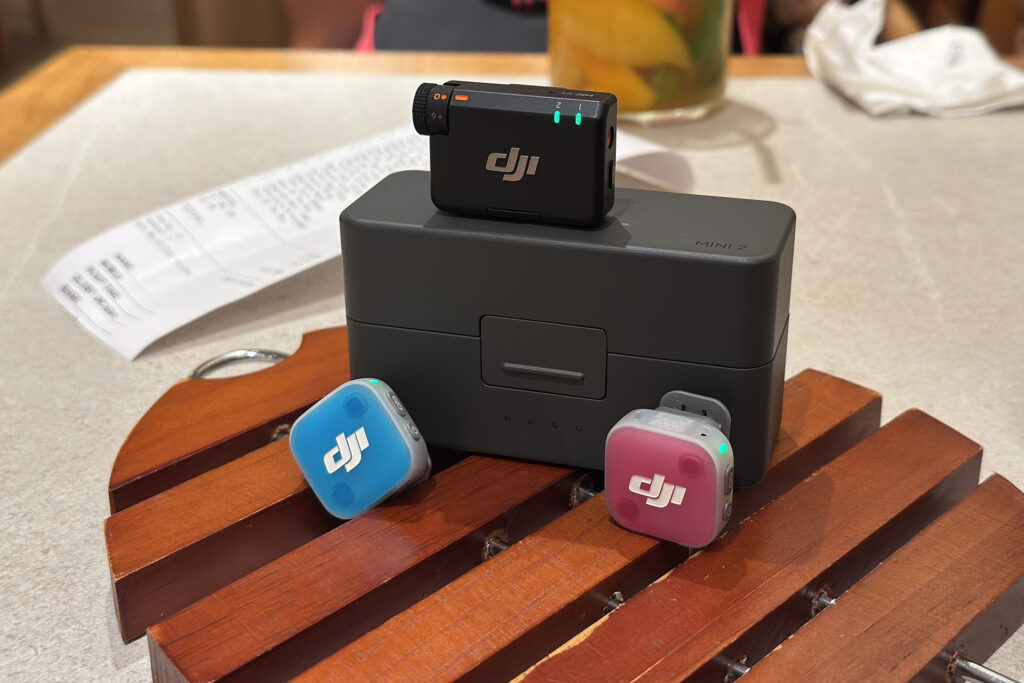
DJI sells the Mic Mini 2 in two packages. One for camera users, one for smartphone users.
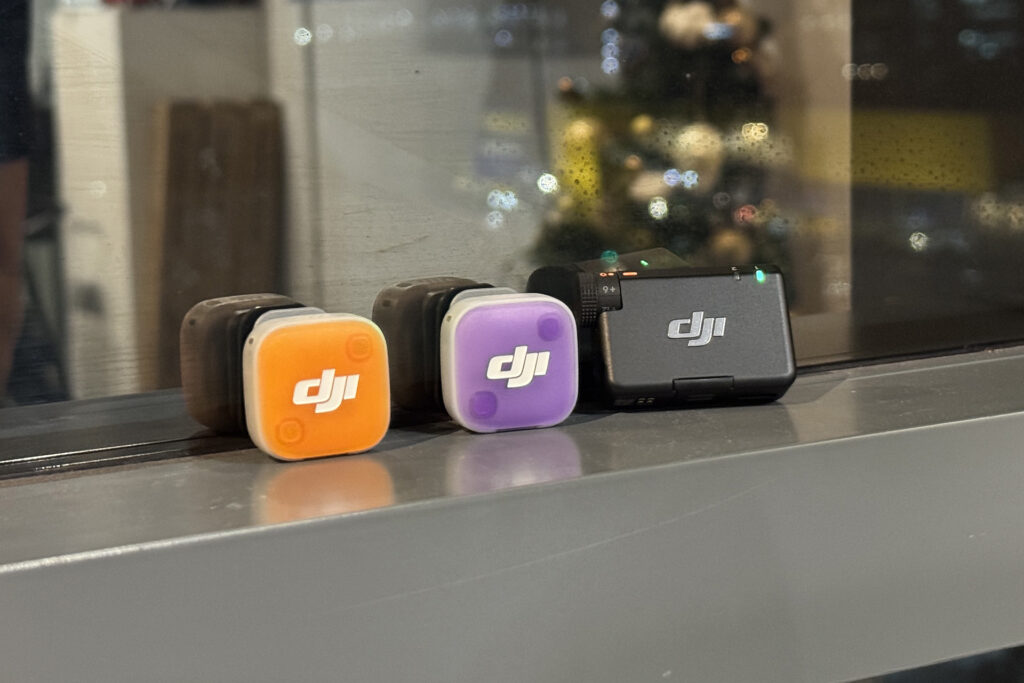
The camera kit includes a receiver with a 3.5mm output, while the mobile kit gives you a USB-C receiver for direct smartphone use. Both include a charging case, one or two transmitters, mounts (clip and magnetic), basic black and white covers, and windscreens. The camera kit also includes a smartphone adapter, which is a nice “just in case” for those of us who don’t always know what we’re shooting on until five minutes before we leave the house.
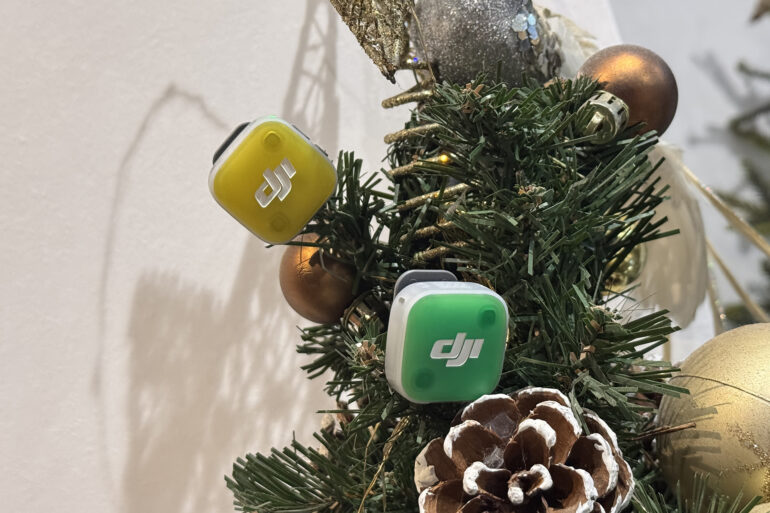
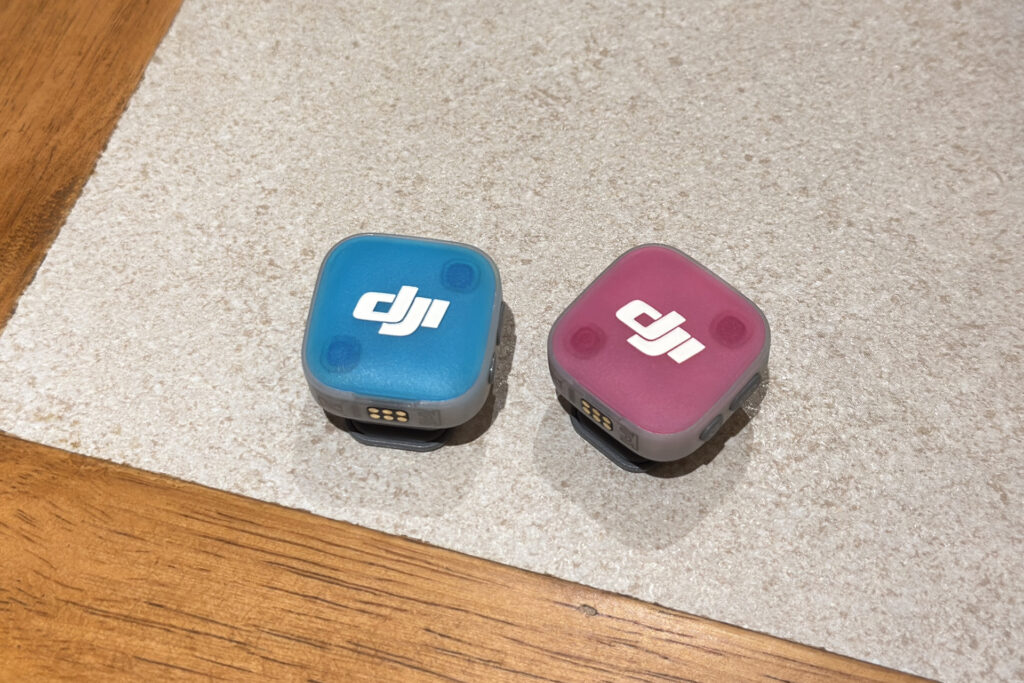
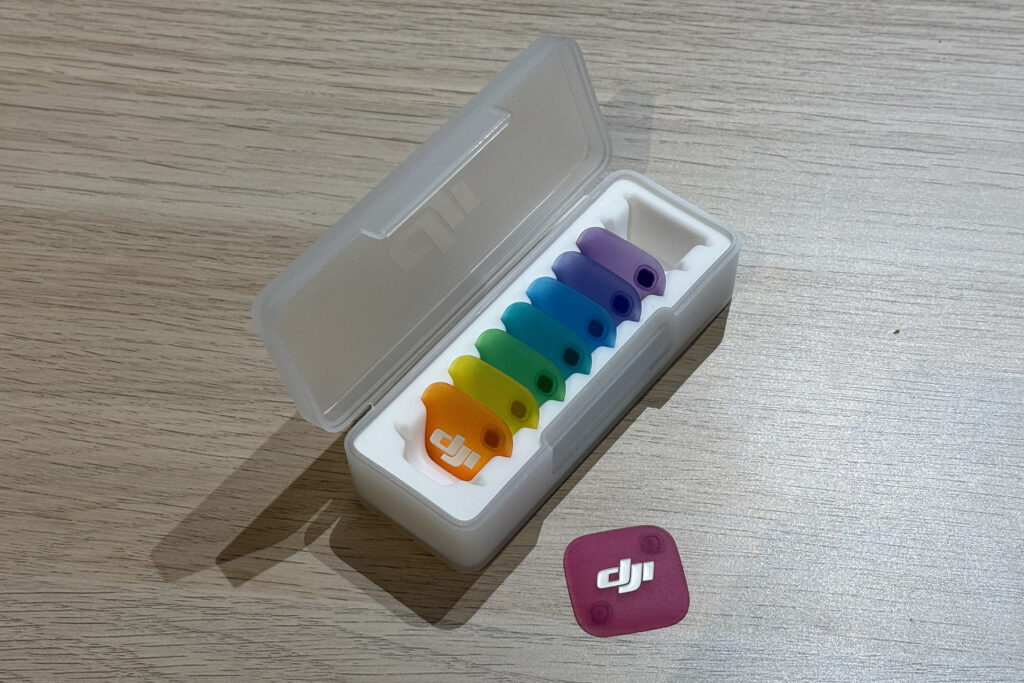
Where DJI has clearly had some fun is with the aesthetics. The camera kit’s colourful covers look as though they were borrowed from a box of ’90s iMacs.
The optional designer covers go even further with abstract pastel patterns, though they feel like the sort of accessory you buy when you are already making money from your content, rather than when you are trying to start.
The only misstep is the branding. The DJI logo is large and, depending on your subject’s outfit, occasionally looks like you are sponsoring yourself. I suspect many creators will do what creators always do: apply a tiny piece of tape and move on.
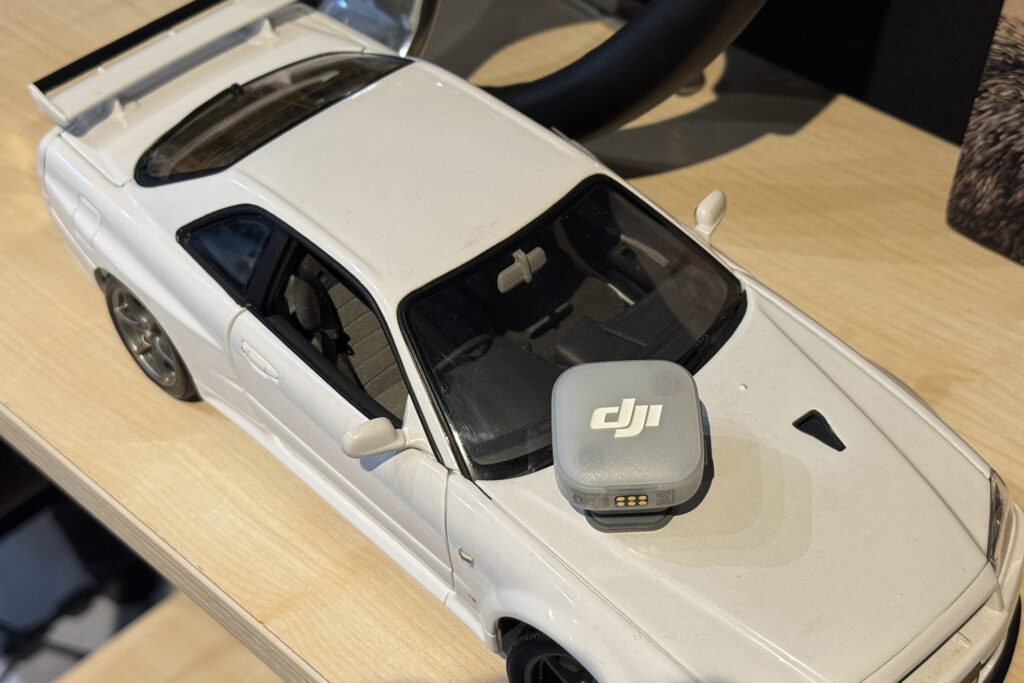
DJI has also slightly changed the shape of the transmitter from a faceted design to a flatter one to better accommodate the magnetic covers. The mic is still small enough to vanish on clothing, though it is now a touch heavier.
Battery life: the mic’s superpower
This is one of the Mic Mini 2’s biggest wins.
Each transmitter is rated for up to 11.5 hours on a charge, with the receiver quoted at around 10.5 hours if noise cancellation is off. In testing, we even exceeded those figures slightly, meaning you can realistically shoot an entire day without the anxiety of mid-take silence.
That is already impressive, but the charging case makes it even more convincing. DJI says the case can recharge the set 3.6 times, giving up to 48 hours of use without a wall plug in sight.
Shooting outdoors, travelling, or simply doing back-to-back client work becomes child’s play with this thing. It’s also better than many rivals in the same space. The Rode Wireless Go III is rated for seven hours per charge, while the Hollyland Lark M2 is stated at 10 hours.
The charging times are reasonable too: about two hours to charge all three devices in the camera case, and about an hour for the smaller mobile set.
Connectivity: flexible enough for modern shooting
DJI has made the Mic Mini 2 behave like a modern creator tool. You can pair transmitters directly with a smartphone via Bluetooth, or connect the system to DJI cameras through the company’s OsmoAudio ecosystem, covering devices like the Osmo Action 6, Osmo Pocket 4 and Osmo 360.
Many budget wireless mic systems lock you into one workflow, with camera only, phone only, or awkward adapters. The Mic Mini 2 feels built for people who routinely shoot both.
Using it is straightforward. Clip or magnet the mic onto your subject, power on the transmitters, power on the receiver, and it pairs automatically.
On the camera receiver, you can adjust levels using a physical dial from -12dB to +12dB. Noise reduction is toggled via a switch on the mobile receiver, or via the DJI Mimo app on the camera receiver. It is, overall, a system designed to reduce fuss, exactly what budget creators need.
Stereo mode is supported, with two mics able to record to separate channels so you can mix later. That’s useful for interviews and dialogue content, and makes the mic feel more professional than its price suggests. These settings are managed via the Mimo app.
Audio quality: excellent… with a few important limitations
The DJI Mic 3 supports 32-bit float internal recording with 32GB onboard storage plus dynamic gain control, meaning it can save your audio in situations where your levels are wrong or your subject suddenly decides to shout. It also gives you a proper audio display and backup recording.
The Mic Mini 2 does not. It has no internal recording, so you have no backup if your phone glitches, your camera input fails, or someone unplugs a cable. It also lacks a level display and relies on automatic limiting rather than 32-bit float. Limiting can prevent clipping, but it may reduce overall audio quality compared to higher-end solutions.
That said, within its constraints, the Mic Mini 2 sounds excellent. It records at 48kHz, 24-bit, and the new voice tone presets are genuinely useful.
Regular is neutral and balanced. Rich emphasises low tones and can sound pleasing for voiceovers without needing post EQ. Bright adds clarity, useful in noisier environments.
Noise cancellation: use sparingly
The Mic Mini 2 includes two levels of AI noise cancellation.
The low setting reduces background noise but introduces some distortion. The high setting is more aggressive, but we found it distorted the audio noticeably. This is a mode you should only use in a pinch when the alternative is unusable sound.
True noise reduction without artefacts is hard, and most budget systems either skip it entirely or offer a version that sounds like your voice is speaking through a pillow. The Mic Mini 2 gives you a tool that can help, provided you treat it like a last resort, not a default.
Availability and pricing
The DJI Mic Mini 2 is available at these price points:
- Camera kit with two transmitters and a receiver is listed at SGD $107
- Mobile kit with one transmitter and receiver is SGD $69.
That is aggressively good value for what you get.
Verdict: the best budget wireless mic for first-time buyers
The DJI Mic Mini 2 is a mild upgrade over the original, but it’s a meaningful refinement for newcomers. It delivers an excellent combination of sound quality, range, battery life and basic noise cancellation at a price that undercuts many rivals.
If you already own the Mic Mini, you do not need to upgrade. The core experience is largely the same, and the biggest changes are aesthetic and tonal presets.
But if you are buying your first wireless mic and you want something small, reliable and genuinely good-sounding without spending a bundle, this is one of the easiest recommendations in the category.
Liked this? Check out more articles on Futr tech here.