
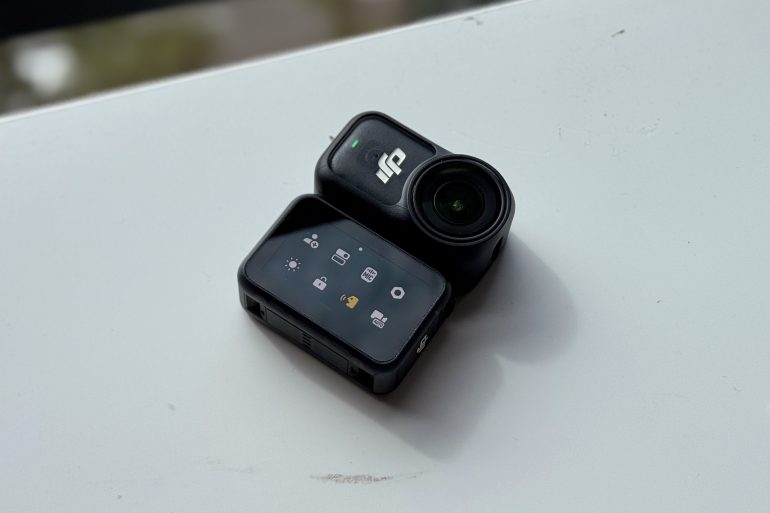
The DJI Osmo Nano is their smallest action camera yet, and makes pro-looking footage effortless, even when your hands are full.
I clipped the Osmo Nano to the brim of a cap for an early jog along East Coast Park. No gimbal, no rig, just a nod to roll and off we went.
The footage later looked steadier than my caffeine levels, which is saying something on a humid Saturday. That, in essence, is the Nano’s pitch: all of the moments, none of the faff.
Design & Handling: Pocket kit, proper engineering
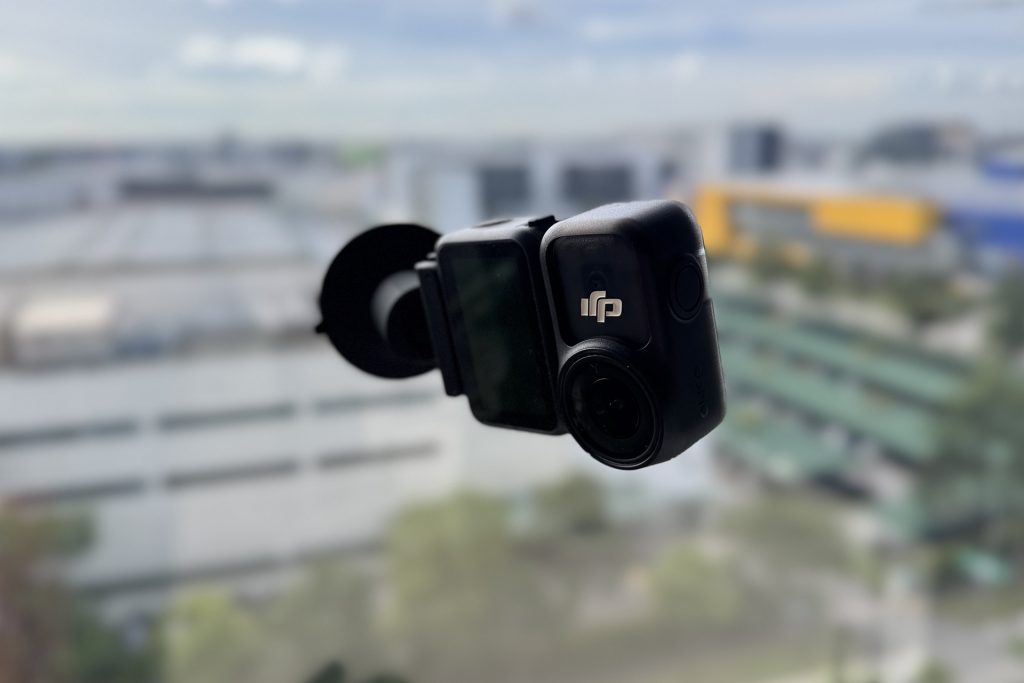
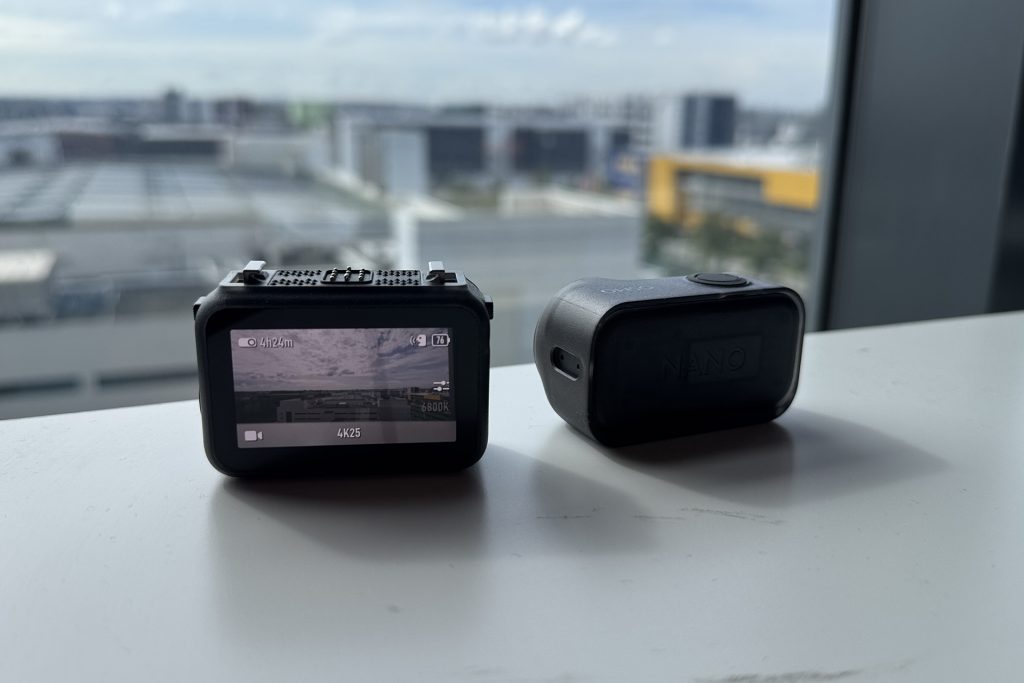
The Nano’s camera module is tiny, measuring just 57.3×29.5×28mm and 52g with a pebble-smooth finish that welcomes magnets, clips and mounts without complaint.
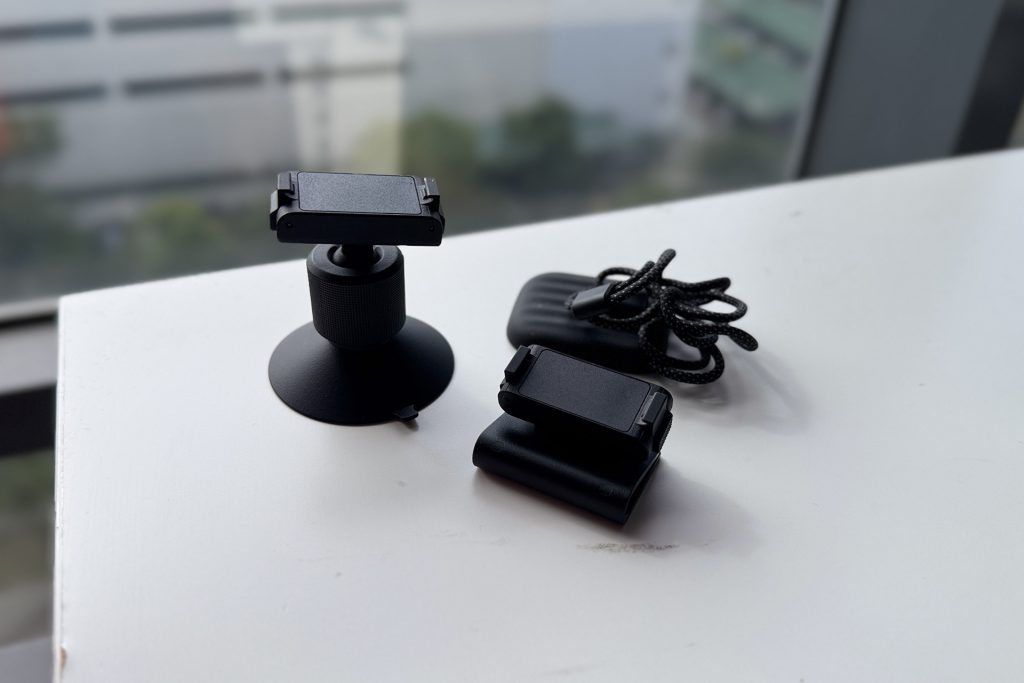
It docks into DJI’s Multifunctional Vision Dock, which adds a small touchscreen, extra battery and wireless remote control. The dock acts as a smart charging case that doubles as a monitor and remote. Useful on a mini-tripod when you want hands-free clips or to frame yourself from a distance. The camera itself is waterproof to 10m, while the camera-plus-dock combo is IPX4 splash-resistant, so you’ll pick your battles at the pool but won’t panic in a drizzle.
The overall feel is familiar to anyone who’s handled DJI action gear: tidy tolerances, tactile buttons, and accessories that click together with a satisfying, almost Lego-like logic. Gesture controls, including the nod-to-record party tricks, are genuinely useful when your hands are busy (or sandy).
Image Quality: Big ambition from a small sensor
The Nano uses a 1/1.3-inch CMOS sensor with fast readout and a wide f/2.8 lens (143° FOV), delivering crisp, high-contrast footage that doesn’t crumble the moment light gets tricky.
It shoots 4K/60p in 16:9, 4K/50p in 4:3 for roomier reframes, and 4K/120p for clean slow-motion; stills land at about 35MP. Colour is where DJI leans into its professional heritage: 10-bit recording with D-Log M gives you proper grading latitude (DJI quotes up to 13.5 stops of dynamic range).
In practice, the Nano’s daylight footage is rich and detailed; at dusk, noise is present but controlled, and highlights roll off gracefully in D-Log M. It won’t shame a larger action cam in good light, and it comes surprisingly close after dark if you’re measured with exposure.
Stabilisation & Movement: Software over gimbal with real results
There’s no mechanical gimbal here. Instead, DJI leans on RockSteady 3.0 electronic stabilisation and HorizonBalancing to keep the horizon sensible and footsteps civilised. For the vast majority of creator scenarios, walk-and-talks, city wanderings, café setups, this is more than enough. (Do note: the most aggressive EIS modes are unavailable in slow-mo and timelapse.)
Audio & Accessories: Small body, grown-up I/O
Two microphones do credible work in quiet environments. Where it gets interesting is wireless: the Nano pairs directly with DJI’s microphones for cleaner dialogue, and the dock’s live preview makes it easier to check levels without a second person.
It’s not a studio rig, but for travel reels, vlogs and quick interviews, the system feels thoughtfully put together.
Battery Life & Storage: Sensible numbers, smarter options
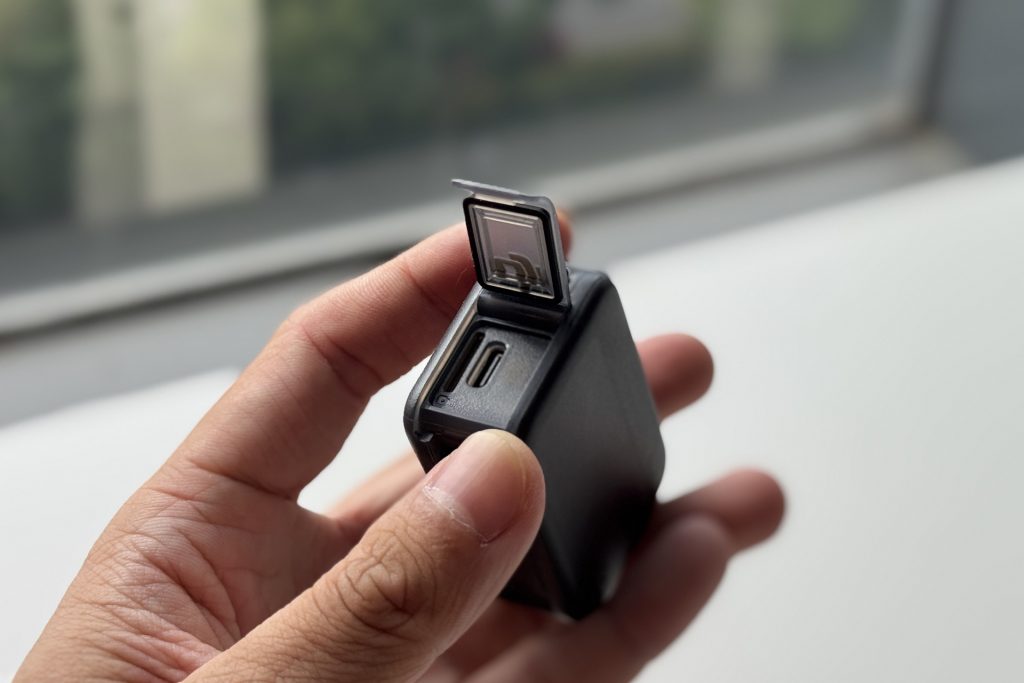
DJI rates about 90 minutes from the camera alone (tested at 1080/24), with over 50 minutes at 4K/60 in “Endurance Mode”. Snap in the dock and you can stretch to around 200 minutes in lighter recording profiles. Real-world reviews report between 60–135 minutes depending on resolution, stabilisation and screen use which mirrors my experience: one morning of mixed clips without battery anxiety, plus a lunch break top-up via USB-C.
Storage is equally pragmatic: 64GB or 128GB built-in, and microSD expansion up to 1TB.
App & Workflow: Friction-light, publish-ready
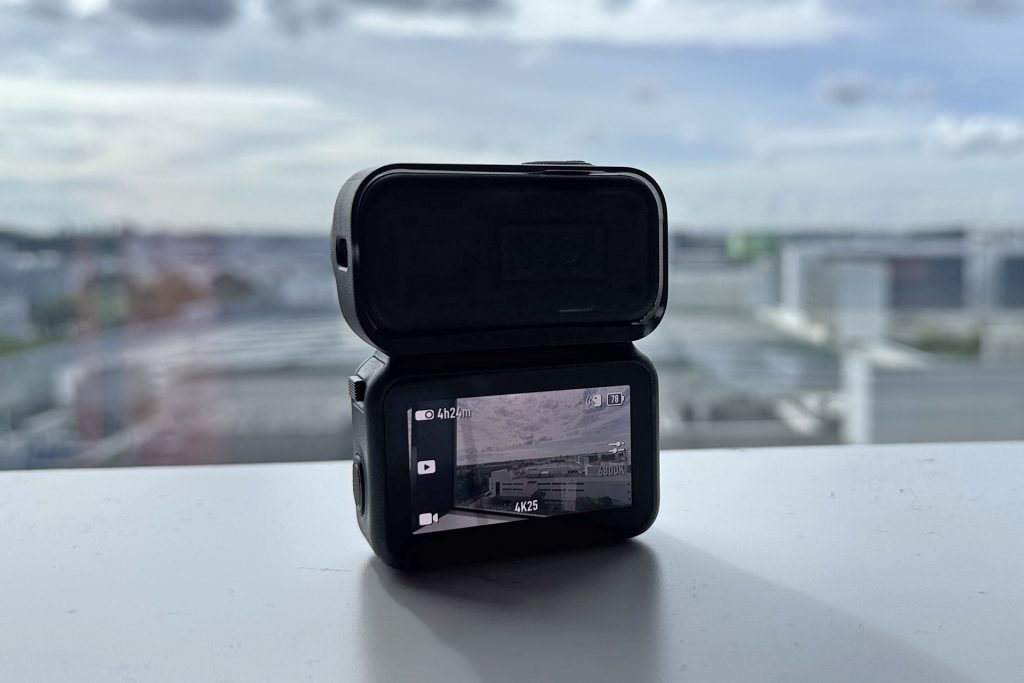
Pairing with the DJI app is quick, and the dock’s 1.96-inch touchscreen is bright enough in Singapore sun to check framing. Pre-record buffers (5s to 5min) save the action that happened just before you hit record, perfect for unpredictable street performers or kid-does-something-funny moments.
Bitrate caps at 120Mbps, which keeps files nimble for phones while preserving detail for a light grade.
Everyday Use: A day out, minus the faff
Here’s a typical sequence I shot for a short reel: nod to roll; stroll past prams and joggers with RockSteady smoothing the cadence; set the dock on a mini-tripod to record a hands-free piece to camera; a quick hyperlapse of the shoreline; a 4K/120 slow-mo of cyclists threading the curve near the food village.
Back home, I trimmed and graded on the phone, pushed to social in ten minutes. That’s the Nano’s trick: it doesn’t interrupt your day to make a decent film of it.
Limitations & Quirks: Not quite invincible
No system this small is without trade-offs. The dock is only IPX4, so if your day involves cannonballs, go camera-only. And while stabilisation is impressive, truly violent movement will show its limits.
Price & Rivals: Value with pro leanings
At launch, the Nano undercuts its most obvious rival: US$299 (64GB) or US$339 (128GB). For creators who want 4K/60, 10-bit/D-Log M, and strong stabilisation in a wearable form factor, that’s a compelling bill.
If you live in heavy winds or constant rain, a larger action camera still makes sense; otherwise, the Nano is the new default recommendation for pocketable video with professional intent.
The DJI Osmo Nano feels like a camera designed by people who actually make videos between errands. It starts when you nod. It stabilises without a harness. It grades like a grown-up. And it slots back into a pocket when life resumes.
Liked this? Check out more articles on Futr tech here.