When we talk about Singapore’s green transition, the spotlight often falls on multinational corporations, headline-grabbing net-zero pledges, glossy sustainability reports. But, if you look under the bonnet of the economy, it is our small and medium enterprises (SMEs) quietly powering the engine.
The question is: are they really ready for the carbon-constrained future that is fast approaching?
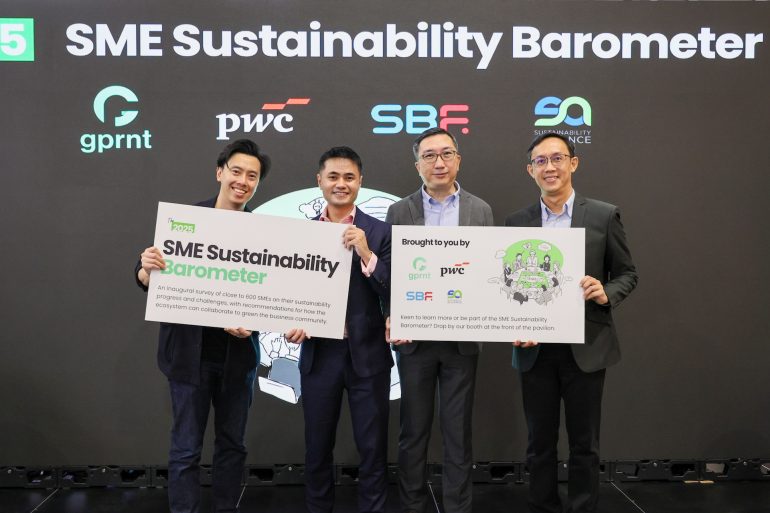
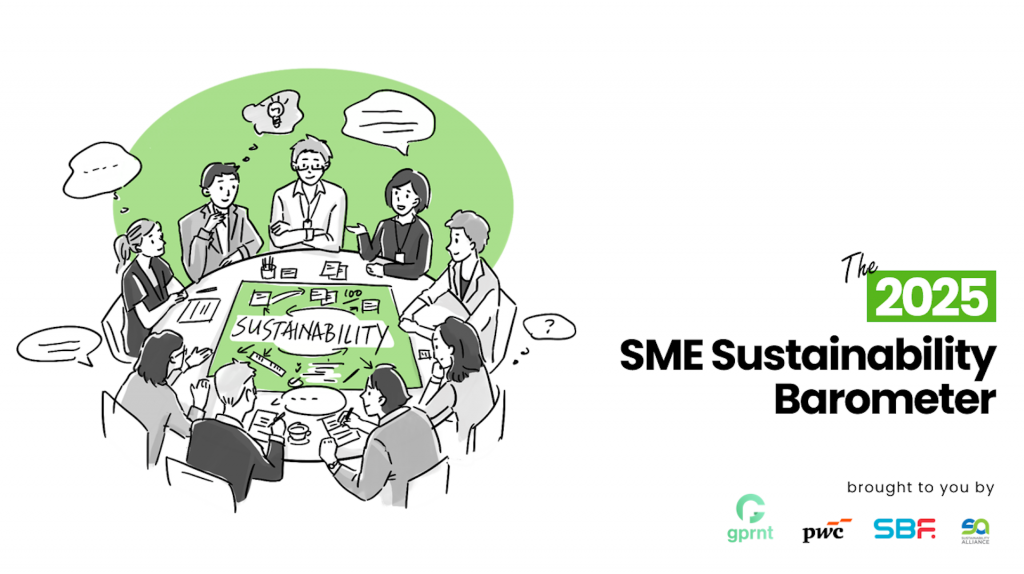
Gprnt and PwC Singapore set out to answer exactly that with the inaugural 2025 SME Sustainability Barometer, launched today with the support of the Singapore Business Federation (SBF) and the Sustainability Alliance (SA). The study engaged more than 560 SMEs across 19 sectors to understand how prepared they are for sustainability, what’s stopping them from getting started, and what the wider ecosystem can do to help them not just comply, but compete.
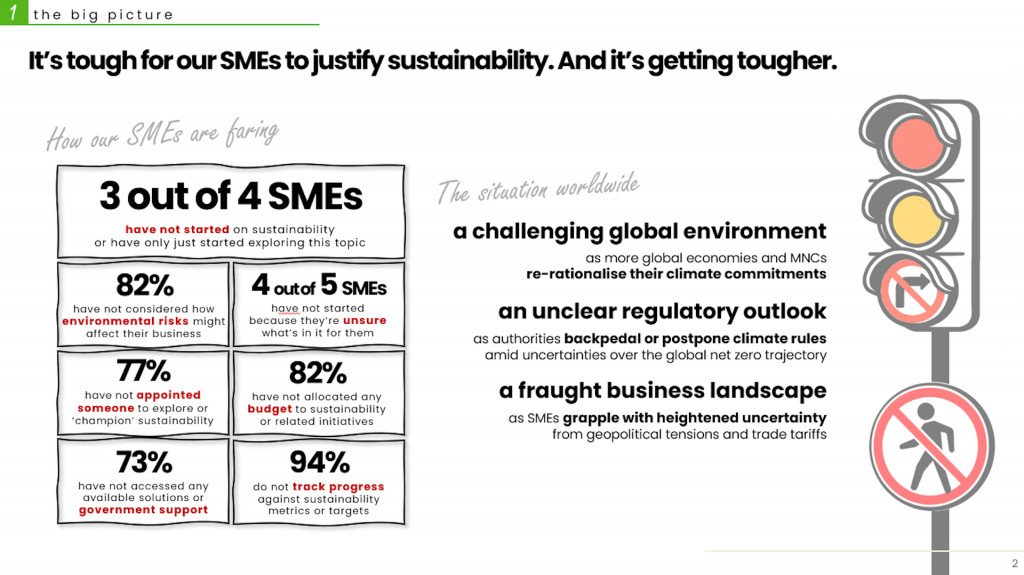
The headline finding is sobering but not surprising: three in four SMEs have yet to meaningfully embark on their sustainability journeys. For most, it is not a lack of interest; it is a knot of constraints that is proving difficult to untangle.
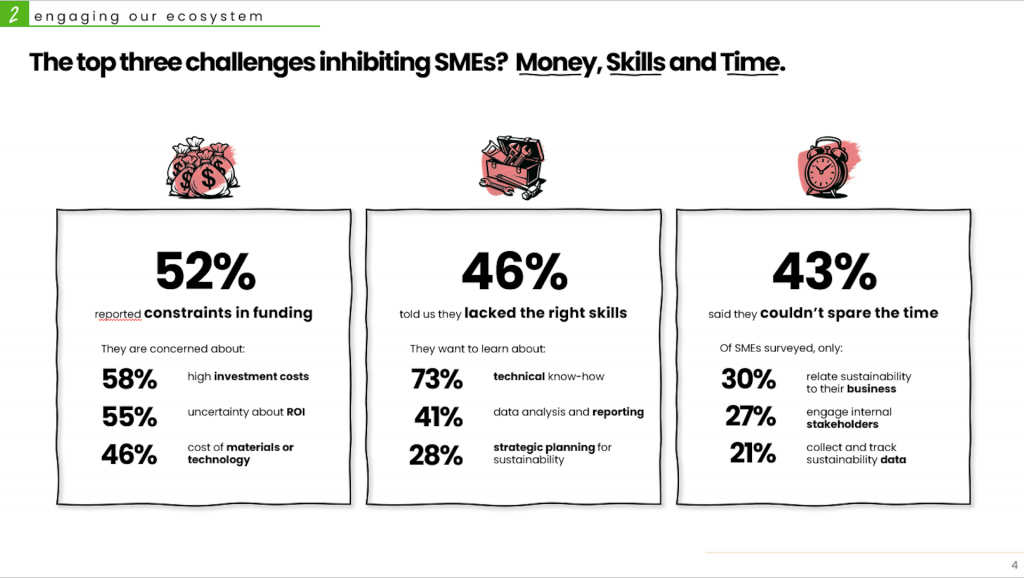
Many SMEs view sustainability as a nice-to-have when margins are thin and day-to-day operations already feel like a juggling act. More than half of those surveyed said it was hard to justify investing in sustainability given tight operating budgets and what they see as more pressing business needs. Four in five admitted they lack clarity on the tangible returns from going green.
About three in four SMEs say they do not have the technical know-how to translate broad sustainability ambitions into concrete action plans with measurable outcomes. It is one thing to know decarbonisation is important; it is quite another to decide which metrics to track, which tools to use, and how to report in a way customers and financiers will trust.
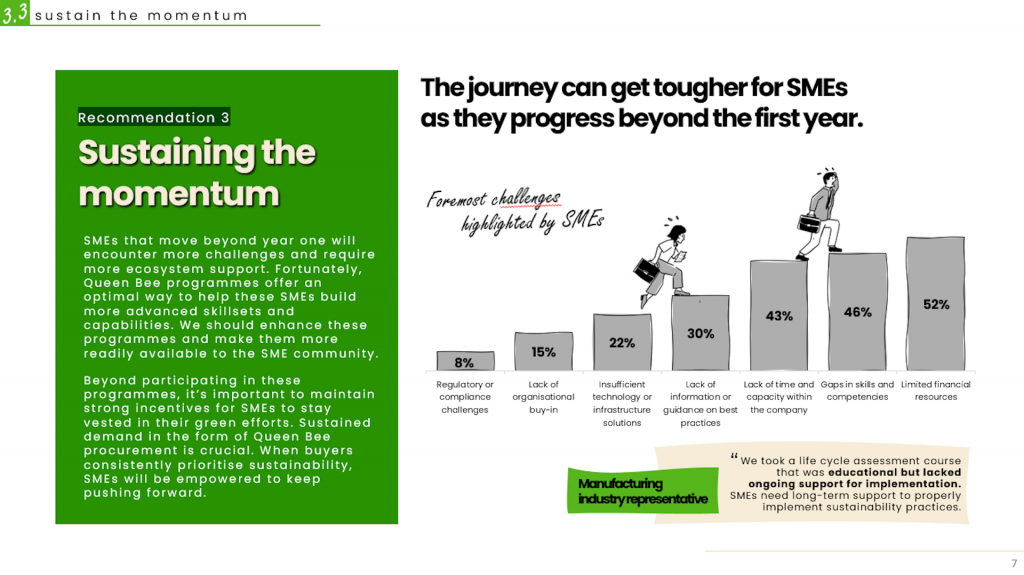
Time, unsurprisingly, is the third major pressure point. Over 40% of SMEs cited limited bandwidth and rising economic headwinds as key reasons they have not been able to explore the many programmes and schemes already available. Sustainability, for many, remains stuck in the “later, when things calm down” drawer.
One striking statistic from the Barometer: more than 70% of SMEs have not tapped any form of government assistance or existing sustainability support, despite the slew of schemes on offer. That points not to a lack of effort from policymakers, but to persistent challenges in awareness, accessibility and perceived relevance.
This is why the Barometer calls for stronger public-private collaboration and more coordinated ecosystem support. To bring the findings down from theory to practice, the study even includes practical “tear sheets”, bite-sized guides that point SMEs towards specific resources and first steps. Future editions aim to pull together an even broader range of programmes across Singapore’s sustainability landscape.
“We must enable SMEs to view sustainability not as a cost to bear, but as a business strategy for securing their place in the carbon-constrained economy of the future. Environmental sustainability will become an increasingly important driver of competitiveness and new growth, as climate change intensifies in the years and decades ahead. Supply chains and customers have begun to prioritise companies that demonstrate credible climate action and will increasingly do so. Going green is not about compliance. It is about staying relevant and resilient.”
Ravi Menon, Singapore’s Ambassador for Climate Action
The Barometer does not stop at diagnosing the problem. It lays out five key areas of action that, taken together, could reshape the business case for SMEs to go green.
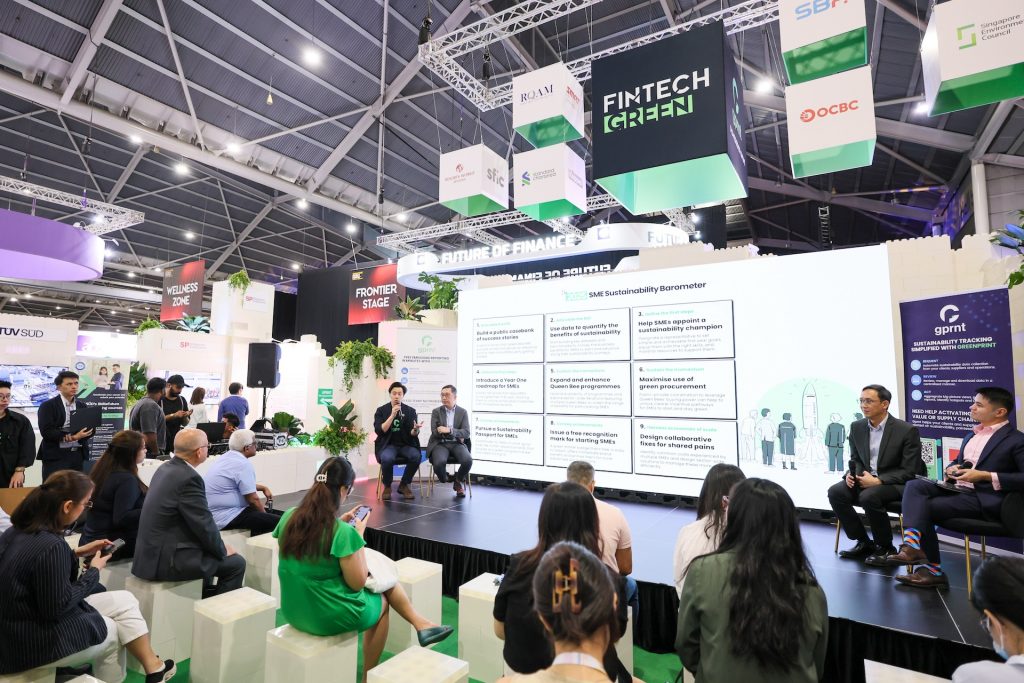
First, SMEs need help seeing the value of sustainability in concrete terms. Interestingly, only about 10% of SMEs at the early stages of their sustainability journey reported measurable benefits. Among the more mature group, that figure jumps to nearly half. The study suggests creating a central “case bank” to show clearly how others have reduced costs, won new customers or unlocked financing by going green.
Second, once the value is clear, SMEs need help getting started without feeling overwhelmed. The Barometer recommends that each SME appoint a sustainability “champion” from within their existing team. The focus is on quick, visible wins that build confidence, rather than long wish-lists that never make it off PowerPoint.
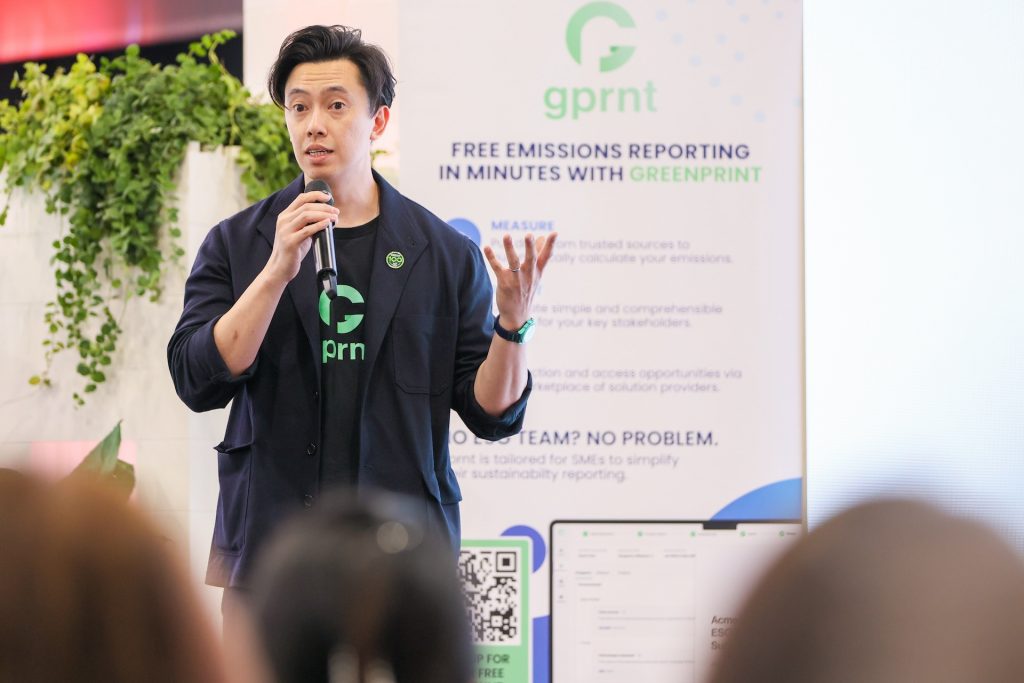
“When SMEs go green, they don’t act alone. They lift the networks around them. They green the value chains they power, and in doing so generate high-quality data from the ground up. Gprnt’s digital utilities play a catalytic role in helping businesses to automatically generate their basic sustainability metrics at no cost, which greatly lowers the barrier for local SMEs to get started. But to truly bring SMEs into the fold, we need to go further by layering clearer market signals and stronger incentives atop these foundations, in the form of green procurement, financing, and market access opportunities. This requires collective effort across the public and private sectors to make sustainability not just viable, but valuable.”
Lionel Wong, Chief Executive Officer of Gprnt
Third, as SMEs progress, they will need structured programmes to scale their efforts. The study highlights flagship initiatives such as sustainability-focused “Queen Bee” programmes, where large corporates work closely with SME suppliers and customers to build green capabilities. The model is clearly working: 86% of participants reported tangible business benefits. The Barometer calls for more such programmes, backed by strong government leadership and tighter public-private coordination, particularly in opening up green procurement opportunities for SMEs.
Fourth, cost remains a stubborn barrier. Nearly half of SMEs pointed to the high price of sustainable materials and solutions as a key obstacle. One way around this is to pool demand and solutions. For example, trade associations could help identify shared pain points and co-create sector-wide solutions with government partners, allowing SMEs to benefit from economies of scale rather than negotiating alone.
Finally, SMEs need better ways to be recognised and rewarded for their efforts. From financing to procurement, businesses increasingly want verifiable signals that a supplier is serious about sustainability. The Barometer proposes a unified “sustainability passport”, a streamlined way for SMEs to navigate fragmented certifications and showcase their progress in a clear, credible format that banks, buyers and partners can easily understand.
The next step is to translate these insights into action. Gprnt, SBF and SA will now engage partners across the public and private sectors to explore how best to implement the Barometer’s recommendations and turn them into real-world outcomes for SMEs and the broader economy.
“SMEs lack manpower, technical and financial resources for net zero transition. In today’s tough economic climate, sustainability can easily take a back seat. The SME Sustainability Barometer is a timely reminder on where SMEs stand and where support is most needed. It calls for stronger public-private partnerships, and for Queen Bees to drive sustainability by integrating environmental considerations into purchasing decisions to drive positive change across their supply chain. SMEs need to consider decarbonisation as an investment to reduce costs through utilities savings and gain new business by fulfilling demand for sustainable products/services. SBF is committed to help SMEs translate sustainability from aspiration to action, for meaningful and lasting business impact.”
Kok Ping Soon, Chief Executive Officer of SBF
For SMEs wondering where to begin, the 2025 SME Sustainability Barometer serves as both a mirror and a map. It reflects the reality on the ground, but also sketches out a practical route forward: start small, build capabilities, plug into the right programmes, and make data your ally.
Check out more news articles on Futr here!