DJI’s latest wireless microphone shrinks the hardware, sharpens the thinking and quietly solves half the gripes creators have muttered about for years.
I clipped the DJI Mic 3 to a linen shirt on a humid morning outside Maxwell Food Centre. Then I did what most microphones dread: I spoke softly. The playback later? Clean, balanced, and free of the usual panic spikes when a lorry rattled past.
That, in a nutshell, is the Mic 3’s proposition: less fiddling, more keepers.
Design & handling: half the faff, twice the sense

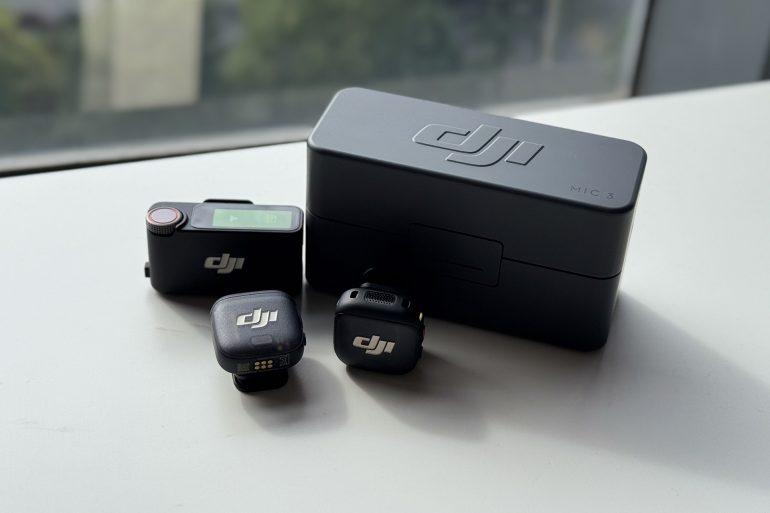
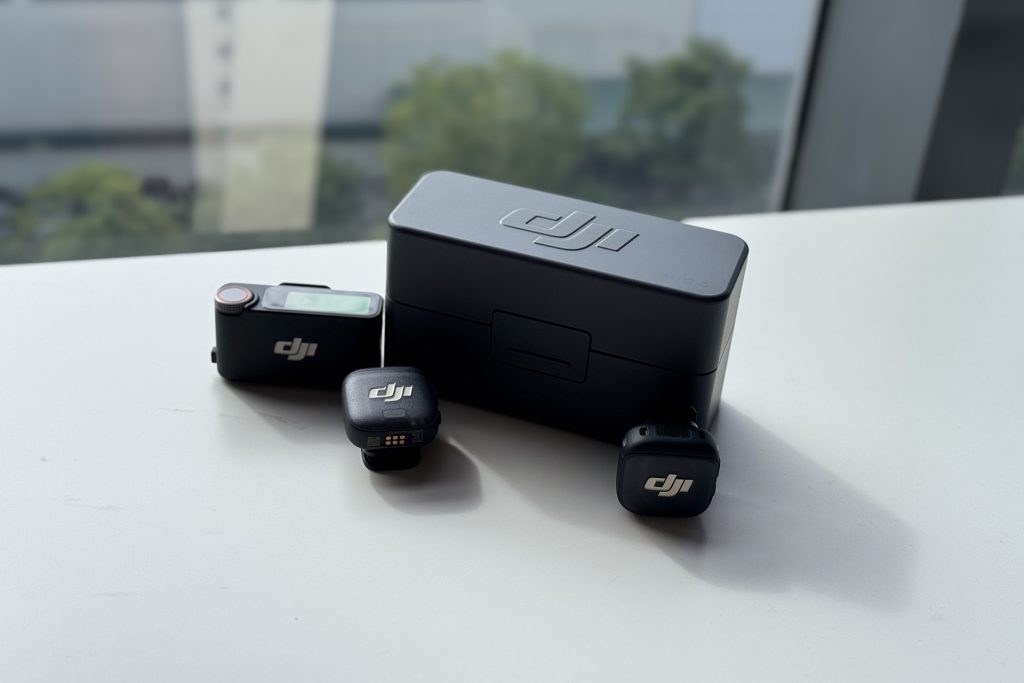
The transmitters weigh just 16g each, roughly the weight of a house key, and the receiver is 25g. They’re markedly smaller than the Mic 2 units, and more discreet on clothes, especially when you use the included magnets rather than the clip, which is what I tend to do with thin fabrics.
Even the charging case stores the little accessories (magnets, windscreens) so you aren’t fishing through pockets. It feels properly engineered now.
The receiver’s OLED touchscreen is small yet responsive, and paired with a physical dial. You can mount it in a camera’s hot shoe, or slot the USB-C puck to feed audio straight into a phone. It locks in place with a reassuring click, the sort of tactile feedback that tells you someone at DJI has actually used this in anger.
Wireless link & range: built for crowded airwaves
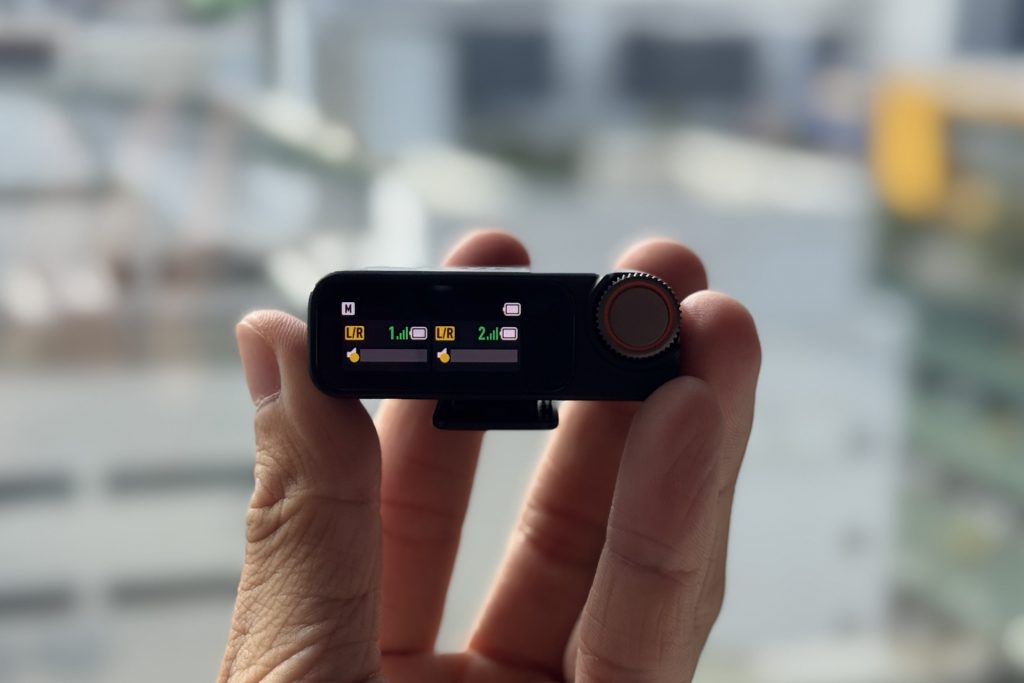
In the field, dropouts are what keep audio people awake at night. Here, DJI leans on a dual-band link (2.4GHz/5GHz) with dynamic hopping, and quotes up to 400 metres, line of sight.
I didn’t have a football pitch to spare, but I did pace half a block down South Bridge Road with two lanes of traffic between me and the camera with no stutters and no drama.
If you’re scaling up, the Mic 3 also accommodates multi-camera and multi-talent work: support for up to four transmitters and eight receivers means you can feed multiple bodies at once for a small documentary crew, with timecode available to keep edits sane. It’s overkill for casual vlogging, but a lifesaver for interviews across two or three cameras.
Sound quality & gain strategy: the safety net you actually feel
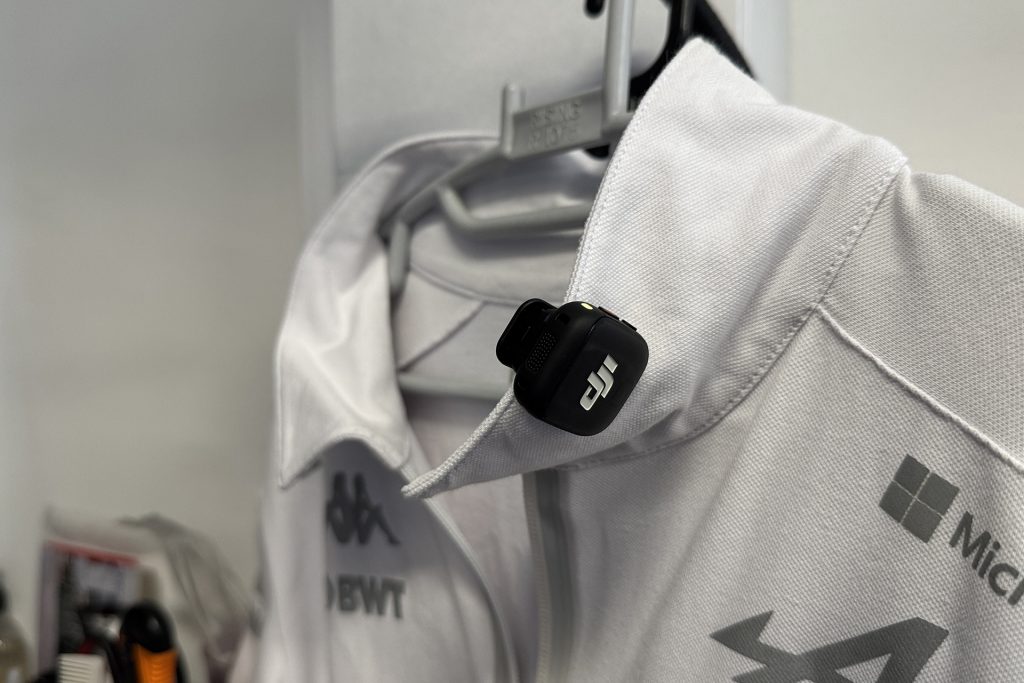
The best way to describe the Mic 3 is that it “looks after you”. The Adaptive Gain Control offers Automatic and Dynamic modes; the system balances levels without producing that breath-pumping you hear in cheaper sets.
In practice, I could whisper without the noise floor rushing up, then raise my voice without clipping when a gust of wind bullied its way down Telok Ayer Street. DJI also gives you three voice tone presets (Regular, Rich and Bright).
For belt-and-braces workflows, each transmitter records internally in 24-bit lossless and can also capture 32-bit float for post-rescue of hot moments. Storage is generous: 32GB per transmitter, so you can always pull a clean track off the mic if the camera feed wasn’t perfect.
Noise control is thoughtful, too: there’s two-level noise cancelling that tames steady rumble. Use it judiciously, but it’s effective for air-con droning or café din.
Battery & case: a long day, not just a long take
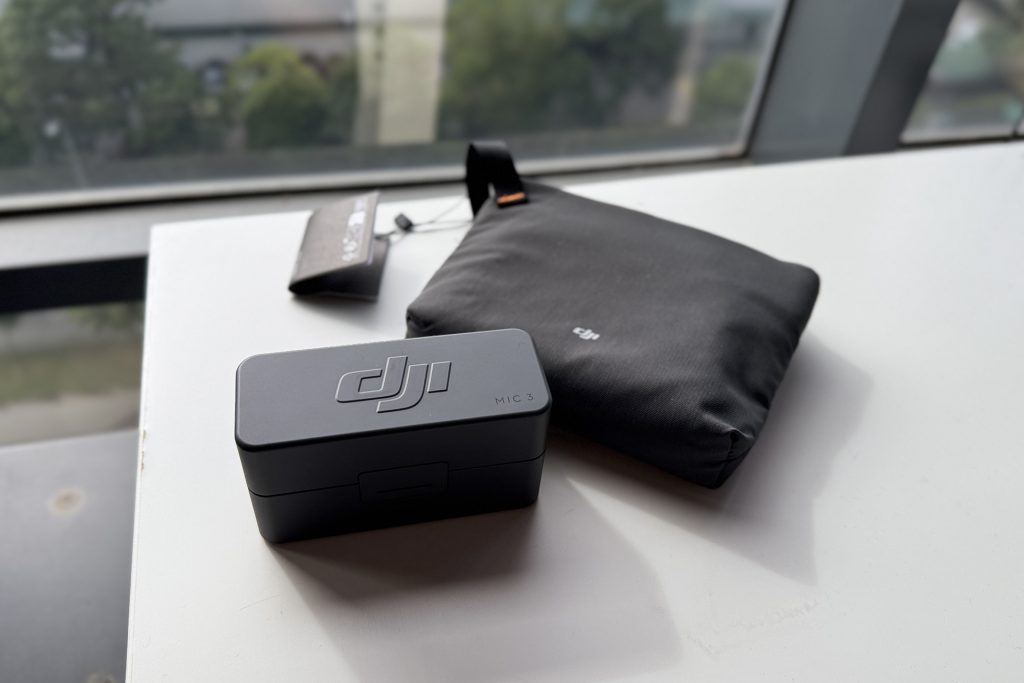
I ran a morning of pieces-to-camera, a lunchtime walk-and-talk and an afternoon interview without battery anxiety.
On paper, you’re looking at around 10 hours on a transmitter, 8 hours on the receiver, and the charging case adds up to 28 hours of extended operation (roughly 2.4 full recharges). Even if you’re a two-shoot-one-day type, that’s comforting headroom.
Quality of life: the “oh thank goodness” features
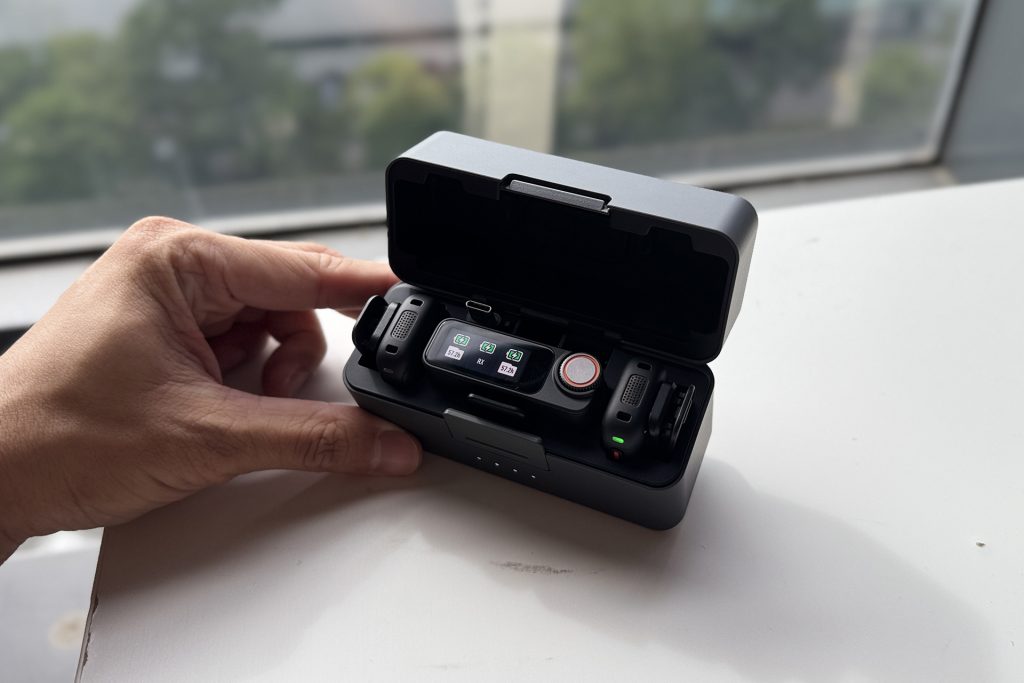
A few touches stand out. First, backup recording on the transmitters; it has already saved me once when a cable on the camera end was a little too “audiophile” and not quite “field-proof”.
Second, the receiver’s touchscreen makes arming tracks, formatting storage and tagging timecode refreshingly quick.
Third, that case that closes over furry windscreens is a tiny detail, but it means you don’t tear them off between takes and lose one at the worst possible moment.
There’s also integration with DJI’s wider ecosystem (OsmoAudio) if you’re using DJI cameras, but a neat way to keep things plug-and-play across bodies.
Limitations & trade-offs: what you should know
Two caveats before you wave your credit card. There’s no 3.5mm lavalier input on the transmitters. Purists who like hiding a tie-clip mic under a lapel will raise an eyebrow.
Two, if you adored the old Safety Track implementation on Mic 2, note that the Mic 3 changes how redundancy is handled (you’ll lean more on 32-bit float and dual-file recording). Neither is a deal-breaker for me, but they’re worth noting.
Price & availability in Singapore
At launch, the Mic 3 sits above the Mic 2 and Mic Mini in DJI’s line-up, reflecting its added capabilities. Typical local street pricing we’ve seen for the 2TX + 1RX + case combo hovers around S$430–S$440, depending on retailer and stock.
That’s competitive against other premium two-person wireless kits, especially once you factor in storage and battery life.
Verdict: the creator’s default, and a small crew’s secret weapon
Does the DJI Mic 3 sound better than a carefully rigged lavalier into a dedicated recorder? No, and it doesn’t pretend to. What it does is win the day more often: in noisy places, with rushed setups, across multiple cameras, and on long schedules.
It’s smaller, smarter, and steadier under pressure than the gear I was using even two years ago, and that changes the kind of work you say “yes” to.
If your priorities are reliability, speed and a clean, flattering sound without a half-hour of faffing about, this is the set I’d recommend first.
Liked this? Check out more articles on Futr tech here.