
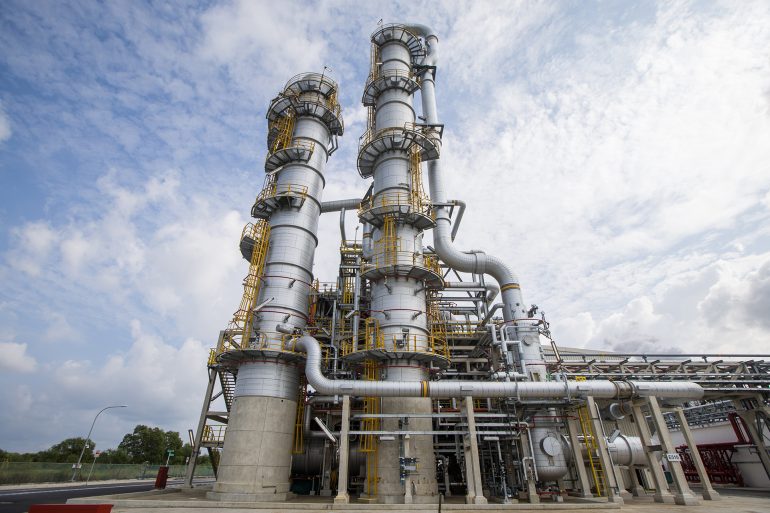
On Jurong Island, Evonik has inaugurated a world-scale alkoxides plant with 100,000 metric tons of annual capacity, purpose-built to serve Asia.
Does it matter where catalysts are made? Absolutely.
In a world where weeks can be the difference between “on track” and “off tender,” producing closer to customers is a competitive edge. This new site, announced in May 2023 and now up and running on schedule and on budget, is Evonik’s statement of intent in the region.
“This facility is a statement of our long-term commitment to Asia,” said Lauren Kjeldsen, Chief Operating Officer Custom Solutions. “By producing closer to our customers, we enhance supply security and agility, while also contributing to Singapore’s vision for a sustainable chemical industry.”
The plant is engineered to operate with net-zero Scope 1 and 2 carbon emissions. With the site embedded in Jurong Island, Evonik can shorten lead times and stabilise supply for customers from biodiesel to pharmaceuticals.
Why alkoxides, and why now?
Alkoxides help in transesterification to extract the highest possible yield from feedstocks such as vegetable oils, used cooking oils, and other fat-based waste. Beyond fuels, these catalysts are the quiet enablers in life-science syntheses, helping build active ingredients and fine chemicals with precision.
Singapore now joins Germany, the United States, and Argentina in Evonik’s global alkoxides footprint. This forms a four-corner network that can flex to local market needs while maintaining the consistency global players demand.
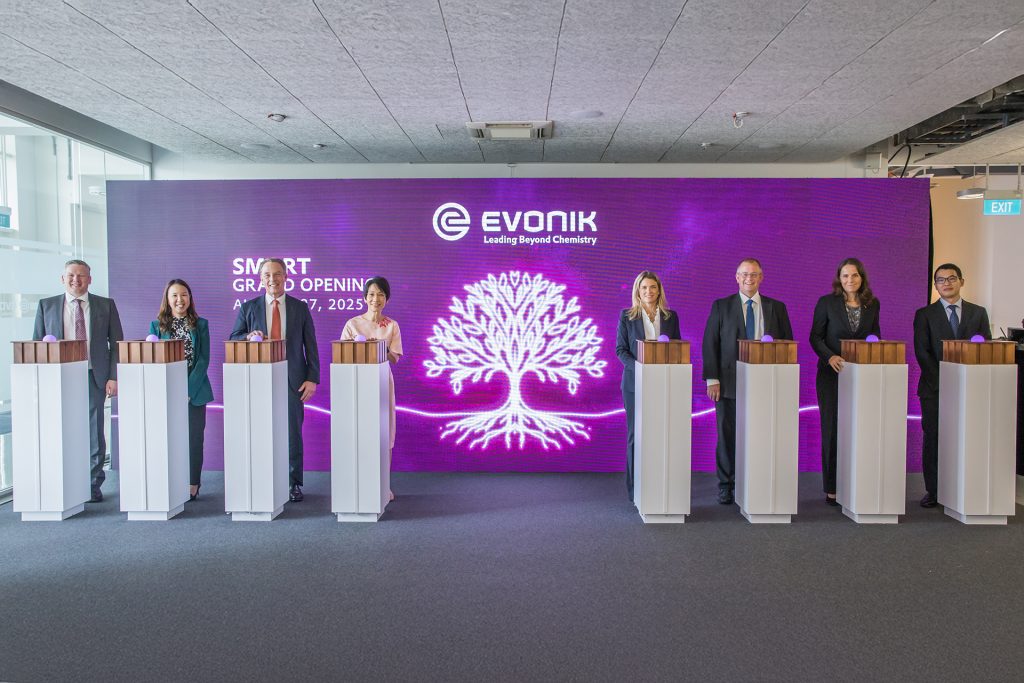
Guest of Honour Ms Grace Fu, Minister for Sustainability and the Environment and Minister-in-Charge of Trade Relations, underscored the milestone: “Evonik first broke the ground in 2023 and in less than three years, has taken this state-of-the-art alkoxides plant to completion, on schedule and on budget. We are glad that partners like Evonik have given us your vote of confidence by investing in Jurong Island to scale production of specialty chemicals that will serve growing regional and global demand.”
Singapore’s advantage, Asia’s opportunity
So, what does this mean for the region’s makers and movers? For biodiesel producers, it’s tighter process control and stronger yields. For pharma and fine chemicals, it’s catalyst quality with regional responsiveness.
And for everyone else watching the sustainability scoreboard, it’s a vote of confidence in Singapore’s pathway to a greener, globally connected chemical industry.
Check out more news articles on Futr here!